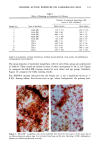
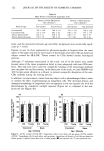
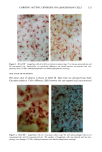
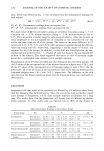
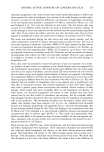
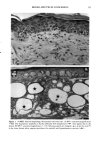
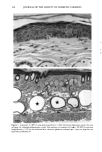
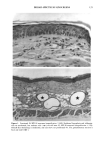
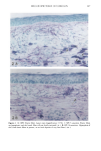
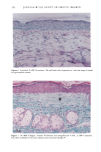
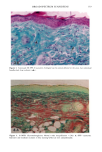
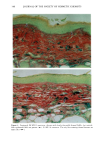
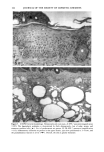
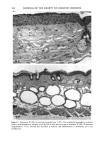
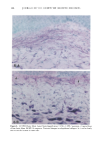
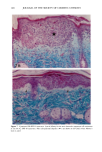
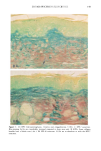
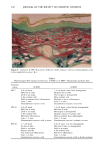
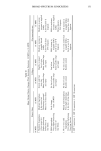
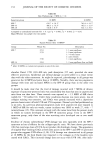
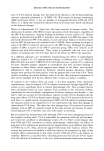
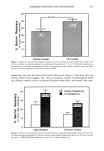
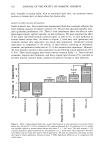
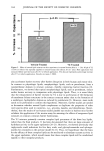
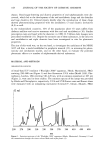
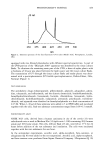
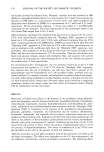
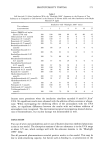
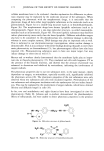
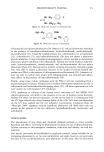
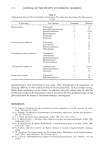
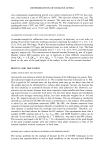
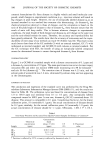
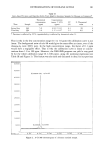
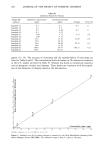
BROAD-SPECTRUM SUNSCREENS 141 growths of 12 or more cell layers. Sunburn cells were readily seen, as were areas of severe atypia and loss of order in the thicker areas (Figure 5A). Foci of lymphocytic infiltrates were increased in frequency and severity. Upper dermal inflammation was increased, with more foci that were severe. Sebaceous gland enlargement was similar to that seen with 10 MPDs. Cyst proliferation increased, with half of the specimens developing 3-4 rows. Severity of the granulomatous reaction increased as cysts enlarged and ruptured (Figure 5B). S?F-16 sunscreen. All specimens had photodamage exceeding that found with 10 MPDs. Epidermal hyperplasia was similar to that seen with the SPF-7 sunscreen, but fewer specimens had numerous thicker downgrowths. Mild disorder and atypia was seen mainly in the downgrowths (Figure 5C). Epidermal inflammation was more mild and focal than with the SPF-7 sunscreen, but dermal inflammation was similar, with nu- merous severe foci. Sebaceous glands were enlarged, as with 10 MPDs. Only one third of the specimens developed 3-4 rows of cysts, and the granulomatous reaction was not as severe as with the SPF-7 sunscreen (Figure 5D). SPF-I8 sunscreen. Photodamage was slightly greater than that seen with 10 MPDs. The epidermis increased to 6-8 cell layers, and only two specimens showed a few thicker downgrowths with occasional loss of order. As with 10 MPDs, there was little or no atypia (Figure 5E). The epidermal lymphocytic infiltrate was very mild, with scattered single lymphocytes. Sebaceous glands remained smaller than in the other two groups. The upper dermal infiltrate was considerably more mild than in the other 16 MPD groups, ranging from very mild to mild with moderate foci. Cyst proliferation was mild, with most specimens having 1-2 rows and a granulomatous reaction that was mild to focally moderate (Figure 5F). LUNA'S STAIN: ELASTIC FIBERS SPF-7 sunscreen. Elastic fiber hyperplasia was similar to that seen with 10 MPDs. The main difference appeared to be more foci of fine fibers (Figure 6A) and increased amounts of tinctorial change in collagen. S?F-I6 sunscreen. The major changes observed compared to 10 MPD were the develop- ment of several foci of tinctorial changes in the upper dermal collagen and an increase in mast cells in the lower dermis (Figure 6B). S?F-I8 sunscreen. Although most specimens had only mild elastic fiber hyperplasia, three had developed a slightly more severe hyperplasia (Figure 6C). All specimens had foci of fine elastic fibers, and most showed some small areas of tinctorial change. Mast cells were not usually increased. MASSON'S TRI-CHROME STAIN: COLLAGEN SPF-7 sunscreen. Collagen damage appeared to progress only slightly beyond that seen with 10 MPDS. One specimen showed some short shallow bands of reduced staining in the uppermost dermis (Figure 7A). All other specimens had a few to several tiny foci of reduced staining and areas in which the collagen bundle outlines were indistinct. SPF-I6 sunscreen. The only areas with loss of affinity for the stain were beneath the deeper epidermal downgrowths and in situ squamous cell carcinomas in two specimens (Figure 7B).

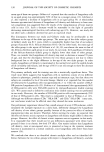
142 JOURNAL OF THE SOCIETY OF COSMETIC CHEMISTS Figure 5. 16 MPD: General morphology. Hematoxylin and eosin stain. A: SPF-7 sunscreen (magnification X295). The hyperplastic epidermis is characterized by thick downgrowths, loss of order, atypia, and numerous sunburn cells (•). Foci of parakeratosis are present (*). B: SPF-7 sunscreen (magnification X 115). Inflammatory infiltrates are present in the upper dermis, cysts have proliferated to 3-4 rows, and the granulomatous reaction is severe (--•-). Overall, the skin is greatly thickened.
Purchased for the exclusive use of nofirst nolast (unknown)
From: SCC Media Library & Resource Center (library.scconline.org)