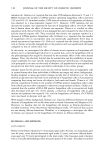
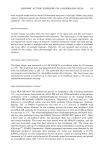
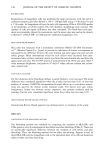
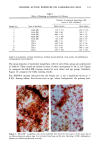
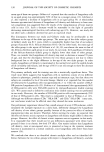
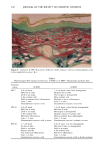
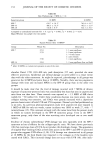
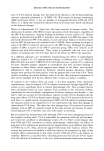
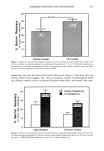
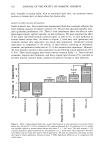
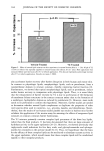
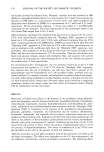
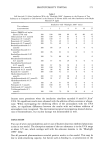
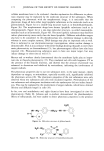
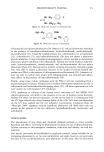
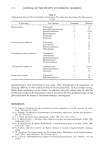
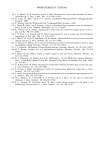
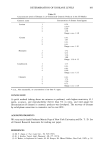
160 JOURNAL OF THE SOCIETY OF COSMETIC CHEMISTS Table I Lipid Composition in Natural Lipid Mixture (% of Total weight) Sphingolipids Glycosphingolipid I 15.88 Glycosphingolipid II 14.32 Ceramides III 1.82 Ceramides IV 0.70 Total sphingolipids 32.72 Free sterol 18.49 Free fatty acids 11.51 Triglycerides 7.74 Polar lipids Sphingomyelin 2.68 Phosphatidylcholine 3.71 Phosphatidylserine 7.21 Phosphatidyl inositol 0.29 Phosphatidylamine 6.15 Total polar lipids 20.04 Total 90.50 The final molar ratio of these lipids is approximately 3:1:1 (fatty acids:ceramides:cho- lesterol) if glycosphingolipids (including sphingomyelin), triglycerides, and other phos- pholipids perform as precursors of ceramides and fatty acids, as demonstrated previously (13). EFFECT OF Y2 ON BARRIER FUNCTION Studies in hairless mice. Previous studies have shown that a physiological lipid mixture, with an approximately equimolar ratio of stratum corneum lipids or their precursors, allows normal barrier recovery (8) and that a threefold increase in cholesterol in the lipid mixture accelerates barrier recovery in acetone-treated murine skin (9, 10, 13). To de- termine whether the naturally occurring lipid mixture also is effective, we first tested its ability to alter barrier recovery rate in acetone-treated murine skin. Barrier recovery in the Y2-treated animals is significantly faster than in vehicle-treated animals two and four hours after barrier disruption (Figure 1 two-hour data not shown). These results demonstrate that this naturally occurring lipid mixture accelerates barrier recovery in acetone-treated murine skin. Studies in human volunteers. Although the effect of exogenous lipids on barrier function have been well demonstrated in mice (8-10), little is known about the ability of synthetic or naturally occurring lipid preparations to influence barrier homeostasis in humans. Prior studies have shown that barrier recovery is prolonged in barrier-disrupted human vs mouse skin (14). Therefore, we next examined whether Y2 also accelerates barrier recovery in acetone and tape-stripped human skin. As observed in hairless mice, Y2 significantly accelerates barrier recovery in both tape-stripped and acetone-treated

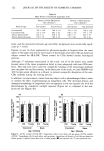
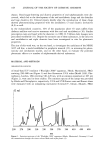
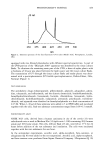
BARRIER FUNCTION AND HYDRATION 161 60 • 5O • 30 20 •P0.01 I ß Vehicle-Treated Y2-Treated Figure 1. Effect of a natural lipid mixture on barrier recovery in acetone-treated murine skin: 30 •1 of Y2 (1.6%) or vehicle was topically applied to acetone-treated mouse skin (2 x 3 cm2). The barrier function was determined by measuring transepidermal water loss immediately after acetone treatment and four hours after Y2 or vehicle application. Results are mean + SEM. human skin two and four hours after barrier disruption (Figure 2 four-hour data not shown). These results suggest, first, that an exogenous mixture of physiological lipids can influence barrier recovery in barrier-disrupted human skin, and second, that com- 4O 30 I'-I Vehicle-Treated(n=5) [] Y2-Treated(n=5) "-• 20 133-,: 10 0 ß Tape-Stripped Acetone-Treated Figure 2. Effect of a natural lipid mixture on barrier recovery in perturbed human skin: 40 Ixl of Y2 (1.6%) or vehicle was topically applied to acetone-treated or tape-stripped human skin (about 20 cm 2 area). Results are mean + SEM. Significant differences are for Y2- vs vehicle-treated site.
Purchased for the exclusive use of nofirst nolast (unknown)
From: SCC Media Library & Resource Center (library.scconline.org)