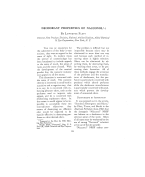
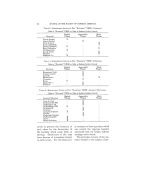
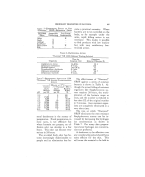
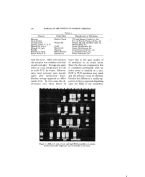
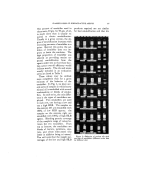
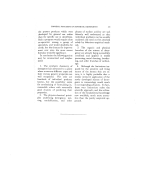
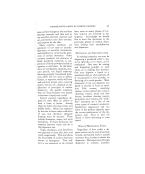
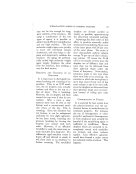
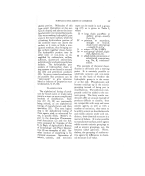
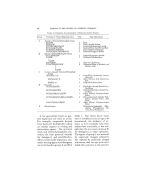
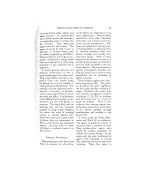
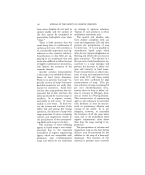
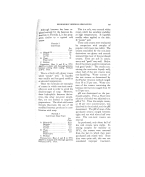
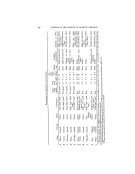
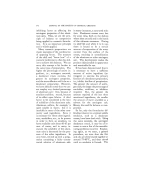
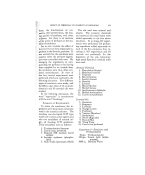
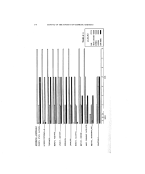
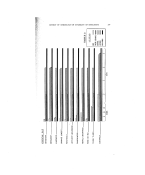
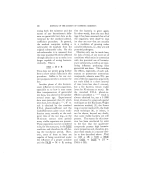
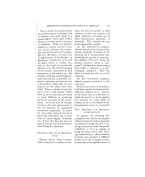
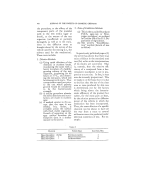
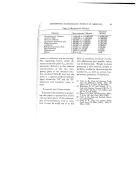
::!?,i.i':.iAlthough beeswax has been re- •j?.Piaced entirely by the beeswax de- 5•i:!i!i(:.i'rivatives in Formula 2, it has prop- 15'•51: . erties similar to a typical cold Formula 2 % -: Cold Cream HYDROPHILIC BEESWAX DERIVATIVES Per ii:' Cent A Mineral Oil .................. 50 G-1704 ...................... 12 G-i726 ...................... 3 'i ,:•:!• :.i:: B Water ....................... 35 ' Preservative Perfume Preparation: Heat A and B to 70øC. Add B to A slowly with thorough agitation. i•-}'?:'Continue stirring while cooling. Perfume o C at 50 ß Pour. This is a fairly soft, glossy cream :=ii:i':Which "peaks" well. It liquefies very readily and has good stability at elevated temperature.. These two formulas are examples of creams in which non-ionic emul- sifiers are used in order to avoid the disadvantages of soap. However, these hydrophilic beeswax deriva- tives, like other non-ionic emulsi- tiers, are not limited to soap-free ß preparations. The third cold cream formula illustrates the use of the modified beeswax products in com- bination with soap. Formula 3 Cold Cream (Soap Type) Per Cent A Mineral Oil ................ 30.0 Beeswax ................... 12.0 G-170{ .................... 3.5 G-1725 .................... 1.5 B Water ..................... 52.0 Borax ..................... 1.0 Preservative C Perfume P•tpx•xw•os: Heat A and B to 70øC. Add B to A slowly with 'thorough agitation. Perfume at 50øC, Pour. 363 This is a soft, very smooth white cream which has excellent stability at high temperatures. It liquefies readily when applied to the skin. It "peaks" well. These cold creams were evaluated by comparison with samples of popular cold cream (see table). The creams emulsified by the non-ionic derivatives are glossy and smooth textured like most of the purchased creams. They are soft in consis- tency and "peak" very well. Only a few of the creams used for comparison had good "peak." The creams con- taining the non-ionics liquefy well about half of the test creams were non-liquefying. Water content of the test creams as determined by the Fischer titration method ranged from 10 to 35 per cent. Water con- tent of the creams containing the beeswax derivatives ranged from 30 to 50 per cent. pH was determined on the pur- chased samples. First, a 50 per cent solution of alcohol was adjusted to a pH of 7.0. Then the sample cream, at 10 per cent concentration, was dissolved in the alcohol, and the pH determined. The pH of most of the purchased creams ranged between eight and ten with about half over nine. The non-ionic creams are neutral. As purchased, only about half of the cold creams were stable. In testing samples for stability at 50øC., the creams were removed from the jars in which they were purchased and mixed well. Since they were quite soft, this was not considered improper treatment.

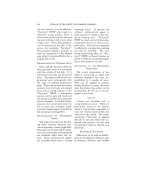
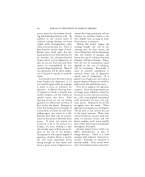
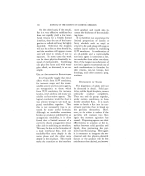
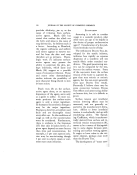
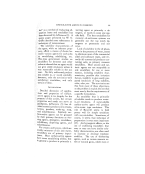
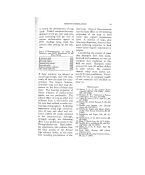
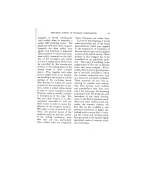
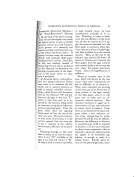
364 JOURNAL OF THE SOCIETY OF COSMETIC CHEMISTS They were placed-in jars of uniform size and stored in a 50øC. oven for observation. Even the best of the popular cold creams separated oil or water within a week. Many of the creams containing beeswax deriva- tives were more stable than the com- mercial creams. Cold cream is one of the most easily modified creams. By adding materials such as hydrogenated vegetable oils and lanolin, emol- lient creams can be prepared. ß Formula All-Purpose Cream Per Cent A Steari½ Acid .................. 10 Lanolin ...................... 4 Beeswax ................... 2 Mineral Oil .................. 20 Tween 40' ................... 8 G-1706 ...................... 2 B Sorbo* ....................... 12 H=O ......................... 42 Preservative C Perfume PRsPXR.vr•oN': Heat A to 70øC., B to 72øC. Add B to A with agitation. Per- fumeat 50øC. Pour. Formula 4 Emollient Cream Per Cent A Beeswax ..................... 5 Lanolin ...................... 3 Hydrogenated Vegetable Oil... 25 Mineral Oil .................. '20 G-1702 ...................... 5 G-1725 ............... ' ....... 5 Antioxidant ................... B H20 ......................... 37 Preservative C Perfume PREPARATION': Heat A to 70øC., B to 72øC. Add B to A with constant agitation. Perfume at 45-50øC. Pour. This is a smooth textured, off- white cream. It has good high temperature stability. Because of its high oil content it has excellent emollient properties. All-purpose cream, which may serve as a cleanser, emollient cream, and foundation cream, is often based on cold cream. Materials which body the cream and others which add emollience are used in Formula 5 to produce the properties of an all- purpose cream. This is a glossy, off-white cream in which stearic acid is used for body- ing the cream and lanolin and Sorbo are added to give emollient prop- erties. Because of its high mineral oil content, and because it liquefies so readily, it is an excellent cleanser. When removed, it leaves a slight oil film whi6h serves as a foundation for make-up. The beeswax derivatives also find application in hand lotion: formulas. Hand lotions have high'i water content this necessitates the' inclusion of a hydrophilic material :: which will permit smooth applica-' tion.rather than a so-called "watery.. feel." The following formula is a fairly heavy white lotion which has excellent spreading properties. Formula 6 Hand Lotion i Cent A Stearic Acid ................ 2.0::i: Lanolin .................... 0.5 Span 60' .................. 2.5 i?!! G-1734 .................... 2.5 'B H•O. Preservative C Perfume PRSPX•T•ON: Heat A to 90øC., B 95øC. Add B to A with thorough agitatiom•½!il Perfume at 50øC. Continue stirring cool. Pour. ' ::'
Purchased for the exclusive use of nofirst nolast (unknown)
From: SCC Media Library & Resource Center (library.scconline.org)