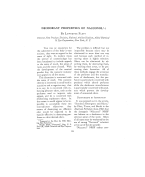
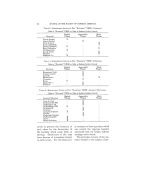
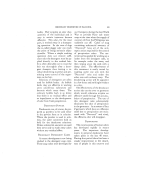
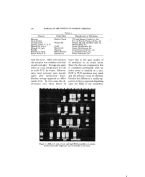
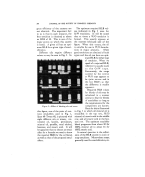
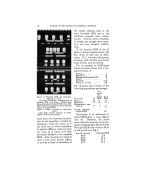
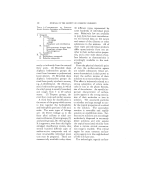
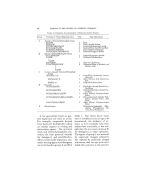
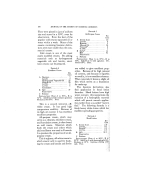
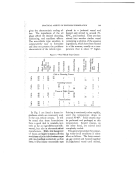
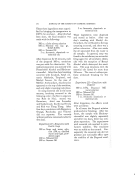
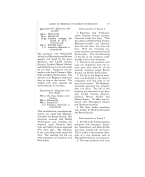
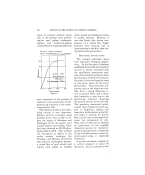
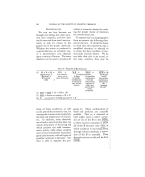
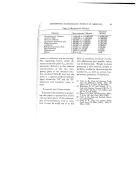
PRACTICAL ASPECTS OF that this is not possible. A concen- trated solution of highly acidic salt, such as aluminum sulfate, will break the conventional type of vanishing cream formulated with potassium, or sodium stearates or other sapo- naceous emulsifiers. Nor will the various glycol or glycerol esters of stearic or other fatty acid do the trick, inasmuch as their emulsifying properties are dependent upon the presence of soap. However, acid stabilized emulsifiers have been de- veloped, some specifically for this particular application. These may be broadly classified into three main groupings: the sulfated, the amide, and the non-ionic types. In some cases, these emulsifiers are used in conjunction with glycerol or glycol stearates, etc., or even in combina- tion with each other. Representa- tive astringent cream formulas are shown in Fig. 2. With these highly Figure 2.--Typical Astringent Deodorant Creams 1 2 3 Emulsifier 18' 5 •- 11 { Stearic Acid' 15 Cetyl Alcohol i15 3 4' Petrolatum 1 3 Glycol Stearate .. •' Mineral Oil •15 .... Carbamide 5 Humectant 3 '3' ' ' Water 53 52 5•' Aluminum Salt 15 18 15 Titanium Oxide 1 1 1 * Sulfated. t Amide. $ Non-ionic. specialized emulsifiers it is possible to formulate stable creams contain- ing sufficient quantities of aluminum or other astringent salts to ade- quately inhibit the flow of perspira- tion. EMULSION FORMULATION 371 However, there are other aspects of the problem of deodorant cream formulation. All of the commonly used astringent salts, to a greater or lesser extent, have a destructive ef- fect upon fabric, particularly cot- ton so that when the user's gar- ment is laundered it is often found that the fabric is completely de- stroyed near the site of application. It is, therefore, desirable to have a deodorant cream formula contain an inhibitor, which will lessen the tendency of the astringent material to attack fabric. Carbamide, or urea as it is commonly known, which has lately been the subject of some prolonged patent litigation, is widely used as an inhibitor. There are other materials which exert a simi- lar effect. Some of the more complex amides, for instance, do a good job in very much lower percentages than car- bamide. For this reason, it has been suggested that the amide-type emulsifiers are particularly suitable for use in deodorant creams. In some instances, they are used in conjunction with emulsifiers be- longing to the other two types as emulsion stabilizers as well as in- hibitors. However, it should be noted that while these materials tend to inhibit the fabric-destroying properties of the aluminum salts, there is much evidence to indicate that they also inhibit the astrin- gent properties almost proportion- ately. It is therefore necessary for the formulator to strike a balance between the inhibiting properties in relation to fabric destruction and

372 JOURNAL OF THE SOCIETY OF COSMETIC CHEMISTS inhibiting factor as affecting the astringent properties of the alumi- num salts. Thus, we see the prin- ciple of balance or compromise being applied to cosmetic formula- tion. It is an important principle and is widely applied. Many cosmetic preparations are classic examples of the combination of opposing forces. The measure of the skill and "know how" of a cosmetic technician is often his abil- ity to achieve this balance. We can carry this concept a bit further in the same type of preparation. The higher the percentage of active in- gredient, i.e., astringent material, a deodorant cream contains, the greater its astringent properties, and the more effective will it be as a deodorant preparation. However, we have already noted that we can- not employ any desired percentage of aluminum salt: first, because of emulsion stability second, because of its effect upon fabrics. A third factor to be considered is the limit of solubility of the aluminum salts. Aluminum sulfate, for example,' is quite soluble in water but it is insoluble in most of the other com- monly used ingredients. Since it is necessary for these other ingredi- ents, emulsifiers, etc., to be present in order to form an emulsion, we have available only about 60-65 per cent of water, and in many in- stances the solubility of the alumi- num salts is decreased by the pres- ence of the o,ther ingredients. In any event, we end up with a prepa- ration containing a fairly concen- trated solution of aluminum salt: in many instances, a saturated solu- tion. Deodorant creams must last for some time, both on the shelves where they are sold and in the hands of the ultimate consumer. During its shelf life and while it is in use, there is bound to be a certain amount of evaporation of the water content from' the surface of the cream, resulting in crystallization of the aluminum or other astringent salt. This development makes the product objectionable in appearance and unsuitable for use. It has been demonstrated that it is necessary to have a sufficient amount of active ingredient (as- tringent) to exercise the primary function of a deodorant preparation, i.e., inhibit the flow of perspiration. The greater the amount of astrin- gent salt, the larger the percentage of emulsifier, stabilizer, or inhibitor required. But, the greater the amount required of the last three mentioned ingredients, the smaller the amount of water available as a solvent for the astringent salt. Hence, the need for balance or com- promise. So far, only the formulation dif- ficulties inherent in a typical vehicle emulsion, such as a deodorant cream, have been dealt with. Using the same example, the astringent deodorant cream, it may be of in- terest to note a few of the manufac- turing problems incurred. Employ- ing again, as we must, a general procedure, we note that the fats and oils are often heated together at around 75-80øC., and then stirred until an emulsion is formed. This
Purchased for the exclusive use of nofirst nolast (unknown)
From: SCC Media Library & Resource Center (library.scconline.org)