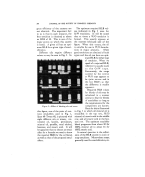
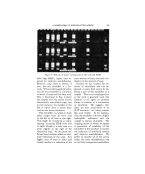
::i':Surface tensions of both components, .::i' very low interfacial tensions are obtained when complex-formation : is observed between the oil-soluble :• and water-soluble stabilizing agents (11). At the oil-water interface, there are interesting phenomena which ill:suggest similar associations result- ing in mixed-film formation (12). In the first place, it is known that the ..:• interfacial tension between an aque- ous soap solution and a hydrocarbon is independent of the oil used. : This indicates the presence of a monolayer of the soap alone at the interface., On the other hand, the interfacial tension between an oil solution of oleic acid and water is strongly dependent on the oil used. The lowering of the interfacial tension between the oil and water is least with benzene, intermediate with cyclohexane and decalin and greatest with hexane and long- chain paraffins. This effect is shown very definitely, particularly in the difference between the aro- matic and saturated hydrocarbons. In the case of the latter, minima occur in the surface-tension-con- centration curves, the explana- tion of which is doubtful. If they are due tO the presence of two components in the interfacial film, the second component can only be an oxidation product of oleic acid or the hydrocarbon itself. Now, it is known that benzene is the best solvent for long-chain alcohols, to which undissociated fatty acids would no doubt approxi- mate in their intermolecular inter- PENETRATION AND COMPLEX-FORMATION IN MONOLAYERS 387 actions, and it is noticeable that it produces the least effect in these experiments, perhaps because of a low surface-bulk partition ratio of the surface-active oleic acid. In the case of emulsification, the inversion of phase continuity from oil- to water-continuous, occurs in decreasing order of readiness in the sequence benzene, cyclohexane, hex- ane, higher paraffins. This may be due to the fact that this is the de- scending order of interaction energy between solvent and solute, so that penetration of the polar heads by water becomes more pronounced than penetration of'the hydrocarbon chains by the solvent, which would favor oil-continuity from steric con- siderations.. If we now take a three-component system consisting of oil, water, and a soap such as potassium oleate and add to it a substance which from monolayer experiments would be expected to form a complex with the soap (and penetrate the soap mono- layer), the mixture liquefies and, on adding sufficient of the fourth component, clears giving a trans- parent, fluid dispersion, which does not show streaming birefringence. A suitable complex-forming agent is an alcohol such as hexyl alcohol or (best) 2•ara-methyl cyclohexanol. If benzene is used as the oil, the dispersions are oil-continuous if nujol (long-chain paraffins), they are water-continuous, as judged by their electrical conductivity. It is possible to make such systems containing equal volumes of oil and water, and indeed their sta-

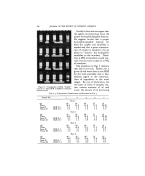
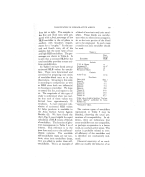
388 JOURNAL OF THE SOCIETY OF COSMETIC CHEMISTS bility is greatest in such a case, be- coming less when the volume of the continuous phase is increased (13). It is interesting that if we take as the hydrocarbon one which is be- tween benzene and nujol in the drophobic series, two transparent systems can be prepared. This has been done, for example, in the case of decalin and of a petroleum frac- tion of the approximate formula C•sHa•. containing a high proportion of naphthenes. These give first very viscous, almost gel-like sys- tems, which are water-continuous, with conductivities, however, less than that of a liquid dispersion. They show pronounced streaming birefringence. When more para- methyl cyclohexanol is added, they break and, on adding still more, liquid dispersions like those pre- viously described are formed. If a hydrocarbon such as decalin or hexane is used, the final dispersion is oil-continuous, but if a mixture containing higher paraffins is used, the system remains water-contin- uous, but has a lower conductivity than if no gel had formed (14). Formation of the two types of dis- persion is consistent with the views outlined above. As more alcohol is added, above the amount required for an equimolecular mixed film with the soap, it will pass into the oil phase, rendering it less hydrophobic by virtue of the hydroxyl groups so introduced. This will weaken the interaction between the oil and the paraffin chains of the soap relative ß to that between the polar groups and water. This will favor an inversion of the dispersion from water- to oil-continuity, but whether the in- version actually takes place or not depends on the degree of hydro- phobic character possessed by the oil. Thus, nujol is sufficiently drophobic to prevent it, but decalin is not. These phenomena can also be expressed in terms of the wetta- bility of the interface by the oil phase and the water phase. The phase which has the lower contact angle with the interfacial film will be continuous, and as the alcohol is added to the oil, it causes its con- tact angle to approach that of water. If the angle is lowered sufficiently by this means, inversion to an oil- continuous system occurs in the case of nujol the lowering is not sufficient to bring this about. STRUCTURE OF THE TRANSPARENT DISPERSIONS In view of their properties, it is clear that the structure of these isotropic dispersions must be dif- ferent from that of concentrated solutions of soaps and of so-called "solubilized oils." It has been shown by the x-ray studies of Hess (15), McBain (16), Harkins (17), and their collaborators, that a soap micelle can swell with oil, and a soap crystallite with water, only within certain definite limits. In the present instance, much more of the disperse phase is incorporated, and it is thought that the alcohol molecules penetrate between the soap molecules in the crystallites introducing disorder into the lattice,
Purchased for the exclusive use of nofirst nolast (unknown)
From: SCC Media Library & Resource Center (library.scconline.org)