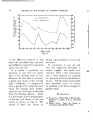
SPECTROPHOTOMETRY IN ANALYSIS OF COSMETIC PRODUCTS 291 photometers classed along with chemical balances as fundamental laboratory equipmen t. It is customary to regard spectro- photometry as divided into three parts, according to the wavelength of the light used. These are the ultraviolet, visible, and infrared regions of the spectrum. More or less arbitrarily, the divisions are for practical purposes set at below 400 m• for ultraviolet, 400-750 m• for the visible, and 750 mu on up for the infrared. VISIBLE REGION 400--750 MU The visible region of the spectrum is of limited usefulness in that only colored substances have absorption in this range. In the cosmetic industry the principal interest would be in color matching, either by transmitted or reflected light, and in the analysis and standardization of dyes and pigments. I shall not spend much time discussing these applications, except to point out that for such purposes the spectro- photometer is invaluable. UL.R^vIOLE. REGIO• BELOW 400 MU In the ultraviolet region, all aro- matic compounds show character- istic absorption. When the entire absorption spectrum is obtained and plotted in the usual manner, i.e., absorbency vx. wavelength, the curve obtained will be char- acteristic of the particular com- pound. An exception is stereo- isomers, in which case both com- pounds show the same absorption. Beside aromatic compounds, mole- cules with two or more conjugated double bonds absorb ultraviolet radiation above 230 mu. Examples are fatty acids with conjugated double bonds, aldehydes or ketones with double bond conjugated with carbonyl, such as aceto acetic esters or ascorbic acid. A considerable number of in- organic salts also absorb ultra- violet above 210 mu. Below 210 mu--out of the range of most commercial instruments-- isolated double bonds, isolated C=O groups, and some other groups show specific absorption. Since practically all compounds absorbing in this region follow Beer's Law over wide ranges of con- centrations, ultraviolet absorption spectra can be used for quantitative as well as qualitative analyses. All that is necessary is to determine the absorption spectrum of a sample of known identity and purity and to compare this with the spectrum of the unknown. INFRARED REGION ABOVE 0.75 In the infrared, 0.75 to 2 u, the so-called "overtone" region, almost all organic compounds show ab- sorption. While this region is of interest to theoretical chemists in investigating fundamental frequen- cies, bond energies, etc., the quali- tative and quantitative applications are quite few. The H20 absorption at about 1.5 u is sometimes used to detect traces of H,.O in refrigerating gases, alcohol, etc. In the region 2 to 40 u, all com- pounds except strictly non-polar

292 JOURNAL OF THE SOCIETY OF COSMETIC CHEMISTS ß substances such as 03, N2, and the rare gases of the zero period of the per. iodic table, show characteristic and rather complex absorption spectra. This region is therefore very useful for qualitative analysis of many compounds. In the region 2 to 7 •, the absorp- tion characteristic is of individual groups in the molecule. For example, all compounds with free OH will ab- sorb at about 3 /•. All compounds with C•---O will absorb in the 5 to 6 u region. There are also character- istic frequencies that can be assigned to other simple groups such as CHa, C:C, C:N, N--H, etc. The po- sition of these peaks is affected some- what by the rest of the molecules, but is not shifted to other regions. In the region 8 to 25 u, the absorption peaks are characteristic of the molecules as a whole. This region is therefore particularly ad- vantageous for distinguishing be- tween closely related compounds such as isomers, or members of homologous series. Most of the work done in the infrared has been in the 2 to 15 u range, using NaC1 prisms. A con- siderable amount has also been done with KBr prisms that cover the region to 28 u. Infrared spectrophotometry is especially suited to analysis of mixtures because of the relatively large number of absorption peaks shown by most compounds it is especially useful for analysis of mixtures of aliphatic hydrocarbons that have little or no absorption in the visible or ultra-violet regions. Many publications are available t½ show application of infrared technique to analysis of fractions of petroleum. In our laboratories, we have used infrared to determine the presence and relative amounts of six components in a mixture of isomeric awlamine compounds. One of the chief difficulties in the application of infrared techniques is the limited number of solvents that do not themselves show strong absorption over wide ranges of the spectrum. Carbon tetrachloride and carbon disulfide are the most widely used, although other solvents can be used over limited regions. It is necessary that the solvents used do not dissolve the salt plates used as cells. When only qualitative determinations are desired, the sol- vent difficulties are not so impor- tant, since solid compounds can be used directly either as films de- posited on salt plates, or as "mulls" with mineral oil or other fairly transparent .liquids. In our labora- tories we have had some promising results from emulsions of materials in carbon disulfide and carbon tetrachloride. TECHNIQUES OF ANALYTICAL SPECTROPHOTOMETRY Most of the qualitative and quan- titative determinations made by spectrophotometric means depend upon comparison of the absorption of the unknown with that of a standard obtained in exactly the same manner as was the unknown. In the visible and ultraviolet regions it is usually advisable to
Purchased for the exclusive use of nofirst nolast (unknown)
From: SCC Media Library & Resource Center (library.scconline.org)