SPECTROPHOTOMETRY IN ANALYSIS OF COSMETIC PRODUCTS 293 obtain the absorption spectrum of a compound under at least two con- ditions. Compounds soluble in water or in dilute alcohol may best be measured in both alkali and acid. Other compounds may be measured in two or more solvents. The spectra so obtained are usually suflSciently distinctive to serve as a means of identification of the com- pounds. The optimum concentra- tion of solutions usually lies between 10 and 100 rag. per liter of solvent when 1-cm. cells are used. Glass cells are satisfactory for use in the visible region. Fused quartz can be used down to about 210 m/• in the ultraviolet region. In the infrared region, sodium chloride cells are most commonly used. Potassium bromide is sometimes used, as are the plates of silver chlo- ride. The cells used in infrared work must be much shorter liquids are usually measured in cells be- tween 0.15 ram. and 0.001 mm. in length. Gases are measured in cells from 1 cm. to 20 cm. in length. Operations in the determination of infrared spectra are similar to those carried out in obtaining spec- tra at shorter wavelengths. So- lutions examined are usually much more concentrated than those needed for visible or ultraviolet work 100 rag. per ml. of solvent is probably a fairly good average. The use of dilute solutions is rarely possible because the absorp- tion due to the solvent may mask that due to the solution. A recent development in spectro- photometric procedures is the vari- able reference technique (1). In this procedure, the unknown and stand- ard solutions are directly com- pared. The spectrophotometer is actually used as a null indicator, and the composition of the unknown is determined entirely by deter- mining the amount of standard or standards required to balance the absorption due to the unknown. This technique is not readily adapted for use on other than double-beam instruments. A comprehensive treatise on ab- sorption spectrophotometry is avail- able in "Analytical Absorption Spectrophotometry" edited by Mellon (3). Study of Williams' (4) article on "Infrared Instrumentation and Techniques" is also recommended. INSTRUMENTS AVAILABLE The so-called "double-beam" re- cording spectrophotometers have so much to recommend them that the laboratories of the Division of Cosmetics have adopted them exclusively. Their principal advan- tage is in the speed with which data, already accurately plotted, can be obtained. They have in the detector stage a means for measuring differences in intensity of light incident upon the photo- sensitive element. Thus the ab- solute intensity of the illumination can vary over wide limit• without affecting the precision of measure- ment of differences. The two beams of light are switched, or alternatively, the detector output is sampled, at suflSciently short

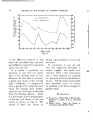
294 JOURNAL OF THE SOCIETY OF COSMETIC CHEMISTS intervals to prevent anomolous re- suits arising from electrical or mechanical transient phenomena. Available double-beam instru- ments are: Visible range--400-700 m/z--the General Electric Recording Spectrophotometer (range can be extended somewhat above 700 m/z if so ordered). Visible and ultra-violet range-- the Cary Recording Spectro- photometer. Infrared range--the Perkin- Elmer (Model 21) and the Baird Associates Recording In- frared Spectrophotometer. Although the cost of any of these instruments is much higher than that of the single-beam instruments available, the rapidity with which precise spectra are automatically plotted makes the recording in- struments more economical in the long run. APPLICATION OF SPECTROPHOTOM- ETRY TO PROBLEMS IN COSMETICS There are few articles in the literature of spectrophotometry in which the word "cosmetic" appears. A great many articles have contained information about compounds used in cosmetics. The third annual "Review of Analyt- ical Chemistry," published as a part of the January, 1951, issue of Analytical Chemistry, contains 217 references to the literature of spectrophotometry in the visual range, 43 to the ultraviolet, and 354 to the infrared. Marton and Chambers (5) (Anal Chem., 23, 571 (1951)) have given a good brief review of the use of infrared spectrophotometry in the printing ink field. Several of the applications mentioned are directly applicable to problems in the cos- metic industry, particularly the studies of waxes and fatty acids. Other recent publications include papers presented at the Second Pittsburgh Conference on Analytical and Applied Spectroscopy. H. Hausdorf of the Perkin-Elmer Cor- poration reported on "Analysis of Polymers by Infra-red Spectros- copy." This should be of partic- ular interest to users of plastics or synthetic resins, such as manu- facturers of nail lacquers. Another paper at this conference was "Infrared Spectrophotometric Indentification of Emulsifying Agents" by Allen S. Powell of the Case Institute of Technology. This field is of great interest in regulatory analysis of cosmetics, and appears to have possibilities in production con- trol of many cosmetic products. The following is a typical example of the applications we have found in our laboratories: A sample of a cosmetic was found to contain a non-ionic surface- active agent. The procedure de- scribed by Newburger (2) showed that it was a polyoxyethylene de- rivative. The ultraviolet spec- trum of the material showed ab- sorption in the region character- istic ofmonocydic aromatic phenols. The infrared spectrum indicated no absorption due to carbonyl groups.
Purchased for the exclusive use of nofirst nolast (unknown)
From: SCC Media Library & Resource Center (library.scconline.org)