284 JOURNAL OF THE SOCIETY OF COSMETIC CHEMISTS time and cost. However, to col- lect these respective washings and to determine the counts thereof, would make the test that much more accurate, since it would natu- rally produce five points for deter- mining the curve instead of three. Also, for these two washings, the area covered should extend three- fourths the way up the arm to the elbow. This is done so as to remove all transient bacteria as well as a part of the resident flora from the area just above the wristline, which line serves as the limiting edge of the normal washing area. By so doing, we simplify the process through eliminating the necessity for wearing rubber or plastic sleeves, strips of adhesive tape, or other marking means as guides to limit the wash area. This modification also makes the washings to follow more accurate by eliminating the danger of adding extraneous bac- teria from the skin at the tape or sleeve edge, which bacteria may have been washed from the skin at that point by the softening action of the detergent solution collected there during the normal washing procedure. It is thus apparent that the bac- terial counts from these two wash- ing procedures, if collected, would constitute data for basins 2 and 3, respectively, of a Price hand-wash- ing test series. (f) Subiect should then. proceed to Basin 4 centaining 2000 cc. of lukewarm 'water and carry out a washing process exactly as was done in the first basin above (para- graphs b, c, and d). (g) Subject then washes in Basin 5, using the same complete proce- dure as was carried out in the pre- ceding basin test. 5. Immediately after subject has finished washing and rinsing in each respective basin, two 1 cc. and two 0.1 cc. samples of the 2000 cc. of wash-water in the basin are removed by the technician and each placed into a separate sterile Petri dish, to which is then added immediately 15-18 cc. of 42-45øC. warm nutrient agar, containing 1 per cent normal horse-serum as an antidote to neu- tralize any possible bacteriostatic effects, mixing thoroughly by rotat- ing, allowing to cool and harden, and incubating same at 37øC. for a period of forty-eight hours. At the end of this time the number of colonies present, indicating the num- ber of bacteria per aliquot removed, are determined by means of a Quebec colony counter. The counts thus obtained are multiplied by 2000 for the 1 cc. samples, and 20,000 for the 0.1 cc. ones to get the total num- bers removed. Before removing the aliquot samples, the 2000 cc. of wash-water should be mixed thoroughly by stir- ring with the sterile pipette to be used for withdrawing first the 0.1 cc. and then the 1.0 cc. samples. Re- member to use a sterile pipette for each basin. 6. Tests as outlined in para- graphs 3 and 4 above should be car- ried out on the first Monday, when the test starts and before the test

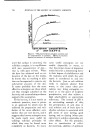
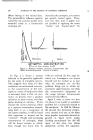
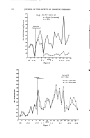
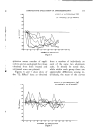
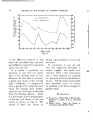
• DEGERMING EFFICIENCY OF HEXACHLOROPHENE SOAPS 285 soap containing the hexachlorophene has been applied for the daily (three times) use of the latter over the two weeks period then repeated on the fifth day (Friday, of the first week) and again on the following Thursday a.m. (before the test soap has been used that day) and then on Friday a.m. At least two hours should elapse between the time a wash test with blank soap is made and that of the previous use of the test soap. 7. At the end of the two weeks' test period, each subject should stop using the test soap and go back to the daily normal routine of using soap containing no germicide, for a period of two weeks. Washing tests as described in paragraphs 3 and 4 above should be run on the respective Fridays of these two weeks. When the bacterial counts show that the subjects have returned to normal, they may be used again for another series of tests. Empha- sis is placed upon the necessity of determining this fact of back to nor- real before the individual in question is utilized again as a test subject. The reasons for this requirement are obvious. 8. Thus, the essential data used as the guide in determining the efficacy of hexachlorophene soap in reducing the resident bacterial flora of the skin comprise: (a) The first, fourth, and fifth basin counts of the normal first-day transient and resident flora. (b) The first, fourth, and fifth basin counts at the start of the fifth day of daily use of the test soap. (c) The first, fourth, and fifth basin counts at the start of the ninth day of daily use of the test soap. (d) The first, fourth, and fifth basin counts at the start of the tenth day (i.e., after ten days' use of the test soap). It should be noted that these ninth and tenth day references are for the respective Thursday and Friday of the second week, assum- ing the test soap was used for five days (Monday through Friday) con- tinuously the first week, then again for five continuous days (Monday- Friday) of the second week. A two-day layover for the week end will not harm the end results, pro- vided care is taken to be sure that no materials are used on the hands or skin during that period which might remove the hexachlorophene. Thus, no germicidal substance other than the test soap should be used over the week end, nor at any other time during the two weeks of the testing. Keep solvents away from the hands also during the two weeks' test period for the same reason. EVALUATING THE DATA Having completed the tests and collected the data as to the number of bacteria removed from the skin of the subject, the next step is to plot that data so as to indicate what effect the continuous daily use of hexachlorophene soap has on the bacterial contents of the skin. This is accomplished by plotting the counts of bacteria removed from the two hands as the ordinate, and the individual basin numbers as abcsissa.
Purchased for the exclusive use of nofirst nolast (unknown)
From: SCC Media Library & Resource Center (library.scconline.org)