STABILITY TESTS ON MAKE-UP ITEMS 307 is likely to do that, laboratory tests are in order to avoid rejects. OILY MAKE-UP This type of make-up has become fairly common in recent years. It is a make-up which is quite hard to direct pressure but readily liquefi- able on rubbing. Such a product must be checked for its tendency to crack and for objectionable sweat- ing. In order to test for cracks, the make-up is subjected to a rapid chilling either on ice or by pouring ice water over the cake. The ex- tent of sweating is tested by sub- jecting the make-up to the influence of extreme changes in temperature between 10-110øF. Under these conditions there should not be enough beading to run off the sur- face when the make-up is standing on edge. It is also a good test to place the make-up in a deepfreeze, allow the shrinkage to occur and then try to knock out the product. If that can be done, it usually means that during the winter months com- plaints will be received that the compacts have come loose from the base. COSMETIC SUSPENSION In this group we have some liquid make-up, leg make-up, and nail lacquer. Sedimentation and change in viscosity are properties to be watched especially in this group. Sedimentation volume is determined by centrifuging or by measuring the height of sediment over a period of three months. Change of viscos- ity is readily determined by Ford or dupont cups, on old and new samples. Naturally the tests which have been described here have been modified by chemists in the cos- metic industry in different ways. Constant alertness on the part of the laboratory will hold trouble and complaints at a minimum. It is poor policy to shrug off complaints, because a few complaints in the introductory period may mean hundreds of them when the product has been on the shelf for varying lengths of time and has reached many consumers with different ways of using the cosmetic. Members who have not received Volume II, No. 3, please advise the Editor at once. The issue was printed in England and mailed from there.

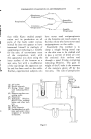
A METHOD FOR COMPARATIVE EVALUATION OF ANTIPERSPIRANTS* By E. L. RICHARDSONS, PH.D., and B. V. MEIGS Colgate-Palmolive-Peet Co., )tersey City, N. )t. THERE ARE almost as many methods of measuring perspiration flow as there have been investigators of the subject. In his "Physiology of Human Perspiration" Kuno (1) mentions a number of such methods, ranging from elaborate Sauter bal- ances on which the human subject was weighed, with their auxiliary apparatus for measurement of oxy- gen-carbon dioxide exchange, down to the deceptively simple method of inserting a fine glass capillary tube into a single pore and observing microscopically the rise and fall of fluid in the capillary stem. Other investigators have enclosed their subjects in air-tight boxes with only the subject's head pro- truding, and determined perspira- tion by humidity measurements on the air circulated through the box. Direct microscopic observation of the pore discharge at the skin surface has been used. Victor Minor (2) painted the skin with an iodine-alcohol-castor oil solution and, after drying and dusting the * Presented at the May 19, 1950, Meeting, New York City. ++ Present address: Whitehall Pharrnacal Co., Elkhart, Ind. painted surface with starch powder, observed the rise of sweat by the appearance of dark spots at the pore openings on the starch-white surface. A relatively simple method of measuring perspiration flow from a limited skin area is described here. No attempt is made to go into the anatomy and physiology of perspiration. The apparatus and procedure described here were de- veloped by the authors several years ago to use in testing effective- ness of antiperspirant materials and compositions. Perhaps a clarification of the word "perspiration" as used here is in order. The relations of the several components often lumped under the term "perspiration" are well shown in a diagram given by Kuno, page 309. The only part being dealt with here is cutaneous moisture as liquid and vapor, or, in other words, sensible perspiration plus that part of the insensible perspi- ration given off through the skin. The apparatus is a modification of that used by Kuno in his exten- sive studies. (It is noteworthy 308
Purchased for the exclusive use of nofirst nolast (unknown)
From: SCC Media Library & Resource Center (library.scconline.org)