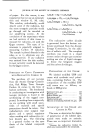
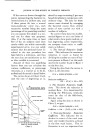
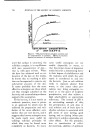
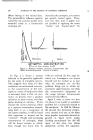
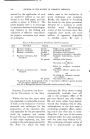
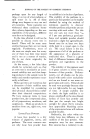
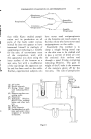
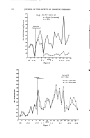
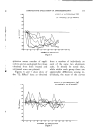
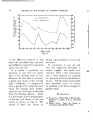
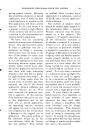
COMPARATIVE EVALUATION OF ANTIPERSPIRANTS 311 minute, was turned on and con- tinued for ten minutes through the arm cups and U-tubes. The weight of moisture collected in this manner varied quite widely from day to day and from person to person, ranging from 10-12 mg./42 sq. cm./10 min., which was probably mostly insensible per- spiration, to 250-300 rag. which could be obtained from a thin man on a hot day. It might be noted here that there is some question as to whether antiperspirants have any effect at all on the passage cf insensible perspiration. However, when the sensible perspiration is flowing freely, the insensible, or vapor part, is probably a small fraction of the total and no correc- tion is necessary. Rather surpris- ingly, the thin subjects, in general, were found to be more copious sweaters than the stouter ones. Before an individual was used in a comparison test, 4 to 10 daily measurements were made on his to the same area of one arm. The other arm was left untreated to be used as a control by which could be judged the effect of the test material. The application of test material was made immediately after each day's measurement so that what was being measured was the cumulative effect of all appli- cations up to and including the previous day's application. Each material was tested on a number of subjects for three to four weeks, thus information was obtained on the effects of prolonged daily use. Another method of comparison would be to use one test material on one arm and another on the other arm. The results would tell which of the two was better in reducing perspiration but would not give a good evaluation of actual reduction. A comparison of groups, each group using a single material, was preferred. The expression used to calculate "Per Cent Effect" is as follows: %Effect= 100X (mg'treatedarm-mg 'untreatedarm) mg. untreated two untreated arms to make sure that the two arms perspired about equally. Consistent agreement be- tween the two arms or axilla was found, as a rule, in five or six people out of every seven tested. Arbitrarily, agreement within 10 per cent was considered as satis- factory. Only one test material at a time was used on each subject. A meas- ured quantity was applied daily, ex- cept Saturdays and Sundays, always A negative result indicates a re- duction and a positive result an increase of perspiration on the treated area. Figure 4 shows a typical plot of the data obtained from a single subject during a test period when an effective aluminum salt (Solution D) was applied. Figure $ shows the results from another subject when an ineffective aluminum salt (Solution B-2) was used. These graphs show milligrams of per-

312 JOURNAL OF THE SOCIETY OF COSMETIC CHEMISTS /o i•. Figure Figure 5
Purchased for the exclusive use of nofirst nolast (unknown)
From: SCC Media Library & Resource Center (library.scconline.org)