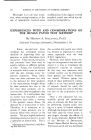
324 JOURNAL OF THE SOCIETY OF COSME'•IC CHEMISTS This paper is to call your atten- tion, when testing cosmetics, to the use of appropriate common-sense modifications of the original covered prophetic patch test which was de- vised for testing fabrics. EXPERIENCES WITH AND CONSIDERATIONS OF THE HUMAN PATCH TEST METHOD* By HERMAN A. SHELANSKI, P•.D. Industrial Toxicology Laboratories, Philadelphia ¾, Pa. SINCE PRE-HISTORIC times mankind has attempted various methods of improving their ap- pearance to make themselves more attractive. Thus tattoos, war paint, and cosmetics have been used in sundry cultures at different periods of time. Today, the manufacture of materials which come in contact with the skin includes many im- portant industries. These indus- tries owe their existence not only to the demand for their products or the improvement brought about by their products but also to the fact that these products are in- nocuous when they are applied to the human skin. It is self-evident that no matter how beautiful a certain preparation may make a woman, if this product causes illness, the demand for it would cease to exist. Therefore, it is necessary to as- certain if these products are in- nocuous before they are put on the market. The most logical method of obtaining conclusive proof is to test a substance on human skin. This is * Presented at the December 5, 1950, Meet- ing, New York City. the so-called skin patch test which has become so important in recent years, especially with the new F.D.A. regulations. However, even before human be- ings can be exposed to.any new sub- stance it is wise to investigate the substance's toxicity on animals. In this way, any substance with marked toxicity can be eliminated from general use before humans are tested. Without going into detail of these preliminary studies, suffice it to say that several species of animals should be used, the material tested not only on the skin but also on the conjunctiva of the eye. Once a new substance has suc- cessfully passed the preliminary tests on animals, the final test may be performed, namely patch test- ing on a series of human subjects. Although the human skin patch test had been used for many years, it was largely through the efforts of Dr. Louis Schwartz, Retired Chief of the Division of Dermatoses, United States Health Service, that the human patch test was developed

324 JOURNAL OF THE SOCIETY OF COSME'•IC CHEMISTS This paper is to call your atten- tion, when testing cosmetics, to the use of appropriate common-sense modifications of the original covered prophetic patch test which was de- vised for testing fabrics. EXPERIENCES WITH AND CONSIDERATIONS OF THE HUMAN PATCH TEST METHOD* By HERMAN A. SHELANSKI, P•.D. Industrial Toxicology Laboratories, Philadelphia ¾, Pa. SINCE PRE-HISTORIC times mankind has attempted various methods of improving their ap- pearance to make themselves more attractive. Thus tattoos, war paint, and cosmetics have been used in sundry cultures at different periods of time. Today, the manufacture of materials which come in contact with the skin includes many im- portant industries. These indus- tries owe their existence not only to the demand for their products or the improvement brought about by their products but also to the fact that these products are in- nocuous when they are applied to the human skin. It is self-evident that no matter how beautiful a certain preparation may make a woman, if this product causes illness, the demand for it would cease to exist. Therefore, it is necessary to as- certain if these products are in- nocuous before they are put on the market. The most logical method of obtaining conclusive proof is to test a substance on human skin. This is * Presented at the December 5, 1950, Meet- ing, New York City. the so-called skin patch test which has become so important in recent years, especially with the new F.D.A. regulations. However, even before human be- ings can be exposed to.any new sub- stance it is wise to investigate the substance's toxicity on animals. In this way, any substance with marked toxicity can be eliminated from general use before humans are tested. Without going into detail of these preliminary studies, suffice it to say that several species of animals should be used, the material tested not only on the skin but also on the conjunctiva of the eye. Once a new substance has suc- cessfully passed the preliminary tests on animals, the final test may be performed, namely patch test- ing on a series of human subjects. Although the human skin patch test had been used for many years, it was largely through the efforts of Dr. Louis Schwartz, Retired Chief of the Division of Dermatoses, United States Health Service, that the human patch test was developed
Purchased for the exclusive use of nofirst nolast (unknown)
From: SCC Media Library & Resource Center (library.scconline.org)