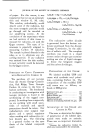
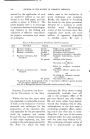
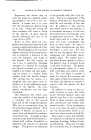
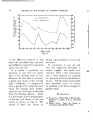
282 JOURNAL OF THE SOCIETY OF COSMETIC CHEMISTS OH OH •CL CL•,• CL CL G- II © (BRAND OF HEXACHLOROPHENE) BIS (3, 5,6- TRICHLORO-2-HYDROXYPHENYL / METHANE Chart I here, with the discussion as to its variables, etc., is based upon the Price (1) technique and the Traub (2) modification, varied so as to better fit our particular needs. Normal skin contains many millions of bacteria. Some of these are on the skin's surface, getting there by direct contact with outside contaminated sources, and are known as "transients" while others, in fact the greatest numbers present in or on the surface of a normal skin, are a part of a natural flora varying as to type and degree with the individual, his daily work (contact source), his resistance, etc. These latter bacteria are known as the "resident" flora. Price showed years ago that the normal washing of the skin with soap removes most all of these transient bacteria in the first wash but that the resi- dent bacteria are more difficult to remove, although this can be accomplished by means of a number of consecutive washings. Even after twenty such washings a considerable number of bacteria continue to be removed per wash. Price also showed that these re- spective numbers were quite con- sistent in count, with each succes- sive removal being a close definite proportion of the previous one. With individuals such as sur- geons, nurses, food-handlers, etc., it is of the utmost importance that they maintain their normal skin flora at the lowest level (count) possible. This desired end can be brought about by means of a proper degerming process, such as hexachlorophene is capable of producing. EXPERIMENTAL Purpose The basic purpose of this test is to determine the skin bacterial flora at various intervals, with special references to the lowering of the resident flora as brought about by the continuous use of hexachlorophene soap over a period of 5 to 10 days or more.

• DEGERMING EFFICIENCY OF HEXACHLOROPHENE SOAPS 283 Procedure 1. Use at least three individuals as subjects per test. Keep clearly in mind the fact that two distinct types of soap are being used in this test. One is the hexachlorophene or medicated soap employed daily for the two weeks' test period to bring about the desired degerming effects. The other is plain soap used where the wash water is collected in the various basins for determining the counts of the bacteria removed. These latter applications of plain soap should not be made until at least two hours has elapsed since the prior use of the medicated soap. 2. Each series of tests should be started on a Monday morning, which is considered as the first day of the washing series. This first washing series is made with plain soap, and only after this has been done does the subject start to use the medicated soap for a period of two weeks, at least three times daily. Bacterial count tests are to be made on four days during the two weeks' period, as described in detail below, washing with blank soap only for this purpose. 3. In the bacterial count or washing test, three basins are used. These are equivalent to the first, fourth, and fifth basins of a "Price series" of hand-washing tests. Enamel or aluminum pans of about 4000 cc. capacity are preferred. Tap water may be used (2000 cc. per basin) provided tests have been made to insure that the water after being placed in the basins (properly cleansed) will contain less than 10 bacteria per cc. before it is used for any washing purposes. Sterile water and sterile basins, of course, would be the ideal but to save time and cost the above is satisfactory for this test, provided counts are made on the water before using and these subtracted from the counts as found after washing, to get the actual counts of the bacteria removed from the hands by the washing process in the basins. 4. The detailed procedure for the washing test follows: (a) Roll sleeves up to elbow. (b) Add 2000 cc. of lukewarm water from the tap into the first basin. Remove 2-1 cc. samples by means of a sterile pipette and plate same in agar for getting the blank bacterial count of the water. (c) Moisten the hands, only up to wristline, then apply blank soap (containing no germicidal material) for fifteen seconds, followed by a thorough lathering and washing for sixty seconds, collecting all of the water in the basin. Rinse off both hands as thoroughly and completely as possible into the basin, allowing fifteen seconds for this process. (d) The hands are then rinsed off lightly in running lukewarm tap water. The latter is discarded as far as collecting for counting purposes is concerned. (e) Two more washings are then carried out successively under the tap, but the water therefrom is not collected or tested in order to save
Purchased for the exclusive use of nofirst nolast (unknown)
From: SCC Media Library & Resource Center (library.scconline.org)