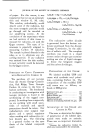
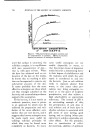
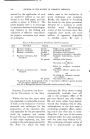
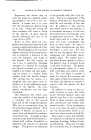
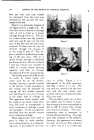
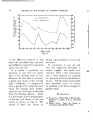
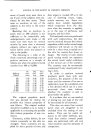
296 JOURNAL OF THE SOCIETY OF COSMETIC CHEMISTS EqUILIBRIUI'I CONCENTRATI 014 oF .ANT I S [ PT I C Figure 1.--Relation between antiseptic sorption and its concentration in solution. Effects on bacteria depend on amounts of antiseptic absorbed. until the surface is saturated, the solid-dye complex is in equilibrium with zero concentration of dye-- that is, with pure solvent. When the dyer has achieved such an ex- haustion of the dye on the textile, he knows that no washing or dilu- tion can be expected to remove any substantial amounts of the dye. It seems probable that the more effective antiseptics are those w. hich are thus strongly adsorbed on the bacteria, and accumulating evidence supports this assumption. If this be true, it is not merely an academic question, since it points to an approach by which may be achieved the preparation and vali- dation of far more effective anti- septics than are now known, and it suggests that known antiseptics may be made much more useful by utilizing colloidal principles by which they may be forced more completely on bacteria. In many cases useful antiseptics are not readily dispersible in water, so that the proper choice of dispersion media becomes a determining factor in their degree of solubilization and the readiness with which the anti- septic is transferred to and into the bacteria. Just as salt addition tends to separate phenol from water, so also many other pro- cedures may bring antiseptics to- ward or to the point of incipient precipitation, and thus achieve a high adsorbability on appropriate substrates. The control of pH is an outstanding example of this the precipitation of acid dyes in acid solution and of basic dyes in alkaline solutions is associated with pH zones of poor dyeing, good dyeing, and no dyeing (where pre- cipitation in solution supersedes any other effect). For the precipita- tion or sensitization of colloi- dal materials, addition of optimum

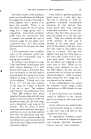
MECHANISMS AND EVALUATION OF ANTISEPTIC ACTIONS 297 amounts of appropriate anions or cations is often the key to enhanced activities or precipitations. The suitability of each procedure is con- ditioned by the actual application, but various attacks are available if the general colloidal principles be applied. Assuming the availability of effective antiseptics and the appro- priate systems from which they will be adsorbed on bacteria, the next step is to discover just how well these chemicals do their job. It is not at all clear that the regularly followed bacteriological procedures give any adequate answer to this fundamental problem. If good antiseptics are strongly and essen- tially irreversibly adsorbed on bacteria, it follows that no amount of washing or dilution will remove the antiseptic, and that inhibitory effects will persist through the usual tests to give false negative results. Only if such an antiseptic be specifically attacked by an appro- priate chemical will its effect be neutralized and the organism be capable of growing. In 1948 we published (2) a paper concerning surgical catgut inoculated with four different organisms and tubed (without the usual heat sterili- zation) in 76 per cent isopropanol, 20 per cent ethanol, and 0.025 per cent phenylmercuric benzoate. When tested without neutralization, eleven out of 24 tubes showed no growth in the oflScial fifteen days, no tube showing growth in less than eleven days. When tested by the then oflScial U.S.P. thiosulfate- carbonate neutralization, there was considerable delay in growth, and three of the tubes showed no growth in 15 days. Strands neutralized in a thioglycolate-carbonate bath or transferred directly to a medium containing sodium thioglycolate all showed growth promptly. In earlier days catgut was treated with iodine, hypochlorite, and other oxi- dizing agents for which thiosulfate was appropriate the thioglycolate media had previously demonstrated their effectiveness against mercu- rials, so that such solutions were adopted for U.S.P. XIII. Thio- glycolate media are appropriate so long as most sutures are tubed with mercurials, but would not necessarily be effective against some other antiseptics, and it is highly desirable that reliable neutralization techniques and criteria be evolved and validated. The work just de- scribed led us to a more extensive scrutiny of the mechanism by which antiseptics produce their effects. It is not necessary to go into much detail on this but a listing of the more obvious reactions is justifiable: TABLE 1--MECHANISMS OF ANTISEPTIC ACTION 1. Protoplasm coagulation--by heat and some chemicals 2. Poisoning of enzyme systems in bac- teria-probably most general 3. Modification of cell membrane perme- ability-especially by surfactants Although mercury compounds can coagulate protoplasm, the fact that they show their effects at such extreme dilutions suggests that such
Purchased for the exclusive use of nofirst nolast (unknown)
From: SCC Media Library & Resource Center (library.scconline.org)