STABILITY TESTING OF LOW-PRESSURE AERO- SOLS* By Eu•v. Nv. L. Rosy. G. Barr & Company, Chicago, IlL THE LOW-PRESSURE aerosol tion. New propellants have been dispenser represents a relatively developed and have been made corn- new and highly functional type of mercially available. packaging. After the introduction The cosmetic industry was slow of the low-pressure insecticide aero- to start since the available corn- sol in 1947, the industry developed mercial containers did not conform very rapidly when the commercial to the design and packaging famil- market for this type of product iar to the cosmetic trade. Equally becameapparent. Manyotherprod- significant is the fact that most ucts were rapidly adapted, more or cosmetic formulations that have less successfully, to this type of aerosol market possibilities contain packaging. I say more or less materials that are chemically or successfully, not so much because of physically incompatible with the lack of market or interest, but necessary propellants. The im- because of haste in getting these portant progress made by the mate- products to the market without rial suppliers has created active in- proper pretesting in the available terest in the possibility of market- containers. ing cosmetic preparations. Co- It is interesting to note that lognes, suntan oils, personal deodor- during this relatively short space ants, shaving creams, shampoos, of time the containe? and valve and other hair preparations have manufacturers have greatly im- been successfuly marketed. How- proved their commercial runs of ever, considerable research and test- component parts to help make ing is necessary before a satis- the final products of the industry factory high-quality product can successful. Equally important is be marketed. the work done by the propellent It is the purpose of this .paper manufacturers who have cG-oper- to stress the importance of proper ated by releasing basic corrosion formulation and stability testing data and other technical informa- of aerosols to avoid failure and the resultant consequences. Mistakes in at the May18,1951, Meeting, the aerosol industry do not o,nl• New York City.
*Presented 315

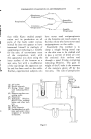
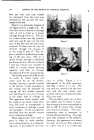
316 JOURNAL OF THE SOCIETY OF COSMETIC CHEMISTS constitute a great monetary loss, but will also adversely affect public acceptance of this new type of packaging which the author sin- cerely feels has great market po- tentialities and consumer ad- vantages. Low-pressure aeros½l consists of a mixture of an active ingredient and a propellant in a sealed con- tainer. This container has a spe- cially designed valve to dispense the product. Part of the propellant remains in solutien as a liquid and part changes to a gas and fills the space above the liquid portion. The pressure exerted by this gaseous phase forces the solution out of the dip tube at the bottom of the can, up through the discharge valve. At the opening of the valve the propellant instantly changes into a gas thereby dispersing the con- centrate into small particles. When the proportion of propellant is high, we produce a very fine, rela- tively dry, spray as characterized by the space aerosols. We can produce a wet spray by using less propellant as characterized by the paints and plastic coatings. The foam type products are partial emulsions of the propellant and active ingredient. When the valve is opened, the liquid propellant in the emulsion changes to a gas to give the foam effect. The more propellant used, the drier the foam. In considering stability testing of aerosols it is well to know some- thing about the production problems in filling these products. It is even more important to take into consideration the production prob- lems involved in aerosol products as related to original formulations than with the usual cosmetic. In the spray type of aerosol, the filling operation takes place in two steps--one in which the concen- trate or active ingredient is meas- ured accurately into the container, and second in which the propellant is added to complete the contents. The amount of material used as the concentrate may vary from 1 to 65 per cent of the formulation. Since the propellants are liquids boiling far below room temperature, it is important that this concen- trate be pre-cooled to temperatures that will permit accurate addition of the propellants with a minimum loss. In order to accomplish this, extensive refrigeration equipment is required. Basically it consists of pumping the concentrate through a cooler into a refrigerated filling tank. A constant head of material is maintained in the filling tank by a series of automatic valves. The filling nozzle on the tank is acti- vated by a microswitch set off by the container as it passes the filling nozzle. The microswitch in turn controls an electronic interval timer which holds the nozzle valve open for sufficient time to allow the required amount of concentrate to flow into the can. With proper maintenance, an accuracy of plus or minus 2 per cent can be maintained. At this point in the operation it is necessary to make constant check weights to insure the accuracy of the concentrate fill. After passing
Purchased for the exclusive use of nofirst nolast (unknown)
From: SCC Media Library & Resource Center (library.scconline.org)