STABILITY TESTING OF LOW-PRESSURE AEROSOLS 317 the filling head the container with the cool concentrate passes under the propellant filling head, which operates in the same manner, ex- cept that two or more filling nozzles are uses to introduce the pre-cooled propellant. Again check weights are maintained to insure the accu- racy of the completed contents. Due to the very low temperatures encountered at the nozzles, moisture condensation presents a real prob- lem. It is important that moisture be eliminated from these cans since the propellants hydrolyze and form corrosive acids. It is therefore necessary to make ample provision for the removal of this accumu- lation or prevent its formation by the use of heated dry air or air- conditioned rooms surrounding the filling heads. At this point the can and contents are at a temperature usually below 0øF., and there is little evidence of boiling or gas loss. The containers then pass through to the capper and are seamed. After seaming, the cans are passed through a series of hot water baths. The temperature of these baths is adjusted so that the contents of the can is heated to a temperature of 130 ø F. In these baths, leakers, lights, overfilled cans, or defective cans can be observed and removed. The cans are. then dried, passed through an automatic labeler and cartoned. The above operations are basic for the standard type of spray aerosol. The water base or foam products such as shampoo and shaving cream are handled quite differently since the amount of propellant used is small in comparison to the spray type dispenser. In this case the product is introduced in liquid form at room temperature or above. The valve is attached, crimped into position, and the propellant intro- duced through the valve as a liquid using a special type pressure piston filler. Check weighings after both filling procedures are again main- tained to assure ,the accuracy of the fill and the cans are sent through the water bath for testing. The first step in producing a successful aerosol is to carefully check the physical compatibility of the concentrate with the pro- pellant. This is particularly im- portant with the spray type prod- ucts since a homogenous mixture is absolutely necessary for the proper functioning of the package. With the foam type products it is not absolutely necessary but a more desirable product is obtained if we have complete compatibility. A preliminary compatibility test is made at room temperature using Freon 11. This material boils at approximately 24øC. and can therefore be handled conveniently as a liquid at room temperatures. The concentrate is placed in a glass-stoppered graduated cylinder. Freon 11 is then'added in small increments, the stopper replaced, and the mixture shaken. In this way we can determine the complete solubility range of the material under investigation in the pro- pellant. In many instances we may have separation in two or more

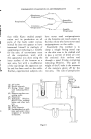
318 JOURNAL OF THE SOCIETY OF COSMETIC CHEMISTS layers, or perhaps solid separation. If we have an incompatible mixture, we can then add a mutual solvent and determine the relationship be- tween concentrate, mutual solvent and propellant which will give the desired result. This test will indi- cate the direction necessary for reformulation. If no immediate re- action is obtained, the material can be transfeted to a screw cap clear glass bottle for observation over longer periods of time. We now determine the type of productwewish to have and from the preliminary examination can pick the correct proportion of propellant and concentrate. Since the solu- bility characteristics of Freon 11 are not exactly the same as the other propellants used, it is neces- sary to prepare a compatibility tube using the exact propellant which has the desired pressure and stability characteristics and proceed then to a pressure tube compati- bility test. For this test, we use a special piece of apparatus, which consists of a valve fitted to a brass shell containing a high-pressure pyrex tube. The concentrate is introduced into the open tube at room temperature and the assembly is completed in the holder. The tube and contents are then cooled to below 0øF. A small laboratory cylinder of the propellant is con- nected directly to the tube. We now have a closed system and when we open the valve the pro- pellant will flow into the tube due to the difference in pressure. After the propellant is added a check weight is made and the excess propellant bled off before mixing. After an operator has gained ex- perience in this type of work almost exact weights can be delivered into the tube. These tubes are then held for at least three days before a satisfactory observation can be made. A small spray head can be attached to the tube so that the spray pattern for that particular product can be determined. The necessary pressure determinations can also be made by placing the tube in a constant temperature water bath and attaching a pressure guage. These pressure tests are made at room temperature and 130øF. Inflammability tests and toxic- ity tests are then made whenever indicated for the particular product. Tests are now made to determine the physical characteristics of the concentrate at below freezing tem- peratures. This is necessary for all aerosols with the exception of foam products. The concentrate is placed in a 25-mm. pyrex test tube fitted with a low-temperature thermometer, range minus 30øF. to plus 50øF. The tube and thermom- eter are placed in the deep freeze. Observations are made at 15-minute intervals. The temperature and condition of the liquid are noted. Particular note is made of the flow characteristics, evidence of precipi- tation, or liquid separation. If the liquid is sufficiently fluid with no evidence of precipitation at minus 10øF.,we can then recommend the heat exchanger for the filling operation. Any other result must
Purchased for the exclusive use of nofirst nolast (unknown)
From: SCC Media Library & Resource Center (library.scconline.org)