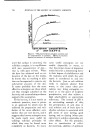
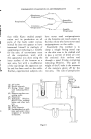
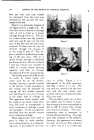
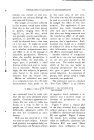
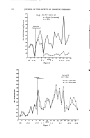
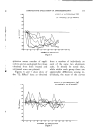
MECHANISMS AND EVALUATION OF ANTISEPTIC ACTIONS 295 From this information, it was clear that the compound was a poly- oxyethylene derivative of a phenol, and that no ester-type linkages were present. In the same sample, a positive test for quaternary bases was obtained. Extraction of this material was done in the usual way, and the ultraviolet spectrum obtained. Data in our files showed that the same spectrum was given by a quaternary de- rivative of isoquinoline. SUMMA RY Analytical absorption spectro- photometry is probably the most rapidly developing field in analyti- cal chemistry. Even though the literature contains hundreds of ref- erences to methods developed, it can be said that the development of applied s•pectrophotometry has only begun. The spectrophotom- eters appear certain to become almost as important in analytical chemistry as the analytical balance itself. REFERENCES (1) Jones, J. H., Clark, G. R., and Harrow, L. S., y. •lssoc. Off. •lgr. Chem., 34, 135 (1951). (2) Newburger, S. H., Ibid., 34, 109 (1951). (3) "Analytical Absorption Spectrophotom- etry," edited by M. G. Mellon, New York, John Wiley & Son, Inc. (1950). (4) Williams, Van Zandt, Rev. Sci. Instru- ments, 19, 135 (1948). (5) Matron, T. U., and Chambers, T. S., •lnal. Chem., 23, 571 (1951). A STUDY OF THE MECHANISMS AND EVALUATION OF ANTISEPTIC ACTIONS* By H•P,B•P,T L. DAviS, P•.D. Ethicon Suture Laboratories, Inc., New Brunswick, N.y. IN VIEW OF the increasing numbers of chemicals offered as antiseptics and of the positive, even extravagant, claims made for their efficacy, it seems appropriate to review the adequacy of the criteria applied to antiseptics, and to seek to discover just how and how well these chemicals exert their effects on micro-organisms. A study of the procedures in which antiseptics are employed in- dicates that colloidal adsorption * Presented at the May 18, 1951, Meeting, New York City. of the antiseptic on (and probably in) the bacteria is the prime pre- requisite (1). What happens after that is a function of the chemical and colloidal properties of the organism, its structures, and of the chemical applied. Figure 1 will remind you that in any given set of adsorbents and adsorbates one .may pass from poorly adsorbed to well adsorbed, and may generally find systems in which strong adsorption is demonstrable. It is emphasized in this last case that the solid has adsorbed all of the dye, and that,

MECHANISMS AND EVALUATION OF ANTISEPTIC ACTIONS 295 From this information, it was clear that the compound was a poly- oxyethylene derivative of a phenol, and that no ester-type linkages were present. In the same sample, a positive test for quaternary bases was obtained. Extraction of this material was done in the usual way, and the ultraviolet spectrum obtained. Data in our files showed that the same spectrum was given by a quaternary de- rivative of isoquinoline. SUMMA RY Analytical absorption spectro- photometry is probably the most rapidly developing field in analyti- cal chemistry. Even though the literature contains hundreds of ref- erences to methods developed, it can be said that the development of applied s•pectrophotometry has only begun. The spectrophotom- eters appear certain to become almost as important in analytical chemistry as the analytical balance itself. REFERENCES (1) Jones, J. H., Clark, G. R., and Harrow, L. S., y. •lssoc. Off. •lgr. Chem., 34, 135 (1951). (2) Newburger, S. H., Ibid., 34, 109 (1951). (3) "Analytical Absorption Spectrophotom- etry," edited by M. G. Mellon, New York, John Wiley & Son, Inc. (1950). (4) Williams, Van Zandt, Rev. Sci. Instru- ments, 19, 135 (1948). (5) Matron, T. U., and Chambers, T. S., •lnal. Chem., 23, 571 (1951). A STUDY OF THE MECHANISMS AND EVALUATION OF ANTISEPTIC ACTIONS* By H•P,B•P,T L. DAviS, P•.D. Ethicon Suture Laboratories, Inc., New Brunswick, N.y. IN VIEW OF the increasing numbers of chemicals offered as antiseptics and of the positive, even extravagant, claims made for their efficacy, it seems appropriate to review the adequacy of the criteria applied to antiseptics, and to seek to discover just how and how well these chemicals exert their effects on micro-organisms. A study of the procedures in which antiseptics are employed in- dicates that colloidal adsorption * Presented at the May 18, 1951, Meeting, New York City. of the antiseptic on (and probably in) the bacteria is the prime pre- requisite (1). What happens after that is a function of the chemical and colloidal properties of the organism, its structures, and of the chemical applied. Figure 1 will remind you that in any given set of adsorbents and adsorbates one .may pass from poorly adsorbed to well adsorbed, and may generally find systems in which strong adsorption is demonstrable. It is emphasized in this last case that the solid has adsorbed all of the dye, and that,
Purchased for the exclusive use of nofirst nolast (unknown)
From: SCC Media Library & Resource Center (library.scconline.org)