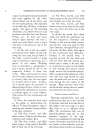
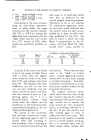
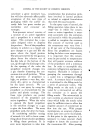
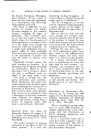
300 JOURNAL OF THE SOCIETY OF COSMETIC CHEMISTS strated by the application of such an analytical scheme as was pre- sented in our 1948 paper, and this outline is shown in Table 3. The prime purpose here is to encourage co-operation between bacteriologists and chemists in the finding and validation of effective neutralizers for popular antiseptics and classes of antiseptics. widely used in the evaluation of scrub techniques and materials. Briefly, this depends on scrubbing the hands by any given procedure, followed by a washing in sterile distilled water. Bacteriological counts of this last basin show that surgically clean hands still carry millions of organisms dispersible in distilled water. By such a TABLE 3--EVALUATION OF ANTISEPTICS AND NEUTRALIZERS Step Procedure Results Interpretation 1 Bacteria--medium 2 Bacteria--antiseptic 3 Bacteria--neutralizer 4 Bacteria--antiseptic, then neutralizer 5 Bacteria--neutralizer, then antiseptic Growth Viable culture, suitable medium No growth Inhibition OR death?? Growth Neutralizer is not antiseptic No growth Neutralizer is antiseptic--unsuitable Growth Antiseptic bacteriostatic, neutral- ized No growth .4ntiseptic killed bacteria or Neutralizer is not effective or Killed by antiseptic--neutralizer complex Growth Neutralizer effective against anti- septic and No killing by antiseptic--neutral- izer complex No growth Neutralizer is not effective No growth in No. 4 and growth in No. 5--neutralizer is effective against dissolved but not against adsorbed antiseptic Step No. 4 distinguishes between bactericidal and bacteriostatic effects SURGICAL CLEANSING AND ANTI- SEPTIC TREATMENT OF THE SKIN Within the last five years there has appeared a considerable amount of work on the evaluation of several materials and techniques for the preparation of the operative site, and especially for the pre-operative scrub by surgeons and nurses. In part this has utilized techniques of skin snips implanted, etc., but notable is the technique proposed by Dr. Price (7), which has been technique Dr. Price shows nothing commercially available that will add to the antiseptic effect of 70 per cent ethanol save only iodine. He and many others have demon- strated that residues of G-11 (hex- achlorophene) on the skin exert a continuing antiseptic effect, reduc- ing counts day after day to some- thing like 5 per cent of the counts obtained under the same conditions with the same soap without G-11. This continuing antiseptic action of G-11 is demonstrable on daily

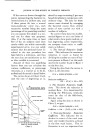
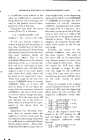
MECHANISMS AND EVALUATION OF ANTISEPTIC ACTIONS 301 counts as long as the G-11 soap such as soap. This is probably continues to be used, but is also the reason why anionic detergents quite conspicuous on counts ob- have been generally of low anti- rained before and after prolonged septic value, and why cationic operations. Inside rubber gloves, antiseptics give the appearance of hands scrubbed with ordinary soaps sterilization at extreme dilutions-- show increased counts, while hands if neutralizing tea. gents are omitted. carrying the G-11 residue show It must be conceded that the wide- values even lower than the small spread use of cationic materials for counts obtained before the interval. sanitizing instruments and surfaces Although these techniques and data as well as for surgical purposes are of outstanding interest in has built up a high degree of surgery, the news is rapidly spread- empirical confidence in their value. ing, and increased use of such The facts remain that as a class combinations by the general popu- they are known to have bacteri- lation is coming. ostatic effects at high dilutions, It may not be superfluous to that these effects are antagonized review briefly the mechanism of by anionic substances, and that detergency and of the antiseptic few, if any, demonstrations have actions here involved. An im- been made of verified killing of portant contribution to this has micro-organisms by them under been made recently by Dr. Blank any conditions. (6), who points out that the skin, Of considerable interest is the soil particles, and bacteria are recent finding that bacteria such likely to be negatively charged. as E. coli may be rendered in- It follows that anionic detergents capable of growth by light around will increase these charges, cause 2600 •., but may then be reacti- a peptization of the soil and bac- rated by exposure to light around teria from the skin and stabilize 3800 •. There is some evidence the peptized particles on colloidal for a correlation of these effects micelies. This is the surface-active with effects on enzymes (8). displacement action of detergents A brief review of some of the generally, involving displacement literature on the removal, inhibi- plus stabilization in solution for tion, and killing of bacteria is of rinsing off. It follows that the interest. Although most students positively charged ions and micelies protest that the phenol coefficient of cationic materials (as pointed is lacking in practical significance, out by Dr. Blank) may tend to it still survives as the most common mordant negative bacteria to nega- standard for the evaluation of tire skin. This will give low bac- antiseptics. Flett (9) has reported teria counts by normal criteria, that organisms presumably killed but the effect is readily reversed by by phenol can be revived by adding small additions of anionic materials sterile charcoal or ferric chloride.
Purchased for the exclusive use of nofirst nolast (unknown)
From: SCC Media Library & Resource Center (library.scconline.org)