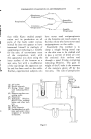
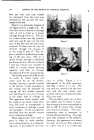
318 JOURNAL OF THE SOCIETY OF COSMETIC CHEMISTS layers, or perhaps solid separation. If we have an incompatible mixture, we can then add a mutual solvent and determine the relationship be- tween concentrate, mutual solvent and propellant which will give the desired result. This test will indi- cate the direction necessary for reformulation. If no immediate re- action is obtained, the material can be transfeted to a screw cap clear glass bottle for observation over longer periods of time. We now determine the type of productwewish to have and from the preliminary examination can pick the correct proportion of propellant and concentrate. Since the solu- bility characteristics of Freon 11 are not exactly the same as the other propellants used, it is neces- sary to prepare a compatibility tube using the exact propellant which has the desired pressure and stability characteristics and proceed then to a pressure tube compati- bility test. For this test, we use a special piece of apparatus, which consists of a valve fitted to a brass shell containing a high-pressure pyrex tube. The concentrate is introduced into the open tube at room temperature and the assembly is completed in the holder. The tube and contents are then cooled to below 0øF. A small laboratory cylinder of the propellant is con- nected directly to the tube. We now have a closed system and when we open the valve the pro- pellant will flow into the tube due to the difference in pressure. After the propellant is added a check weight is made and the excess propellant bled off before mixing. After an operator has gained ex- perience in this type of work almost exact weights can be delivered into the tube. These tubes are then held for at least three days before a satisfactory observation can be made. A small spray head can be attached to the tube so that the spray pattern for that particular product can be determined. The necessary pressure determinations can also be made by placing the tube in a constant temperature water bath and attaching a pressure guage. These pressure tests are made at room temperature and 130øF. Inflammability tests and toxic- ity tests are then made whenever indicated for the particular product. Tests are now made to determine the physical characteristics of the concentrate at below freezing tem- peratures. This is necessary for all aerosols with the exception of foam products. The concentrate is placed in a 25-mm. pyrex test tube fitted with a low-temperature thermometer, range minus 30øF. to plus 50øF. The tube and thermom- eter are placed in the deep freeze. Observations are made at 15-minute intervals. The temperature and condition of the liquid are noted. Particular note is made of the flow characteristics, evidence of precipi- tation, or liquid separation. If the liquid is sufficiently fluid with no evidence of precipitation at minus 10øF.,we can then recommend the heat exchanger for the filling operation. Any other result must

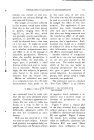
STABILITY TESTING OF LOW-PRESSURE AEROSOLS 319 be evaluated in terms of the feasi- bility of filling, using special equip- ment. In many instances it is possible to reformulate to obtain a concentrate which will meet both the compatibility and the low- temperature stability requirements. Although compatibility is of prime importance in formulation it is imperative that actual con- ditions in the can be simulated for corrosion studies. In order to accomplish this a pressure flask is set up containing the contents and all parts of the can or container that come in contact with the formula. These tests are made both in the liquid and the vapor phase. The flasks are incubated at 130øF and observations made on the conditions of the can parts and liquid components over a period of at least three months if negative results are not indicated sooner. Similar tests are run at room tem- perature. Proper precaution must be taken in performing these ex- periments since cans and glassware may be shattered due to improper compounding or apparatus failure. Safety goggles or protective shields provide suitable protection and do not hamper the efforts of the tech- nician. Let us assume now that our prod- uct is satisfactory in so far as compatibility and freezing tests are concerned. The aging tests are under way. To complete stability testing of this product we must make up the complete formulation in the container. According to I.C.C. regulations, cans shall not be liquid full at 130øF. Knowing the water overflow capacity of our container and the specific gravity of the concentrate and propellant at room temperature and at 130øF, we can then determine the practical safe net contents. In determining this figure it is advisable to add 4 per cent to the safety margin set up by the I.C.C. since we may encounter a 4 per cent accumulative air during our filling operation. The greatest danger in overfilling is encountered when the container is liquid full at 130øF. When this condition arises the normal vapor pressure of the system no longer exists and we have to contend with the hydrostatic pressure produced by the expansion of the liquid. Two sets of cans are prepared based on the compatibility test and the content calculations. One set is incubated at 130øF along with the pressure flasks and the other set is retained at room temperature. Both sets of cans are subjected to an intermittent-use test so as to determine the effect of contact of the material with the working parts of the valve. The cans are prepared in the' laboratory by weighing the con- centrate into the can and placing it in the deepfreeze or similar cooling device. Special apparatus is re- quired to handle the propellant. This consists of a copper coil emersed in a bath of acetone and dry ice. One end of the coil is tapped and threaded so that it may be attached to the inverted cylinder. The other end of the
Purchased for the exclusive use of nofirst nolast (unknown)
From: SCC Media Library & Resource Center (library.scconline.org)