THE SKIN TESTING OF NEW COSMETICS 321 tant part. Rigid specifications should be set up and quality control maintained on container and valve material. Stability testing of aerosols al- though perhaps a little more compli- cated and painstaking than the stability testing of other cosmetic preparations is still a matter of being practical. From the above discussion you might probably say to yourself, "It takes a long time, we cannot wait." My sincere answer to that attitude is that an aerosol product cannot be placed on the market under any other conditions. There is no compromise for running the stability and control tests on low- pressure aerosols. THE SKIN TESTING OF NEW COSMETICS* By Louts SCIW^P. TZ, M.D. trashington 6, D.C. THE CLOSED patch test was devised many years ago by Jadas- sohn as a means of finding the irri- tant in cases of contact dermatitis. It is a diagnostic procedure. The skin testing of new cosmetics is comparatively recent and is still in the stage of development. The prophetic patch test was devised about 14 years ago while I was in the U.S. Public Health Service to test the possible irritant properties of the then new synthetic fiber now known as nylon. It came about as follows: before nylon was placed on the market, the manufacturers asked the U.S. Public Health Service to devise a test which may show whether gar- ments made of the new synthetic fabric would be safe to wear. The result of this request was the pro- phetic patch test. * Presented at the May 18, 1951, Meeting, New York City. The original prophetic patch test consisted in placing a half-inch square piece ofunprocessed nylon on the skin of 200 subjects, covering it with a piece of cellophane 1 inch square and sealing this on the skin with a piece of adhesive plaster 3 inches square. A piece of un- bleached unprocessed cotton fabric of similar size was fastened on the skin of the opposite side of the body to act as a control. The patches remained on for forty-eight hours, then removed and the reactions read and recorded. The sites of the patches were ex- amined for 3 consecutive days for late reactions. Ten days after the last reading the patch testing was repeated on the same 200 subjects and on approximately the same skin areas. The patches were removed after forty-eight hours and the sites examined for signs of reactions for three consecutive days. The second

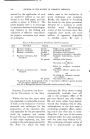
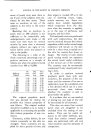
322 JOURNAL OF THE SOCIETY OF COSMETIC CHEMISTS series of patch tests were done to see if any of the subjects were sen- sitized by the first series. There were no reactions on any of the subjects to the nylon or the cotton control. Realizing that no reactions to patch tests on 200 subjects is not sufficient to be statistically safe, undergarments were made of the nylon and were worn for several months by more than a thousand subjects without any signs of irri- tation before nylon was placed on sale to the public. The following is a table of the likely maximum percentage rate of positive reactions in a sample of infinite size when the subjects tested number from 100 to 10,000. No One Two Subjects reac- reac- reac- Tested tions tion tions 100 3.00 4.40 5.80 200 1.50 2.20 2.90 300 0.99 1.50 2.00 500 0.60 0.90 1.20 1,000 0.30 0.45 0.60 2,000 0.15 0.23 0.30 5,000 0.06 0.09 0.12 10,000 0.03 0.05 0.06 The original prophetic patch test was devised for testir, g the possible skin irritant properties of new fabrics. The original method should be modified so as to make it applicable to evaluating the possible skin irritant properties of new cos- metics. Cosmetics, unlike fabrics, do not remain constantly on the skin un- changed. Some cosmetics are ap- plied for short periods of time and then wiped or washed off as in the case of cleansing cream, soaps, cuticle remover, etc. Some cos- metics have volatile ingredients which evaporate frem the skin soon after the cosmetic is applied, as in the case of perfumes, nail lacquers, and hair dyes. If closed patch tests are performed with such preparations, the skin may be irritated because the irritant ingredient, which under normalusage conditions will remain on the skin only for a short time, is sealed on to the skin for twenty-four hours or longer. The results of such closed patch testing would not represent the actual result under conditions of the normal use of the cosmetic. The cosmetic may be erroneously condemned if only closed patch test- ing is done. In order to perform rationaI prophetic patch tests with new cosmetics, the purpose of the cos- metic and the manner of its use or application must be considered, and a test devised which can in a com- paratively short time indicate whether the cosmetic is safe to place before the public. It is evident that no one method of testing nor one type of test will be best suited for all cosmetics. This does not mean that covered patch tests are altogether to be excluded from the testing of cos- metics. They can be useful ad- juncts to the other methods, pro- vided that similar covered patch tests are performed with old and tried cosmetics used for purposes of comparison.
Purchased for the exclusive use of nofirst nolast (unknown)
From: SCC Media Library & Resource Center (library.scconline.org)