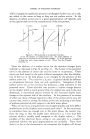
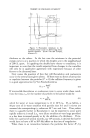
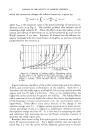
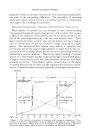
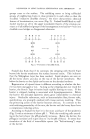
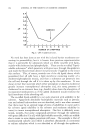
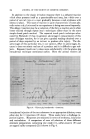
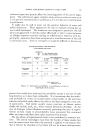
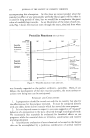
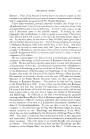
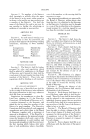
TOWARD EMULSION CONTROL 187 properties of films at oil-water interfaces are very limited and clearly points out some of the outstanding difficulties. The desirability of obtaining information about surface viscosity and surface potential is emphasized. This ought to be a challenge to somebody! EMULSION COMPOSITION: VISCOSITY AND ELECTRICAL CONDUCTIVITY When spheres of uniform size are arranged in their closest packing (close-packed hexagonal) seventy-four per cent of the volume they occupy is filled by the substance of the spheres, and the remaining twenty-six per cent of the volume represents the voids that exist between them. These figures remain the same no matter what size the spheres may be, as long as they are all the same size and the container is large compared to a single sphere. This geometrical fact induced some authors to speculate that seventy-four per cent by volume might represent an upper limit for the con- centration of the emulsified phase, and an increase in percentage would be followed by a reversal of phases. However by special packing of unequal spheres it is theoretically possible to get percentages of emulsified phase, as high as ninety-five per cent, and some emulsions of this sort have been produced in practice. Nevertheless, volume concentrations in the region of seventy-four per cent do often actually represent the maximum concen- tration of emulsion before inversion, especially of homogenized emulsions. PROPERTIES ,•__ o///• •.•L W/O EMULSION or POLYHEORAL-- FOAM I •TYPE OROPLETS I % EMULSION -.• W///0 : I • IPO LYHEORAL- FOA• / • m rrYpE OROPLET:•/• • I ø P.ASE I..ASE or u. "--- .• or POLYHEORAL--FOAM • '• • • •v POLYH EORAL-- FOAM W '-• •'• "• 0 TYPE •//0 I n ' • •' - .-•' - '/W ...... o io •o •o 40 •o so 7o .o 90 ,oo •/o---w ,oo so eo 7o •o •o •o so ao ,o o Figure 1.--The variation of properties of emulsions with changes in composition. If in- version occurs there is a discontinuity in the description of the property, as it changes from one curve to the other. Below 74 per cent the emulsion has spherical droplets, and above 74 per cent there is either a phase inversion or the droplets are deformed to polyhedra.

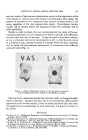
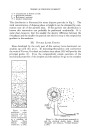
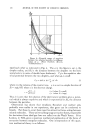
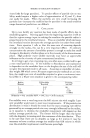
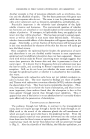
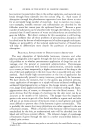
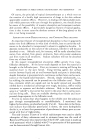
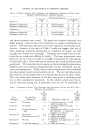
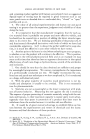
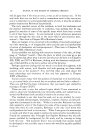
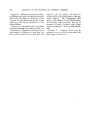
188 JOURNAL OF THE SOCIETY OF COSMETIC CHEMISTS Another property that can be related to the close-packing of uniform spheres is the viscosity of an emulsion. At concentrations below seventy- four per cent the spheres are not in contact and the flow of the emulsion is not impeded by undue interference of the droplets with each other. As more concentrated emulsions are prepared, interference does appear and the resistance to flow becomes more marked. Finally the droplets may be packed so close to one another that flow is seriously impeded this is made manifest by a high viscosity, requiring a large shearing stress to overcome the structure built up by many spheres in contact. Manegold has published (7) a useful diagram, Fig. 1, that represents the dependence of some properties of emulsions on volume concen- tration. This is intended to represent a general summary, and it would be erroneous to rely on it for quantitative predictions of emulsion properties. It depicts a volume concentration (seventy-four per cent in Fig. 1) above which the property of the emulsion either becomes discontinuous (inversion) or continues to increase, with the production of deformed droplets in con- tact. The deformation of the drops from their original spherical shape is produced by packing them closer than seventy-four per cent. This type of emulsion is called "polyhedral-foam type" by Manegold, using an anal- I-- )- 180 o $60 ø :300 ø 0 [•3240 o Z -- r.)r,.) 60 ø '•...//V 0•0 20 40 60 80 I00 PERCENT. BENZENE Figure 2.--The viscosity of two types of emulsion as a function of composition. ogy with the structure of drained foam, and, like such a foam, has a huge structural viscosity. Ostwald called such emulsions "liquid-liquid foams." Emulsions of lower concentrations are called "spherical-foam type" by an analogy with a wet foam (for example, a milk shake before the milk drains down to the bottom of the glass is very fluid by comparison with the drained foam that is left on top after a short time). Measurements of the viscosity of emulsions illustrate this reasoning.
Purchased for the exclusive use of nofirst nolast (unknown)
From: SCC Media Library & Resource Center (library.scconline.org)