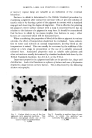
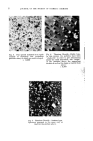
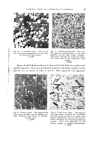
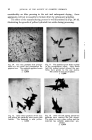
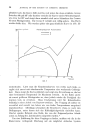
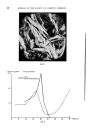
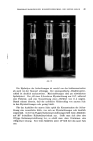
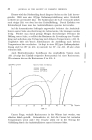
PIGMENTS, LAKES AND DYESTUFFS IN COSMETICS Recent developments in pigment manufacture include the coating of the particles either with an oleophilic material to allow easy dispersion in oil or with a hydrophilic material to allow easy dispersion in water. These developments show promise in many applications and once proved to be dermatologically innocuous, they should be of much value in cosmetics. By examining the foregoing illustrations it will be appreciated that pigment particles can vary considerably in size and shape. The various dry powders with which colours are often mixed in cosmetics have, by contrast, even and small particles. It should therefore not be overlooked that it is best to obtain pigments and lakes of fine particle size and not to waste time and energy in trying to reduce the size of coarse colour particles added to an already fine mixture. The identification of pigments, lakes and dyestuffs is fairly simple in some cases, provided that they are not mixed. For example, addition of concen- trated sulphuric acid to a madder lake decomposes, and subsequent dilution regenerates the original alizarin and with care the actual brand of alizin may be identified. More often, it is only by a series of elimination tests and final comparisons with standards that the colour can be identified and this somewhat involved procedure needs a paper to itself. Mention must be made of the technique of paper chromatography which will often demonstrate not only the basic colour present but will give an accurate indication of the impurities in the parent colour. COLOURS FOR SOAP AND ]3ATH CRYSTALS Both preparations are characterised by conditions of permanent alkalinity and any colour employed must have excellent resistance to this state. With soap, there is also the possibility of bleed of colour in the mass with consequent change of shade and the development of discoloured patches on storage. There are, however, many colours which can be selected as suitably alkali- fast. It is worthy of note, in passing, that soap is far more difficult in this respect than any type of bath crystals. These alkali-fast colours must always be rigorously checked for ultimate fastness against the perfume which is being employed. It will be appreciated that most perfumes are a complex mixture of chemicals and that new materials are being added daily to the vast list of possible ingredients in a perfume formulation. It is not perhaps realised that each of these perfumery raw materials has a definite effect on the colour used in a cosmetic preparation and that a very slight modification (to the mind of the perfumer) may have striking and disastrous results on the colour employed in the finished product. Without doubt, perfume is the factor which finally governs the choice of colour in any cosmetic. It is, of course, possible to correlate well-kno•vn types of perfume with behaviour

12 jOURNAL OF THE SOCIETY OF COSMETIC CHEMISTS towards the colour. Those containing a high proportion of aldehydes and reducing compounds are rapidly destructive, while those perfumes with considerable resinoid bases have little effect. As yet, however, we have no means of deducing a result with certainty and experience shows that searching shelf tests are the only way of ensuring satisfactory results. With soap, solu- tions of dyestuffs are introduced at the milling stage and with bath crystals in the dry state during mixing. Lakes are rarely used, being readily split into the dyestuff and the base by the alkaline nature of the medium. Pig- ments are of considerable value having the greatest fastness in low concen- trations but they must be in a form capable of easy dispersion in the plastic mass. It is found that the azo class is rarely suitable and it is often necessary to use a particularly stable type of pigment of the anthraquinone or vat class. COLOURS FOR FACE POWDER A face powder may be described as a weak dispersion of colour on a perfumed base of white pigments often containing a proportion of fats, oils and waxes, and designed to adhere to and tint the skin. The short life of the product in use eliminates the need for high light fastness in the colour so this factor is not of primary importance. Tinctorial power of the colour is of little importance due to the low concentration required. The size of particle is of interest to the cosmetic manufacturer but it is not of crucial importance as it is often negatived by inadequate methods of dispersion of the colour on the base and it would be more correct to say that the prime factor is not so much fineness of division but ease of dispersion. Cosmetic manufacturers generally agree that the best results in face powders are obtained by the use, not of concentrated colours, but of reduced colours on bases similar to those employed in the end-product. These are best prepared during manufacture of the pigment itself and cannot be produced satisfactorily once the pigment has been manufactured due to the aggregates which are formed during the drying and which are not broken down on milling. The use of these semi- prepared colours reduces the development of colour on the face or puff, although it must not be overlooked that this development may be brought about by other factors, the chief of which is colour bleed. The principal cause of colour bleed is the perfume and any perfume which is to be used in a face powder should be checked for reaction with the pigments to be employed. The bleed of any pigment in the presence of water and alcohol should also be most carefully checked as it is subject to attack from perspiration and the glandular excretion of the skin. Incorrect choice of pigment may result in a change of shade of the face powder after manufacture as the result of bleed due to the perfume and the added materials in the base, or due to a change
Purchased for the exclusive use of nofirst nolast (unknown)
From: SCC Media Library & Resource Center (library.scconline.org)