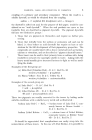
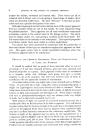
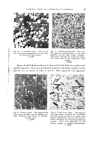
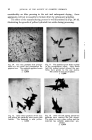
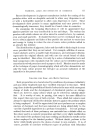
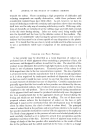
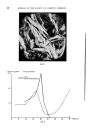
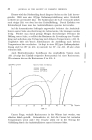
BEHAVIOUR OF COSMETIC CREAMS, LOTIONS AND OILS ON THE SKIN 47 it is of medium extent and on the lower arm it is generally the largest. Lanolin and Vaseline are exceptions, probably because they are semisolid at room and skin temperature. Lard is semisolid too, but has a lower melting point and liquefies easier. This is the reason for its different behaviour. The fact that the fat materials show the smallest spreading on the forehead is especially surprising. As mentioned before, the skin temperature of this area was found 2-3 ø C. higher than on the rest of the body areas that were measured. Higher skin temperatures on the forehead have also been reported by other investigators. This increased temperature should lower the viscosity and therefore increase the spreading, if the viscosity were to be an important factor. The pronounced regional differences in spreading independent of skin temperatures indicate that there are unique factors for the different skin areas which govern the spreading effect. It is our belief that the macro- and micro- fine structure of the skin surface plays a major role in the spreading and creeping of oils and fats along the skin surface. There is a fine capillary network of lines, lamellas and scales representing the topography of the stratum corneum. By the pulse and muscle movements this network is in constant motion. Under the skin microscope one gets the impression of a cornfield waving in the wind. This capillary network absorbs the fats and oils like a blotting paper and transports them along the skin surface. Recently, Kligman and She!!?ø •ha •e pointed out the significance of the capillary network of the skin surface for the spreading of sebum. They look upon the stratum corneum as a wick which attracts and transports the sebum by capillary action. Our results appear to prove the same to be true for other fatty and oily materials if they come in contact with the skin. This fine structure of the skin surface is very irregular. It varies from area to area and from subject to subject. Although the individual variations are great, there seems to be a limited uniformity in the structure of different body areas. The fine structure consists of numerous tiny channels and capillaries of different radii and sizes. If one looks at the equation for the rise of liquid h in a capillary tube of radius r h-- 2x (x = capillary constant, r = capillary radius, g ---- weight of the transported liquid and p • density of the liquid) one realises the significance of r for the transport of liquids in capillaries. With the possibilities of values varying from area to area and from subject to subject, it is not surprising that our measurements have shown great variations from person to person. On the other hand, the skin's microstructure depends very much on the condition of the skin. • smooth nerm•_! skin will have less capilarity and therefore less spreading ability than a rough, scaly and dry skin. This indicates the

48 JOURNAL OF THE SOCIETY OF COSMETIC CHEMISTS importance of cosmetic treatments of the skin to maintain or restore a smooth, supple, healthy and normal skin surface. The regional differences in spreading, as we found them, correspond very well with similar regional differences in sebum content found by Wheatley TM. He, however, reports a high sebum content where our tests showed a small spreading. He found the highest amounts of sebum on the forehead with 212 + 73/•g./cm.5 with 120 + 61 /•g./cm. • on the chest. The extremities showed the lowest sebum content, the arms 58 + 34/•g./cm. 2 and the legs 36 + 19/•g./cm. •. Wheatley also found great individual differences in the sebum content of one and the same skin area in different persons. Following our conception that the capilarity of the skin surface is a major factor in the spreading of fats and oils along the skin surface, the regional differences in sebum content could explain the regional differences in spreading. On the forehead with its highest sebum content, the surface capillaries are more or less filled with sebum. This hinders the attraction of additional fats and oils, and results in the low spreading found in our tests. The chest and the upper arm near the shoulder (being very close to the chest) have medium sebum content and therefore this area shows medium spreading values. On the lower arm with a very small sebum content, the capillaries are not very much preoccupied with sebum and therefore allow a wide spreading as shown by our results. The great individual differences in the sebum content from person to person, found by Wheatley, could explain the great fluctuations in the spreading seen in our tests. Although the capilarity of the skin surface probably plays a major part in the spreading effect, it is not the only factor. Besides the viscosity and the surface tension of the fats and oils the so-called X-materials 1•, natural wetting agents of the stratum corneum, certainly have an additional influence. Kleine-Natrop la already mentioned the possibility that these X-materials of the skin may change the surface tension of fats on the skin. The water- soluble hygroscopic X-materials may also act as emulsifiers with sweat in Sulzberger's TM sense and take part in the spreading in this way. The moisture content on the skin surface is certainly also of importance in the spreading of fats and oils. Jones et al. 15 did show this for sebum. According to their investigations the spreading of sebum on the wet surface is 140 times more than on dry skin surface. As one can see, there are many factors influencing the spreading on the skin. This leads to the conclusion that surface tension, viscosity, melting point, density and other physical and chemical data are not sufficient to predict the spreading of fats or oils on the skin surface. The regional and the individual differences of the skin surface are of much greater influence than the materials' physical properties. This study again demonstrates the necessity of skin physiology in the
Purchased for the exclusive use of nofirst nolast (unknown)
From: SCC Media Library & Resource Center (library.scconline.org)