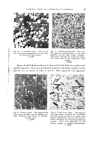
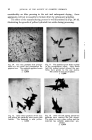
PIGMENTS, LAKES AND DYESTUFFS IN COSMETICS 19 and a further report was issued in 1955, the number of recommended colours despite rejections and additions still being 32. The matter was only finalised in June 1957 when Statutory Order 1066 laid down that only 30 coal- tar colours were permitted for use in foods in the United Kingdom. Specifica- tions for each individual colour were not issued, but this matter has been referred to the British Standards Institute and the committee now dealing with the matter will no doubt issue in due course specifications which will be finally given a legal basis. In comparing the U.S.A. and the U.K. lists it is found that there are only seven colours common to both and that, in the course of their deliberations, the Sub-Committee considered and rejected the remaining five U.S.A. food colours as unsuitable for use. In other words, a food manufacturer wishing to prepare foods for sale in both countries is restricted to 7 colours, which must be U.S.A. certified, the U.K. having, as yet, no accepted specifications. As these 7 colours comprise 4 reds, 1 blue and 2 yellows the difficulties of the food manufacturer and his colour supplier can be well imagined. It should be mentioned that UNESCO in Rome has commenced the publication and issue of each country's latest regulations in this matter and it is to be hoped that they will be instrumental in the acceptance of an international list of foodstuff colours and hence resolve the present chaotic state of foodstuff colour regulations. As yet there is no control of the use of colours in cosmetics in the United Kingdom. The Toilet Preparations Federation has, however, been preparing specifications for many cosmetic raw materials over the past years and the first set of T.P.F. standards has recently been issued. At some stage they will no doubt consider colours and it is likely that they will profit by the experience of the revision of the foodstuffs regulations and introduce a list of permitted colours common to as many countries as possible. In the U.S. schedule we have a list of accepted colours on which many of the U.K. cosmetic manufacturers and their colour suppliers base their needs and when legislation is introduced it is hoped that the experience gained by all will have been taken fully into account. ACKNOWLEDGEMENTS The author acknowledges the courtesy of the Director of the Research Association of British Paint Colour and Varnish Manufacturers for the loan of the electron micrograph slides. •Received .' 17th January 19581 DISCUSSION MR. H. F. FROST: Having selected a specific colour after a series of tests on perfume and product, and ordered a self colour, we frequently find it

20 JOURNAL OF THE SOCIETY OF COSMETIC CHEMISTS has been shaded with small amounts of another dye. Is this procedure necessary and are any precautions taken to ensure that the shading dyestuff shall behave in the same way as the material so laboriously tested ? THE LECTURER: Almost all manufactured dyestuffs are standardised for textile use and small amounts of other colours than the self colour are introduced for this reason. The colour manufacturer will use a shading dyestuff, which is satisfactory from the viewpoint of the dyeing properties. It will be appreciated, therefore, that in a cosmetic preparation the shading dyestuff may behave quite differently from the self colour. Initial tests with the manufacturer's accepted standard will help to overcome this source of trouble and the manufacturer is often willing to co-operate with the continued supply of accepted standard material if advised of the importance of the matter. Alternatively, the user must accept a greater degree of toler- ance and abide by the dyestuff manufacturers' standard rather than his own. TIlE DEVELOPING MARKET IN MEN'S COSMETICS IN THE UNITED STATES OF AMERICA J. R. L. MARTIN, Ing. Chim.* A lecture delivered before the Socie•J on 25th April 1958. The growth in the sales o• men's cosmetics is summarized and produc• types are detailed. WHE• I was asked last year to give a lecture before your Society, I chose my topic because this part of the market has changed so dramatically in the short span of a few years that its meteoric rise has caught even the greatest optimists by surprise. I thought that it might interest you to get a glimpse of what has happened to men's cosmetics in the U.S.A., what it means to us and what it may come to mean to you too. The subject is one of actual interest. This year, it has been chosen as the theme for the Charles Welch Memorial Award Essay Competition, sponsored by the Toilet Goods Association. The theme will be "Men's Toiletries, their use and motivation of purchase by both men and women". For the benefit of those who do not know I wish to explain that Charles Welch was the Executive Secretary of the T.G.A. at the time of his death in 1942. In 1956, the T.G.A. decided to institute a Charles Welch Memorial Award to be * Consultant to Schimmel & Go., Inc., New York, U.S.A.
Purchased for the exclusive use of nofirst nolast (unknown)
From: SCC Media Library & Resource Center (library.scconline.org)