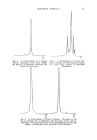
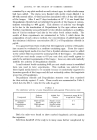
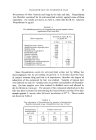
AMPHOLYTIC SURFACE ACTIVE AGENTS 13 capable of giving an enormous amount of information even when the exact natures of the components are unknown. Chromatograms of the type of product which you like and those you do not like may indicate a trend which will enable you to obtain your ideal material. CONCLUSION The perfumer naturally wants the raw material which will give him maximum results and he wants the material to be identical with each delivery. He, the perfumer, can do a lot to help the supplier to bring about this highly desirable state of affairs. Finally, can I just say that the number of times when you find you really need a pure compound will be relatively small. That master perfumer--nature--never offers a pure chemical to us, she always shades it off with blending agents. [Received: 25th August 19591 REFERENCES Krajkeman, A. J. J. Soc. Cosmetic Chem., 7 (1956) 38. Mitchell, W. Perfumery oessent. Oil Record, 21 (1950) 41. AMPHOLYTIC SURFACE ACTIVE AGENTS C. D. MOORE, F.R.I.C.* Based on a lecture delivered before the Society on 16th March 1959. The general characteristics of surtace active ampholytes are discussed with particuhr reference to their similarities and dissimilarities to the better- known types ot the surface active agents. A re-classification ot the long chain betaines is proposed, and the reasons tot this suggested change are given. AMPHOLYTIC SURFACE active agents have been known for a considerable time, but they have remained little more than chemical curiosities until very recently, owing to the difficulty of procuring suitable intermediates for their manufacture. The situation has changed radically over the last few years, due principally to the pioneering work on Fat and Petroleum Chemicals, carried out mostly in the U.S.A. At the time of writing, however, it would be fair to say that owing to the still comparative novelty of the Ampholytics, little is yet known regarding their practical application. * Glovers (Chemicals) Ltd., Leeds, Yorks.

14 JOURNAL OF THE SOCIETY OF COSMETIC ,CHEMISTS Consequently, discussion must mainly be confined to a description of,their properties, and it will be a question for the expert in any field to apply them to his particular problem. General structure of ampholytic surface active agents The older surface active agents can be divided into three classes: (a) Anion active, (b) cation active, and (c) non-ionic. The first two classes are analogous with the inorganic salts, and depend for their properties on whether the long chain fatty radical resides in the anion or cation the solubilizing counter ion when small, such as Na +, NH4 +, Halogen-, SO3CH•- having little effect except that of promoting solubility. The non-ionic surface active agents depend on their solubility on a plurality of hydroxyl or ether linkages, being hydrated by means of hydrogen bonding with water, or to a much lesser extent polyoxonium hydrate formation. By analogy with the inorganic salts, it would seem that ampholytic surface active agents corresponding to the arnphoteric inorganic salts should be possible. While strict analogy is not feasible, this effect may be simulated by placing in the molecule various groups of opposite characteristics, for example,--NH• and- COOH, the effect of these groups being accentuated under proper conditions of pH, -- NH•., for example, being a base, most noticeable in acid media, and -- COOH an acid, in basic solution. As the opposing ionic effect will be mostly suppressed under conditions ideal to the other radical, the attached fatty chain will be converted from the anion to the cation and vice versa, according to the pH of the solution, and thus become anion-active or cation-active. In aqueous solution, when unaffected by external agents controlling pH, the basic and acidic radicals neutralize each other as, for example, in amino acids this condition is known as the isoelectric point, and is common to all amphoteric surface active agents. The isoelectric point is dependent on the relative strengths of the radicals of opposing polarity or numerical dissimilarity, and may vary from the very acid to the quite strongly basic side. It must be realized that there is not only an isoelectric point, but in many cases a broad zone in which an ampholyte may be practically isoelectric. An extreme case of this effect may be exemplified by reference to the simple amino acid glycine, between the pH values of 4.3 and 7.7 species other than the zwitterion represent less than two per cent of the whole. There is little doubt that this state of affairs exists in the surface active members, though generally to a less degree. From the above description there is every reason for stating that the ampholytic surface active agents show anion or cation active properties according to pH, but it is felt that there is no justification in comparing these products at their neutral points with the non-ionics, as is so often done. To consider them in this light is bound to be misleading because,
Purchased for the exclusive use of nofirst nolast (unknown)
From: SCC Media Library & Resource Center (library.scconline.org)