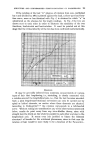
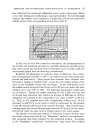
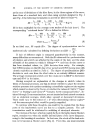
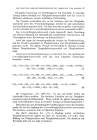
STRUCTURE AND SYNCHRONIZED STRETCH-ROTATION OF HAIRKERATIN 27 substance to the continuous and more or less uniform sliding of the cell walls. Other authors have tried to explain the three parts of the load-stretch curve by assuming that they express the mechanical properties of three distinct phases of keratin, Kx, K,. and K•, which lie partly or completely outside the cells and which differ from each other by their side chain. * The Intermolecular Stretch Theory This theory explains the elastic behaviour of keratin fibres by an inter- molecular overlapping. The substance between the molecules need not contain anything foreign but could be a constituent of keratin itself, such as polypeptide chains which are coiled along the axis of the molecule and which impinge on the neighbouring molecules by means of cystine side-arms or other side chains. Thus an endless, possibly two-phase, macromolecule is built up from smaller elements. The stretching would then consist of the dissolution of connecting bonds, would be dependent on the displacement of polypeptide chain networks ø and vould be characterized by the deforma- tion of the crosslinks. There is an overlapping of the first-named theory and this one, since it is difficult to decide where the border between inter-

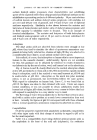
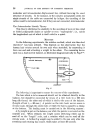
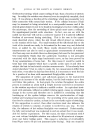
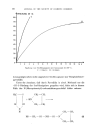
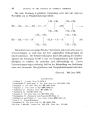
28 JOURNAL OF THE SOCIETY' OF COSMETIC CHEMISTS molecular and intramolecular disp:acement lies, without knowing the exact structure of keratin. If, for instance, in the complex polypeptide cables the single strands of the cable are connected by bridges, the uncoiling of the cables would be intramolecular, but if they are not connected, intermolecular. The Intramolecular Stretch Theory This theory attributes the elasticity to the uncoiling of more or less coiled or folded polypeptide chains or spirals ? or even "superspirals", i.e., spirals the longitudinal axis of which is itself coiled in a spiral. iV•ETHODS In the following experiments, the rotation method, which was described elsewhere 8 has been utilized. This depends on the observation that the human hair rotates around its own axis when stretched, by suspending it from one end and attaching a weight to the other. The measuring device used was a load-stretch balance, as illustrated diagrammatically in • 8T•RETCH INDICATOR (•) C 0UNTERPOIS E SILK T•READ -•' ROTATION IND ICATOR,'-• • iiiii1•111/ i .Fig. 2 The following is important to ensure the success of the experiments: The hair which is to be measured should not be attached directly to the balance, but should be connected by means of a wire hook to a 100 mm long silk thread, the other end of which is tied to the arms of the balance. (Length of hair 10 = 50 mm.) A pointer on the wire hook moves across a circular scale, through the centre hole of which the hair is passed to a clamp at the bottom. The loading must be carried out in the following manner: A 5 g weight is put on the balance pan while the pointer is arrested on the nearside arm. When released, the weight causes stretching which can be read off on the "length" scale, and a rotation which can be read off the circular scale. A further 5 g weight may be added to the pan only after the stretching and rotating has ceased, which takes at least 20 seconds.
Purchased for the exclusive use of nofirst nolast (unknown)
From: SCC Media Library & Resource Center (library.scconline.org)