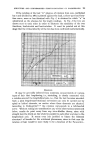
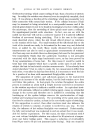
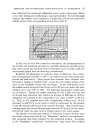
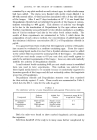
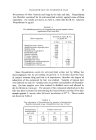
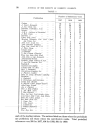
42 JOURNAL OF THE SOCIETY OF COSMETIC CHEMISTS DISCUSSION It is very evident that in these in vitro experiments Dequalinium salts are highly effective in restricting the growth of both P. ovale and the many micro-organisms associated with hair and skin. In order that Dequalinium preparations could be tested in cases of seborrhoea and infective dandruff, a study was made into the formulation of preparations which would be capable of conveying the quaternary am•nonium compound in a sufficiently high concentration, and from which Dequalinium would be freely absorbed by the hair and the tissues of the scalp. Dequalinium salts are highly reactive and therefore somewhat difficult to incorporate into anti-dandruff preparations for example, the bacterio- static activity of Dequalinium is reduced in the presence of some soaps and anionic surface active agents. However, this activity is retained, and may even be potentiated in the presence of certain non-ionic or cationic detergents. A hair shampoo containing Dequalinium chloride 0.25 per cent with a non- ionic detergent and a suitable hair conditioner, such as a long chain fatty acid, has been found to be acceptable from both anti-bacterial and cosmetic aspects. The shampoo has high anti-bacterial activity in vitro and initial studies have shown that it is highly effective when tested clinically in cases of seborrhoea and infective dandruff •4. Even when the infection is (radicated, there is still a danger of re-infection of the scalp with P. owle due to further contact with the fungus and its spores. Prophylactic treatment carried out at regular intervals is therefore the only really effective means of control. An anti-dandruff lotion or cream, which at the same time serves as a hair dressing and fixative, is a very con- venient means of effecting this treatment. The formulation of two such preparations has been investigated and a hair lotion has been prepared containing 0.4 per cent Dequalinium stearate solubilized in mineral oil, and an oil in water emulsified hair cream containing Dequalinium chloride 0.4 per cent has been formulated with Coilone N.I. CONCLUSIONS The results reported in this work show that Dequalinium salts are highly effective in restricting the growth of P. ovale in vitro in addition, they exert considerable anti-microbial activity against the organisms contaminating skin and hair. Clinical and ext)erimental observations reported else- where n,•2,•4 have shown that repeated applications of Dequalinium to skin and mucous membranes are without toxic or irritant effect and that pre- parations are highly effective when tested clinically in cases of seborrhoea and infective dandruff. ACKNOWLEDGEMENTS We thank the Directors of Allen and Hanburys, Ltd. for permission to

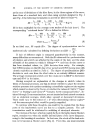
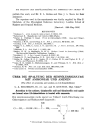
DIE $PALTUNG DER SENF/•LESSIGS•URE MIT AMMONIAK UND AMINEN 43 publish this work, and Mr. E. L. Robins and Miss J. A. Moore for their assistance. The organism used in the experiments was kindly supplied by Miss P. Stockdale, of the Mycological Reference Laboratory, London School of Hygiene and Tropical Medicine. [Received: 25th May 19591 REFERENCES x Malassez, L. Arch. de physio. norm eJ path., I (1874), 203. * Sabouraud, R. Maladies du Cuir Chevelu (1902) (Paris). a Darier, J. Pollitzer, S. transl. Precis de Dermatologie (1920). (Lea and Febiger,. Philadelphia. ) 4 Macleod, J. 3/I. H., and Dowling, G.B. Brit. J. Dermatol., 40 (1928), 139. 5 Dowling, G.B. Brit. J. Dermatol., 51 (1939), 1. 6 Rocha, G. L., Silva, C., Lima, A. O., and Goto, M. J. Invest. Dermatol., 19 (1952), 289. 7 Whitlock, F. A. Brit. Med. J. i (1953), 484. s Barber, H. W., in MacKenna, R. M. B. Modern Trends in Dermatology (1948)• (Butterworths Scientific Publications, London.) 9 Reddish,G. F. f. Soc. Cosmetic Chemists, 3 (1952), 90. •0 Hughes, H. W., and Hamilton, E.D. Brit. Med. J. ii (1958), 542. n Babbs, M., Collier, H. O. J., Austin, W. C., Potter, M. D., and Taylor, E. P. f. Pharm. and Pharmacol., 8 (1956), 110. • Coles, R. B., Grubb, C., Mathuranayagam, D., and Wilinson, D. S. Brit. Med. J. ii (1958), 1014. ,a Benham, R.W. Proc. Soc. Exp. Biol. Med., 58 (1945), 199. 1• Colin-Jones, E. Private communication (1959). •IBER DIE SPALTUNG DER SENFOLESSIGS•URE MIT AMMONIAK UND AMINEN {The effect of ammonia and amines on 2,4-thiazoledione) G. A. ERLEMANN, Dr. rer. nat. and H. KNETSCH, Dipl. Chem.* According to the authors, tiaioglyconic acid and thioglycollie acid amide are format when 2,4-thiazol•tione is treated with ammonia. DiE SENF6LESSIGSXURE wurde zuerst von Volhard I durch Einwirkung von Chloressigs/iure auf Thioharnstoff dargestellt: NH C1 -- CH2 -- COOH +HS -- C -- NH2 -- I I OC C = NH.HC1 N H (1) * Schwarzkopf, Hamburg-Altona, Germany.
Purchased for the exclusive use of nofirst nolast (unknown)
From: SCC Media Library & Resource Center (library.scconline.org)