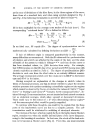
AMPItOLYTIC SURFACE ACTIVE AGENTS 15 while the net charge at the isoelectric point will be nil, the gross charge, of course, will remain high. The number of ampholytic surface active agents possible is legion, due to being polyfunctional compounds, and, in practice, is only limited by the availability of suitable intermediates. The ampholytics are not confined to the derivatives of carbon and nitrogen, but may also be derivatives of sulphur, phosphorus, arsenic, etc., and for special purposes these derivatives may appear in commerce in due course in this discussion, however, we will confine ourselves to the compounds which are articles of commerce. The ampholytic surface active agents in commerce are broadly based on two types of structure: {a) Long chain N substituted amino acids, and (b) long chain betaines. In respect of the betaines, we feel that we should follow conventional ideas on these products, and include them in our discussions, but in future they would better be ascribed to a new class of surface active agent. Products in class (a) are, for example, the Amphionics, Deephats, Tegos, and in class (b) examples are Ambiterics, Miranols and Amfaides. • , To illustrate the major points concerning ampholytes it would be better to discuss a limited number of examples at some length from each class of structure, referring to them under their chemical names. From class (a) we will discuss the/• alkyl aminopropionic acids, and from (b) the straight chain betaines. • ALKYL AMINOPROPIONIC ACIDS The alkyl aminopropionic acids are obviously long chain derivatives of the amino acid alanine or /• aminopropionic acid, and consequently they would be expected to behave in a similar manner, under many conditions, to the parent acid. Effects of pH The amino acids, with change of pH from one side to the other, pass through their isoelectric points, and at this point the amino acids exist in their zwitterion form. The isoelectric point occurs for the ]g alkyl amino- propionic acids at pH 4.3, and this suggests that the acidic strength is slightly greater than the basic strength it is, in fact, difficult to find an amino acid derivative which has the isoelectric point at pH 7.3. On each side of pH 4.3, of course, the anion or cation properties begin to appear, and in the case of the alkyl amino propionates are fully developed at pH 2 and pH 11, when the opposing effect is virtually suppressed. Solubility As pointed out previously, the • alkyl aminopropionic acids are typical amino acids, and therefore one would expect at the isoelectric point a

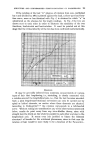
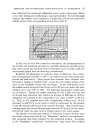
16 JOURNAL OF THE SOCIETY OF COSMETIC CHEMISTS region of lower solubility this is, in fact, noticeable with this particular class. For instance, the dodecyl compound has a solubility at 20 ø C. of the order of 0.25 per cent at the isoelectric point, whereas the sodium salt with a natural pH of about 11.0 is extremely soluble, and at the other extreme the aminosulphamic acid salt at a pH of about 3.0 has a solubility greater than 5.0 per cent. Although there is obviously a considerable reduction in solubility in the zwitterion form, there is adequate solubility to provide most surface active characteristics, and in any case the solubility increases greatly with rise in temperature. The hexadecyl compound has, as expected, lower solubility characteris- tics, and at the isoelectric point has a solubility of only 0.04 per cent, and the aminosulphamic acid salt a solubility of 0.02 per cent the acetate is, however, much more soluble. The dodecyl and hexadecyl compounds' solubility increases with rise in temperature. Surface Active Characteristics The surface tension reducing properties have been indicated by Anderson, et al. •, •, for instance, the dodecyl compound at a concentration of 0-1 per cent has an interfacial tension of less than 2 dynes/cm., and a surface tension of about 25 dynes/cm. This compound is, therefore, an exceptionally powerful wetting agent, and is approching the sulphosuccinates in this respect. The values given are fairly independent of pH, and our own tests on the compara- tive wetting times in relation to pH, using a sinking method, indicate that there is little variation over the pH range 3.5 to 10-1. This statement applies also to the hexadecyl compound where it has sufficient solubility to enable the data to be obtained. The dodecyl amino acid is an excellent foam producer, the sodium salt being about twice as efficient in this respect as pure sodium laurate. Decrease in pH has some detrimental effect on the foaming properties to the extent that foam trials on the free acid show its foaming properties to be only about two-thirds that of the sodium salt, while the sulphamic acid salt of this compound is only about half as effective a roamer as the sodium salt. Hard water has little effect on the foaming power of the dodecyl compound, as is shown by the fact that foaming efficiency is reduced by only 10 per cent if water at 40 ø hardness is substituted for distilled water in the foaming trials. The hexadecyl amino acid has far less foaming power than the dodecyl compound, as is expected, and the foaming power of the sodium salt is completely repressed in water at 40 ø hardness, although the free acid is not so affected. Lack of solubility of the sulphamic acid salt of this compound renders foaming trials difficult, and its intrinsic lack of foaming makes it unsuitable as a foam-producing agent in any case. It must be realized that all long chain amino acids are not as resistant to hard water as the best
Purchased for the exclusive use of nofirst nolast (unknown)
From: SCC Media Library & Resource Center (library.scconline.org)