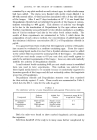
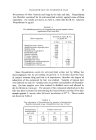
AMPHOLYTIC SURFACE ACTIVE AGENTS 23 effective emulsions. The hexadecyl compound behaved normally in showing superiority over the dodecyl type as an emulsifying agent. Compatibilities A compatibility chart drawn up for the betaines would be similar to the one in Table 1. The betaines are thus compatible at all pH values with all classes of surfactants, with the single exception that an acid betaine will form a precipitate on addition to anionics. Acid and neutral solutions of the betaines are compatible in all propor- tions with solutions of salts of calcium, magnesium, barium, aluminium, copper, nickel, zinc and chromium. Like the alkyl amino acids, at high pH the betaines will precipitate the heavy metals from solution. The hexadecyl compound was found, in our trials, to have identical compatibility properties with the dodecyl compound, and this is a point of divergence from the similarities observed between the alkyl amino acids and the betaines, and of surface active agents in general. Having now described the betaines at some length, we can examine further properties of the long chain amino acids and betaines together. Physiological Properties The effect on skin of the alkyl amino acids depends upon pH, but examina- tion of the results available indicate that on the alkaline side they are of a similar order to an ordinary soap of the same chain length, •vhile on the acid side they show irritation effects comparable with those of the quaternary ammonium compounds. At neutrality (pH 7), skin irritation is reduced to the minimum. The triethanolamine salts appear particularly free of irritancy. The effect of the betaines on the skin has not yet been completely investigated, but it is possible to say at this stage that, in general, irritant effects are quite low. Preservation The preservation of preparations containing surface active agents from attack by microbiological organisms sometimes presents difficulties. We have examined this problem in our laboratories, using both dodecyl and hexadecyl amino propionates and betaines against aspergillus niger as an example of a vigorous growing and difficult organism to preserve against. At the natural high pH of the alkali salts, growth is inhibited to a large extent by the very alkalinity of the material. At concentrations of 1 per cent and 5 per cent in an artificially contaminated emulsion at pH 7 there was no growth at the high concentration and only slight growth at the lower. This also appertained at a pH of 3.5. Wherever slight growth took place it was easily controlled by the addition of a preservative such as 0.2 per cent of

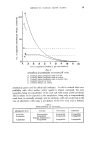
24 JOURNAL OF THE SOCIETY OF COSMETIC CHEMISTS p-hydroxy ethyl benzoate. These particular surface active agents, therefore, could almost be said to be self-preserving against moulds, as the media used were prepared to simulate a cosmetic preparation which had been exposed to contamination with proteinous and other growth-supporting factors. Sabaraud's Maltose Agar media was the contaminant, and consequently the creams were far more contaminated than is ever likely to be met with in practice. Bacteriological Aspects The compatibility of ampholytic and intronium surface active agents with other surface active agents is a property which can be utilized in germi- cidal preparations, which have hitherto been impossible when using the better-known surface active agents. A fuller report on this subject will be found elsewhere 8, but, briefly, the following points will be of interest: It must be realized that when the article referred to above was written, the betaines were still considered as true ampholytes this, however, does not affect the published results or opinions to any great degree. (a) In mixtures of alkyl amino acids with quaternary ammonium com- pounds, the high activity of the quaternary is maintained against the Gram positive organisms even when the alkyl amino acid is present as its sodium salt, and consequently in its anion active form. Under normal circumstances cation and anion active materials are incompatible and precipitate. It was generally thought that loss of bacterial activity in such circumstances was due to removal of the active constituent from the aqueous phase. This we felt was only half the truth. If, in fact, the precipitate had in some way been soluble, it would still have been inactive because of balance in the anion and cation. The bacteriological inactivity of the soluble hexadecyltrimethyl- ammonium-/•-N-dodecylaminopropionate was a proof of this supposition. Gram negative organisms are intrinsically more resistant to quaternary ammonium compounds as is well known, and they do not adsorb a quaternary ammonium compound as readily, consequently they are more sensitive to competition from other surface active agents. However, up to four times the amount of dodecylaminopropionate may still be added to a quaternary ammonium compound before the activity returns to the original figure. The dodecyl compound is most useful for work with germicides, not only because of its higher intrinsic solubdity, but also because it enhances the activity of the quaternary ammonium compound in certain proportions. (b) In mixtures of quaternary ammonium compounds with long chain betaines against Gram positive organisms, there is no observed loss of activity in the quaternary ammonium compound, and against Gram negative organisms an increase in activity is observed, and this increase is maintained
Purchased for the exclusive use of nofirst nolast (unknown)
From: SCC Media Library & Resource Center (library.scconline.org)