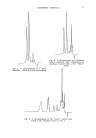
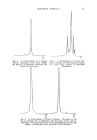
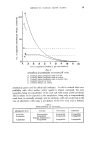
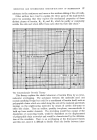
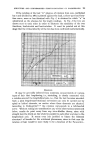
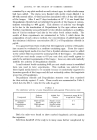
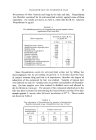
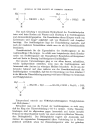
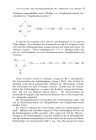
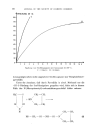
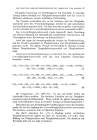
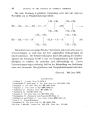
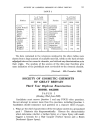
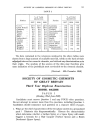
AMPHOLYTIC SURFACE ACTIVE AGENTS 21 practical results as true ampholytes. This does not infer that the betaines are any the less interesting: indeed, they may in time prove to be one of the most useful types for the solution o[ problems outside the general run. Our reasons for suggesting reclassification of the betaines and similar products are as follows: The betaines are internal quaternary ammonium compounds, and thereby carry an integral positive charge which is characteristic of all onium com- pounds. Removal of these charges is normally accompanied by the degrada- tion of these compounds. The nitrogen in the amino acids, however, carries no such permanent charge, in [act the amino group behaves like a typical amino group in that a positive charge may be added or removed according to the pH of the medium, in accordance with the Lowry-Br6nsted concept of acids and bases. From an examination of the structure of betaines, it would appear that the transfer of a proton would not be possible, and in accordance with the above theory, betaines would not, there[ore, be expected to behave as acids. Aceto-betaine, the parent member ot' the series, has been quoted as having a pK• value of 1.84, and a pK, value too large to measure. The only conclusion reached from the above evidence was that the betaines, whilst being cationic in strongly acidic media, would not appear to be capable of acting as acids towards bases or, in other words, as anion active products. In view of the potential importance of surface active betaines, further investigation was deemed very necessary. Potentiometric studies of the behaviour of aceto and/• propiobetaines, the parent substances, together with dodecyl betaine and dodecyl-/•-propiobetaine, were carried out, and from the results of these studies no indication of amphoteric behaviour in aqueous media could be observed. Non-a'•lueous titrations carried out in a strongly basic medium, in attempts to augment any potential acidic behaviour, were negative. A true ampholyte, e.g., an amino acid, gave the expected results in both aqueous and non-aqueous media. A literature search failed to reveal any evidence of alkali metal or organic base salts of betames having been prepared. As the is,•lation of an alkali metM or organic base sal* would be added proof either x•a v, an attempt was made to prepare sni• able organic base salts. In all cases the betaines were recovered unchanged. From the foregoing evidence, it must be conclnded that betaines, as a class, dr• not exhibit amphoteric properties, and alkaline solutions of betaines are smply solutions of the compounds in free alkali. Further physic:)-chemical evidence in support of this belief was gained irom adsorption trials (F,g. I•. Sucl• trials carried {rot on cotton and wool fibres gave constart adsorption figure,irrespective of OH these results are in line with th,)se expected from compounds carrvi,,g an integral chargt- and unlike the result expected from an ampholyte and indeed, obtained with the alkyl amb,o acids. Under the circumstances, t'te betaines, long recognized

22 JOURNAL OF THE SOCIETY OF COSMETIC CHEMISTS as typical ampholytes, would appear to be best classified as members of the cation active type. However, such a degree of difference exists between them and the ordinary quaternary ammonium compounds that some name seems to be required to cover the general class which includes their sulphur analogues, the thetines and the theoretical possibilities from phosphorus, arsenic, etc. We felt that a name should be coined, and propose that the general class of surface active agent based on the internal onium structure, if our views are accepted, should be called Intronium Surface Active Agents. The betaines and allied surfactants actually appear to be so compli- mentary to the ampholytes, or in certain cases excellent alternatives, that there is no reason why they should not continue to be studied together, provided that recognition is clearly made of their different properties. An indication of the type of properties expected from the Intronium compounds can be gained by a study of the dodecyl and hexadecyl betaines. Surface Active Characteristics While not as effective wetting agents as the alkyl amino acids, the betaines are nevertheless of value in this capacity the dodecyl compounds, for instance, being comparable in wetting power with well-known secondary alcohol sulphates. Little change in wetting power is noticed over a pH range of 3-0 to 10 if anything, the betaines act as slightly better wetters at a lower pH than they do at high. The foaming capacity of the betaines is very similar to that of the alkyl arnino acids, but the effect of pH is reversed and to a large extent levelled out. Whereas with the dodecyl amino acid a 50 per cent loss in foaming power was evident in the change from sodium salt to sulphamic acid salt, in the case of the dodecyl betaine, only about a 10 per cent loss in foaming power occurs, and that in the other direction, i.e., in the change frorn low to high pH. The even production of foam, together with an even level of wetting power throughout the entire practical pH range, is further support for the contention made above regarding betaines. In common with all other surfactants, the hexadecyl compound is well above the optimum chain length required for maximum foaming, but it is, for all that, a consider- ably better foaming agent than could be expected from a compound of such a chain length. Hard water is totally without effect on the foaming proper- ties of the betaines, no difference being observed in our trials between the foam produced in distilled water and that produced in water at 40 ø hardness over the whole pH range. Emulsification trials of the kind performed with the alkyl amino acids showed the betaines to have similar properties. While extremely poor emulsions of paraffin oils and waxes were possible, with vegetable oils and fatty alcohols, minor proportions of the betaines were capable of producing
Purchased for the exclusive use of nofirst nolast (unknown)
From: SCC Media Library & Resource Center (library.scconline.org)