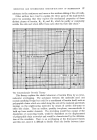
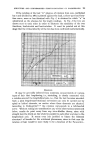
AMPHOLYTIC SURFACE ACTIVE AGENTS 25 at a higher level than expected from the quaternary ammonium compound alone. This continued increase in activity may be due to the imposition of some antibacterial activity of the betaine type itself upon the whole. (c) The alkali salts of alkyl amino acids in combination with phenols give results rather like those expected by solubilization in saponaceous materials, but, of course, inactivation by hard water is resisted to a large extent, particularly with the dodecyl compound. (d) The betaines are particularly interesting solubilizing agents for phenols as they increase the activity of the phenol considerably, and the activity of the mixture does not fall to zero even with high proportions of betaines, as is the case with soaps. It may be asked why a product like a betaine, in admixture with a phenol, should maintain activity at high concentrations of betaine contrary to expectations, when one considers the competing factor of micellular incor- poration. This may be due to the fact that phenols apparently form some type of addition compound with betaines, and consequently the whole addition compound is probably acting as a bacteriocide in this case. CONCLUSION It is clear from the foregoing that the ampholytes and similar products have great potentialities, especially if one considers their properties and likely advantages in the proper light, and not merely regards them as slightly improved substitutes for standard type surface active agents. To reiterate, the most important potential characteristics of the ampholytes are that not only can one apply to them the very useful rules in regard to hydrophile/ lipophile balance, but it is possible, even at this early stage, for one to make a semi-quantitative estimation regarding the effect of the anion/cation balance and the positioning of the isoelectric point. For instance, the iso- electric point may in many cases be approximately estimated from the relative acidic and basic strengths of the polar constituents, and as sufficient data becomes available it should ultimately be possible, by a combination of hydrophile/lipophile and anion/cation balances, to specify considerably more accurately than hitherto the exact type of surface active agent required for a particular purpose. I wish to acknowledge the considerable advice and help afforded to me during the preparation of this lecture by my colleagues, IV[. Bell and R. B. Hardwick. [Received: oe8th May 1959• REFERENCES • Anderson, D. L. J. •tm. Oil Chemists' Soc., $4 (1957) 188. • Anderson, D.L. ztm. Perfumer,4romat., 72 (1958) (No. 4) 59. a Moore, C. D., and Hardwick, R.B. Mfg. Chemist, 29 (1958) 194.

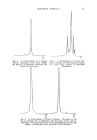
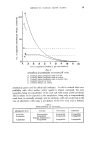
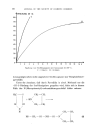
26 JOURNAL OF THE SOCIETY OF COSMETIC CHEMISTS STRUCTURE AND SYNCHRONIZED STRETCH-ROTATION OF HAIRKERATIN FIBRES F. HIRSCH, Dipl. Chem.* The theories concerning the s•retching o[ hairkeratin fibres are briefly reviewed. The author's rotation methooe1 is described in oe1etail and the exlflana•ion o[ load-rotation curves in terms o[ atomic s•ructure is a•em10ted. NoT MANY albuminous bodies have been as successfully examined for their micro- and macro-structure as hair and wool keratin. Chemical, optical and mechanical methods of measurement were used in this task. The latter, especially, figured in many publications of the last 30 years, so that the special term "Mechanochemistry" was coined for the mechanical methods of measurement, and it is surprising that Mechanochemistry could have been so successfully used without anyone being completely clear as to its mechanism to this very day. It therefore seems desirable to find a method which would sufficiently clarify the nature of the stretching process to allow the elimination of the most improbable theories hitherto adhered to. Knowledge of the real causes of stretching would lead to a truer picture of the structure of keratin, which in its turn could serve as a pattern for other proteins. All physicochemical experiments, especially Speakman'sL have shown that the characteristic physical behaviour of keratinous bodies, such as their great elasticity, was dependent on their chemical structure. Three theories have to be examined, experimentally if possible. The Intercellular Stretch Theory x,-% a According to this theory it is not the spindle cells, the actual bearers of keratin themselves, but the amorphous connecting substance which lies between them that is responsible for the elasticity of animal and human hair. This theory can be mathematically deduced from load-stretch curves (Fig. 1) 4, and it postulates that during the initial stretch the "gliding surfaces" of two neighbouring cells are held together by a "putty substance" which breaks at the first kink in the curve and becomes merely a lubricating substance. The sliding of two neighbouring cells during further stretching corresponds to the end part of the stretch curve. The middle part of the curve would correspond to the jump from the elastic stretching of the putty * Munich, Germany.
Purchased for the exclusive use of nofirst nolast (unknown)
From: SCC Media Library & Resource Center (library.scconline.org)