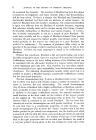
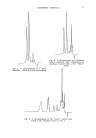
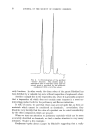
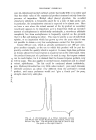
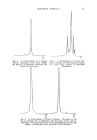
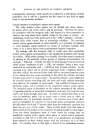
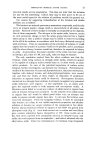
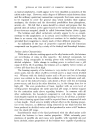
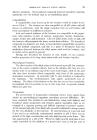
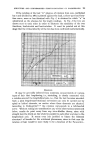
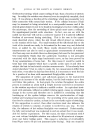
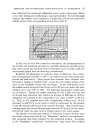
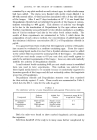
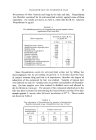
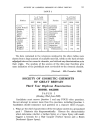
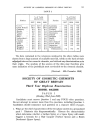
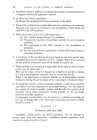
10 JOURNAL OF TItE SOCIETY OF COSMETIC CHEMISTS Another class of compounds is the higher esters of the terpene alcohols. Many of these are almost completely odourless if prepared in a high enough state of purity, as, for example, Geranyl Caprate, Linalyl Cinnamate, etc. The general idea is further extended by means of the following chromato- grams. CITRAL Fig. 5 shows a chromatogram of a Citral which contains only 97 per cent of aldehydes when estimated by the hydroxylamine method. It is never- theless a product with a very fine odour and is, in fact, superior in many respects to other Citrals with a so-called 100 per cent content. This is due to the fact that one of the materials which may be present in Citral is Geraniol which, in small quantities, has no detrimental effect on the odour, but of course reduces the aidehyde content proportionally. On the other hand, a Citral can be produced which contains no Geraniol and tests approximately 100 per cent by the hydroxylamine method, but, nevertheless, contains impurities other than Geraniol testing as aldehydes and possessing a most objectionable odour and flavour. In this case, it may even be that attention should be directed to the ratio of Citral A to Citral B rather than to the total aldehyde content. LINALYL ACETATE Fig. 6 is a chromatogram of a Linalyl Acetate containing over 95 per cent of esters. It will be noted that it does not consist of a single substance and it could be claimed, therefore, that it is not pure Linalyl Acetate, but in actual fact, because it has been freed from undesirable impurities, it has a very satisfactory odour indeed and will in most cases perform better than pure Linalyl Acetate, which many people have described as having an odour no better than a high-class Terpinyl Acetate. The point here is that the work involved and the loss of yield due to the removal of other esters will increase the price very considerably, whilst at the same time in many cases making the product unsuitable for its intended purpose. IONONE It was mentioned earher that Ionone Terpenes were claimed to perform very well in soap, whilst other people rate an Ionone containing terpenes as an unsatisfactory product. This chromatogram (Fig. 7) of a sample of Ionone Terpenes will probably explain this discrepancy, as it will be seen that the terpenes themselves consist of a very large number of components, some of which may be valuable and others undoubtedly detrimental to the odour of the product. In other words, the term "Ionone Terpenes" is not sufficiently descriptive. It is also possible that certain components of the terpene fraction are responsible for the instability of Ionones.

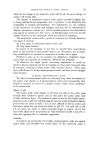
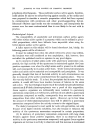
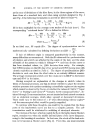
PERFUMERY CHEMICALS Fig. 6. A chromatogram of a Linalyl Acetate, possessing a fine odour despite the presence of subsidiary chemicals just before the main peak. 11 Fig. 7. A chromatogram of Ionone Ter- penes, showing how this material consists of a very large number of individual components. ^ Fig. 8. A chromatogram of Phenyl Propanol. The figure on the left is virtually free of impurities but the odour is flat and un- interesting. The impurities shown in the chromatogram on the right impart a strong and sweet top note to this chemical.
Purchased for the exclusive use of nofirst nolast (unknown)
From: SCC Media Library & Resource Center (library.scconline.org)