AMPHOLYTIC SURFACE ACTIVE AGENTS 17 amino propionates. Those based on a amino acids, and derivatives of dicarboxylic acids in which the carboxyls are in close proximity, such as those derived from aspartic acid, can show very high sensitivity to calcium and magnesium ions. Critical Micelle Concentration The/R alkyl amino propionate salts are micelle forming at all pH's, and the critical micelie concentrations appear to be in line with those expected. For instance, potassium dodecyl alanate has a CMC of 0 0030 mol/1., as com- pared with potassium palmitate at 0.0022 mol/1., N dodecyl/R alanine hydro- chloride 0.010 and dodecyl trimethyl ammonium chloride 0.014 on the same terms. Emuls{fication The emulsification properties of the alkyl amino acids were assessed in the usual way with mineral and vegetable oils, fatty alcohols and acids using small proportions of ampholyte (i.e., 1 per cent on the oil) and repeating the trials at various pH values. In general, it is found that the amino acids are fair to good emulsifiers for fats and oils, except those of a paraffinic nature, for which type they are of little value. Both the dodecyl and hexadecyl compounds are particularly effective with fatty alcohols, but with vegetable oils, fatty acids, etc., the hexadecyl compound is the better of the two this is to be expected by analogy with commoner types of surfactants. Emulsions can be produced with the alkyl amino acids acting both as anionic or cationic emulsifiers, or at the isoelectric point, but as a general rule emulsions are more readily produced on the anionic side, i.e., with the ampholytes at fairly high pH. These results are in line with those obtained by using individual surface active agents of single effect. It is possible, by adjustment of the pH, to change an emulsion based on ampholytes from anionic to cationic. This property, which is unique to the ampholytic surface active agents, could be extremely useful, because, as stated above, emulsions are more readily formed on the anionic side, and when the more difficult to obtain cationic emulsions are required, it is often a simple matter to prepare the emulsions anionically, and then by addition of the appropriate acid to alter the pH and render the emulsion cationic. Solubilizing properties As previously indicated, micelies are formed by the alkyl amino acids in solution at concentrations in accordance with that expected from their chain length and, by analogy with other types of surface active agents, they should show similar solubilization characteristics. Sodium laurate and

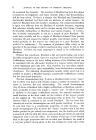
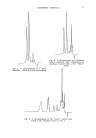
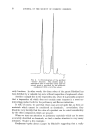
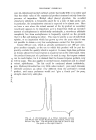
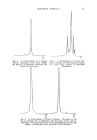
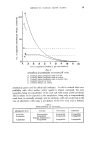
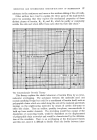
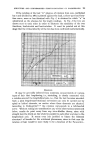
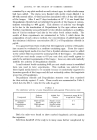
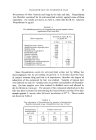
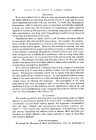
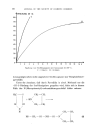
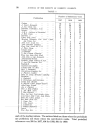
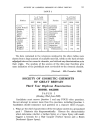
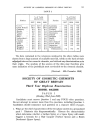
18 JOURNAL OF THE SOCIETY OF COSMETIC CHEMISTS sodium dodecyl amino propionate show characteristics and solubilizing power of the expected order when using geraniol and diphenyl methane as the solubilizates representing products of different polarity. 10 per cent solutions of sodium laurate and sodium dodecyl amino propionate will solubilize 4.4 per cent and 2.8 per cent of geraniol, and 1.4 and 2.3 per cent of diphenyl methane respectively. Similarity is also shown between the acetates and butyrates of dodecylamine and similar salts of dodecyl aminopropionic acid in their-capacity to solubilize water in decanol. This is an example of inverted solubilization. The acetates and butyrates of both dodecylamine and dodecyl aminopropionic acid at 10 per cent in decanol, solubilized 5-2 and 4.4 per cent of water respectively. Adsorption The alkyl amino acids are adsorbed from solution most strongly at low pH, where they tend to simulate the effect of quaternary ammonium com- pounds in being fairly substantive, whereas at high pH they are adsorbed to a considerably lesser degree, as are anionic surface active agents. It is realized, of course, that adsorption on human skin is a most important feature to the cosmetic chemist unfortunately, figures are not available for this, but guidance can be obtained by reference to results obtained in our laboratories by the use of cotton, wool, and human hair as the adsorbents. Fig. 1, Curves A and B, clearly illustrates the marked adsorption effects at low pH, particularly on wool, and as the pH is increased an equally marked drop in adsorption, until it has reached a very small amount at pH 9.0 and is undetectable at pH 10.0. Adsorption on the much less polar material, cotton, is not so pronounced, but nevertheless follows the same pattern. With regard to adsorption on human hair, Curve C, it was found that at pH 2.5 the figure was close to that obtained with wool. Under our experi- mental conditions, it was not possible to obtain satisfactory results with human hair at higher pH values, but there is every reason to believe that hair will respond to ampholytes in a very similar way to wool. The flattening of Curve B is no doubt due to the fact that cotton is satur- ated with a cation active product at a much lower concentration than wool or hair. Actually the figures at pYI 3-0 correspond well with those obtained when a normal quaternary ammonium compound is adsorbed on cotton. Compatibilities Of all the properties expected with ampholytic surfactants, compatibility with other types ranks with their change of activity in regard to pH as by far the most important. Table 1 is a compatibility chart using dodecyl aminopropionic acid, as the ampholyte in the form of the acid salt (sulphamic), the zwitterion
Purchased for the exclusive use of nofirst nolast (unknown)
From: SCC Media Library & Resource Center (library.scconline.org)