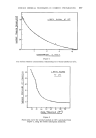
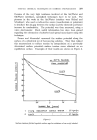
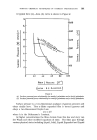
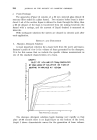
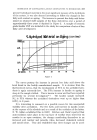
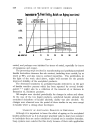
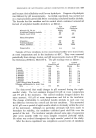
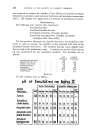
386 JOURNAL OF THE SOCIETY OF COSMETIC CHEMISTS smaller affinities will pass into the surface. This concentration of constitu- ents is called "adsorption". Both positive and negative adsorption are possible, although the cosmetic chemist is almost always concerned with the positive adsorption of organic substances dissolved either in oil or in water, or in both. Considering the various methods we have-- Static Methods at the air/water interface 1. The use of radio-isotopes. 2. Surface tension measurements. Dynamic Methods The formation of an adsorbed film at the usual concentrations of surface active material takes place very rapidly, often in less than a second. However, in the case of an aqueous formulation in pressurized or squeeze pack, the surface tension of the water is very high and therefore a great deal of energy is necessary to break the material into a satisfactorily fine spray. Surface active agents may be added but they must be of the type, and be present in sufficiently large amounts, to bring the surface tension down to a low value in a few milli-seconds. Where a high concentration of alcohol or mineral oil is used, the surface tension is naturally low and the problem is not so acute. In order to investigate the surface tension of surfaces during the early moments of formation, special techniques have been used. 1. Oscillating Jet 2. Surface Potention Measurements Along a Jet Surface Results are then interpolated on a previously determined calibration curve of surface potential against surface tension. All dynamic methods of studying surface tension suffer from the fact that the true age of the surface is unknown because of the complex hydro- dynamic conditions at the surface. The methods are therefore best used for making comparison between different surface active agents and the effect of concentration. The results should therefore always quote the method used. Insoluble Films Surface Pressure Measurements at the Gas/Liquid Interface The Langmuir trough is used to measure the force/area of curves for insoluble mono-layers, although recently the hanging plate has been used in place of the barrier of the Langmuir trough which obviates the difficulty of leaks past the edges of the barrier. The hanging plate is probably satis- factory for all films except the most rigid.

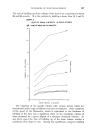
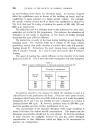
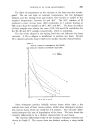
SURFACE CHEMICAL TECHNIQUES IN COSMETIC PREPARATIONS 387 Mechanical Properties of Insoluble and Adsorbed Films Surface Viscosities The mechanical properties of the surface film often parallel the stability of a foam or emulsion. If the film is too rigid, then the system will be unable to resist mechanical or thermal shock. If it is too fluid, rapid drainage of a foam or coalescence of the emulsion will take place. Davies has recently introduced two new surface viscometers which rely on the measurement of the speed of rotation of talc particles placed in a narrow circular channel placed at the interface, when the vessel containing the interface is rotated. All the different rheological types known in three-dimensional systems can be shown in two dimensions. The Oil/Water Interface Many of the methods described for the air/water interface may be adapted to the oil/water interface. Zeta Potential When one phase is dispersed in another, electrical charge separation occurs either by adsorption of ions from one of the phases, ionic dissociation, or by an electrical dipole at the interface. This charge plays an important role in determining emulsion stability, especially of the oil-in-water type. The presence of such charges may promote or hinder penetration of active ingredients through the skin. The potential may be determined by measur- ing the speed with which the dispersed phase migrates under an electrical potential. Particles are observed with an ultra-microscope. The technique has been successfully used to gain insight into the mechanism of the salt precipitation of various colloids and dispersions. It has been shown that coagulation is due to the reduction in the thickness of the double layer and potential. You may well ask what use have these types of measurements for the cosmetic chemist ? Many emulsifying systems depend on structure of the primary emulsifying layer. It might be possible to learn something about the physio-chemica! properties and structures of the diverse emulsify- ing agents by spreading them at the oil/water and air/water interface as has been done by Schulman and Cockbain. Similar remarks apply to the study of adsorbed films. The above descriptions are by no means exhaustive. They have been collected together to direct thinking along such lines as might be found useful in determining some of the basic surface chemical and physical problems of cosmetic formulation and application. DISCUSSION DR. W. W. MYm)L•TON: 1. Has anything been revealed of the emulsifying
Purchased for the exclusive use of nofirst nolast (unknown)
From: SCC Media Library & Resource Center (library.scconline.org)