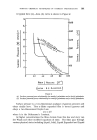
384 JOURNAL OF THE SOCIETY OF COSMETIC CHEMISTS Zeta Potential When one phase is dispersed in another, electrical charge separation occurs either by adsorption of ions from one of the phases, or by an electrical dipole at the interface. These electrical charges play an important role in determining emulsion stability, especially of the water in oil type. The presence of such electrical charges may promote or hinder penetration of "active" ingredients through the skin. The zeta potential at an interface may be determined by measuring the speed with which the dispersed phase migrates under an electrical potential. The particles are observed with an ultra-microscope. Thus, oil, water, skin or hair may be dispersed in suitable media and this migration deter- mined using a micro-electrophoresis cell of the type described by Bradbury and Jordan •ø. The zeta potential and charge density on the particle may thus be calculated from the speed of migration and the applied potential. The technique has been successfully used to gain insight into the mech- anism of the salt precipitation of various colloids and dispersions. It has been shown that coagulation is due to a reduction in the thickness of the double layer and zeta potential. CONCLUSION The above descriptions of surface chemical techniques are by no means exhaustive. They have been collected together to direct thinking along such lines as might be found useful in determining some of the basic surface chemical and physical problems of cosmetic formulation and application. It must, however, always be borne in mind when interpreting this type of experiment, that quite often over-simplified model systems have to be used in order to make the measurements. Thus measurements on the Oil/Water interface described above neglect the interface/interface interaction which is always present in a concentrated emulsion and very often determines its physical properties. ACKNOWLEDGMENT I should like to thank the Directors of County Laboratories Limited for permission to publish this paper. (Received: 16th June REFERENCES Dixon, J. K., Weith, A. J., Argyle, A. A., and Salley, D.J. Nature 163 845 (1949). Aniannsson G., and Lamm, O. Nature 165 357 (1950). Nilsson, G. troc. Second International Congress of Surface Activity I 141 (1957). Flengas, S. N., and Rideal, E. K. Trans. Faraday Soc. 55 339 (1959). Harkins, W. D., and Jordan, H.F. J. Am. Chern. Soc. 52 1751 (1930).

SURFACE CHEMICAL TECHNIQUES IN COSMETIC PREPARATIONS 385 Addison, C. C. J. Chem. Soc. 535 (1943). Rideal, E. K., and Schulman, J.H. Proc. Roy. Soc., London A 130 259 (1931). Posner, A.M., and Alexander, A.E. Trans. Faraday Soc. 45 651 (1949). Padday, J.F. Proc. Second International Congress of Surface Activity 1 1 (1957). Alexander, A.E. Bordeaux Conference on Surface Activity 123 (1949) (Butterworth's Scientific Publications, London). Matalon, R., and Schulman, J.H. J. Colloid Sci. 4 89 (1949). Alexander, A. E., and Cureper, C. W.N. Trans. Faraday Soc. 46 235 (1950). Blakey, B.C., and Lawrence, A. S.C. Disc. Faraday Soc. 18 268 (1954). Davies, J.T. Proc. Second International Congress of Surface Activity 1 220 (1957). Davies, J. T., and Mayers, G. R.A. Trans. Faraday Soc. 56 691 (1960). Monquin, H., and Rideal, E. K. Proc. Roy. Soc. London A, 114 690 (1927). Cumper, C. W. N., and Alexander, A.E. Australian J. Sci. Research, Ser. A 5 189 (1952). Alexander, A. E., and Teorell, L. Trans. Faraday Soc. 35 727 (1939). Davies, J.T. Nature 167 193 (1951). Bradbury, F. R., and Jordan, D.D. Blochem. J. 36 23 (1942). INTRODUCTION BY THE LECTURER THE CLASSICAL division of matter into three forms or phases, namely gas or vapour, liquid and solid, is satisfactory as long as one is concerned only with a continuous phase or the gross properties of a number of phases in contact with one another. If, however, the region of transition from one phase to another is examined closely, one finds what are in effect new forms of matter with special properties existing at these boundaries. These regions of transition are termed surfaces or interfaces. The simplest interfaces are liquid/liquid and gas/liquid. This paper is primarily concerned with review of the methods of examining these latter two interfaces, although there are many features in common amongst the various types of interface. Consider a pure water phase in which the molecules are all one kind. Each molecule will exert, as a result of its internal energy content, the same average force on its nearest neighbour. If an air/water interface is now formed, as for example by blowing a bubble or forming an Aerosol, those molecules at the surface will no longer be surrounded by molecules all exerting the same force. There will, in fact, be a resultant pull on the molecules at the surface directed towards the bulk tending to cause the surface to contract and take up a position of least energy content in which the area/volume ratio is at a minimum. Thus, a small drop of liquid or gas bubble will try to assume a spherical shape. The surface force involved here is known as the "Surface Tension" In the case of solutions of one or more substances, whose molecules differ in the magnitude of the forces exerted on each other, the unbalanced forces at the surface may be diminished in another way. The molecules with the greatest affinity for one another will pass into the bulk, while those with the
Purchased for the exclusive use of nofirst nolast (unknown)
From: SCC Media Library & Resource Center (library.scconline.org)