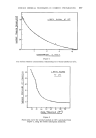
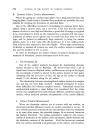
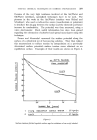
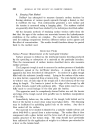
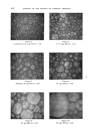
TECHNIQUES OF FOAM MEASUREMENT 391 weak foam, it is unlikely to be accepted as a good shampoo. Rinsing is expected to be easy. The domestic user assesses the foam removed by what is seen in the wash basin, so that it is important that the col/apse should be rapid and complete on dilution, and the foam should not simply wash off the hair. The detergent concentration in the solution applied to the soiled head, even allowing for the amount of water in the wetted hair, is high (1-5%-2.0%), which is well above the critical micelle concentration for the detergents studied. The amount of soil removed from the hair exhausts only about 5% of the detergency of the shampoo. Toothpaste foams are generated under more diverse conditions than shampoos. The volume and composition of the saliva, the amount and type of debris in the mouth, the vigour and time of brushing the teeth, vary considerably. Thus a toothpaste has to be more versatile in pro- ducing foam under these differing conditions. The volume must be suffi- cient to fill, but not overfill, the mouth it must feel solid, creamy and viscous and not elastic, thin or light. Finally, it must rinse out easily, but it is not important if it does not collapse. The concentration of detergent in toothpaste/saliva mixture from the mouth is about 0.25-0.40% which in some cases is very near the critical micelie concentration level. What are the important factors controlling the properties of foams ? We would like to be able to express the subjective properties in objective parameters, and a better understanding achieved by empirical methods will point to further research work in this field. Our aim has been to generate a foam under conditions which simulate actual usage, and to develop techniques for measuring all of the properties of the bulk foams which are possibly important in the subjective assessment. Previous work in this field has been almost exclusively devoted to a consideration of foam volume and drainage. These are relatively simple parameters which can easily be assessed, but we have extended the work to cover other, more nebulous, factors. These factors are, beside the foam volume and drainage, the viscosity, the change in viscosity with age of the foam (here called viscosity differential), light transmission, bubble size and distribution, and breakdown during rinsing. Results on the last technique are not yet sufficiently complete for presentation. When these properties are known it may be possible to forecast the characteristics and expected behaviour of the foam. The methods described are applicable to both toothpastes and shampoos and to other products. EXPERIMENTAL Generation of Foam Our aim was to make large amounts of foam under strictly controlled 5

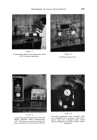
392 JOURNAL OF THE SOCIETY OF COSMETIC CHEMISTS conditions. This foam should be similar to the foam produced under usage conditions. The simplest foam generation experiments were carried out by shaking the detergent solution in a cylinder a number of times. Some authors •, • evolved shampoo foams by bubbling a known volume of air through a detergent solution, or by using an oscillating perforated disc in a cylinder of detergent. The first technique is not reproducible. The second is not realistic as there is no work simultaneously "making and breaking" the foam. The third technique is too restricted in the amount of air which can be incorporated. The generation of foam by beating with food mixers is widespread and was used as far back as 1933 by Henry and Barbour a in their studies on egg white. Besides food mixers, adapted food mixers and various other stirrers are also used. We chose a Sunbeam Mixmaster to generate the foams. Our choice was governed by the following factors: 1. The foam generated in the Mixmaster at the faster speeds is com- parable to the actual shampoo and toothpaste foams. 2. Air is freely incorporated. 3. Excellent reproducibility because of easy and accurate controls. 4. Speed of beaters is practically independent of the load on them. We measured the properties and specific (bulk) volume of foam produced on a head of hair when shampooed with a mild anionic detergent shampoo. When beating a similar solution on the Mixmaster the foam after 4 minutes' beating at 720 r.p.m. was found to be similar to the foam after 30 seconds' shampooing on the second application. The testing of toothpaste foams in a similar manner is technically impossible as saliva rapidly ages and the amount of foam produced when cleaning teeth is insufficient for experiments on the foam properties. Subjective tests, however, indicated that tooth- paste foam whipped between 720 and 820 r.p.m. for 1-4 minutes is similar in feel to the foam produced during the tooth brushing. Materials Tested We tested four shampoo detergent solutions and four toothpastes. The shampoo detergent solutions were typical detergents of the following types:-- A "mild" anionic detergent ref. M A "harsh" anionic detergent ref. H A non-ionic detergent ref. N A cationic detergent ref. C The anionic detergents are referred to as good foamers. When used as a shampoo the mild anionic produces a rich, creamy, voluminous foam.
Purchased for the exclusive use of nofirst nolast (unknown)
From: SCC Media Library & Resource Center (library.scconline.org)