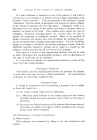
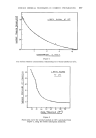
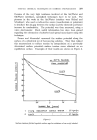
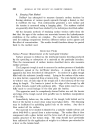
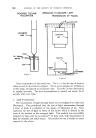
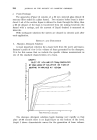
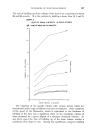
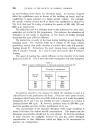
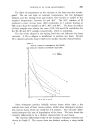
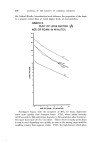
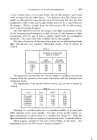
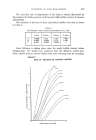
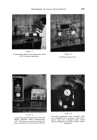
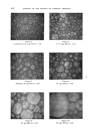
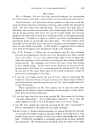
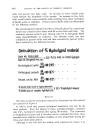
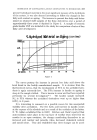
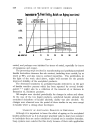
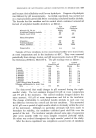
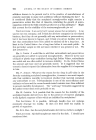
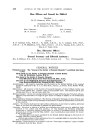
TECHNIQUES OF FOAM MEASUREMENT 393 The harsh anionic detergent is not as satisfactory in this respect as the mild anionic. The non-ionic detergent produces a small volume of foam which feels dry. The cationic detergent produces only a poor foam, which feels soft and elastic, and is hard to rinse out. The following types of toothpaste were tested :-- 2 phosphate-based toothpastes q- synthetic detergent Ref. PD/1, PD/2 Chalk-based toothpaste q- synthetic detergent Ref. CD Chalk-based toothpaste q- soap Ref. CS In use, the two phosphate-based toothpastes are classed as high foamers. PD/2 is the more acceptable of the two because of its rinsing out properties. CS is a very poor foamer and CD is intermediate between phosphate-based toothpaste and CS. EXPERIMENTAL TECHNIQUES a. Specific Foam Volume The foam is withdrawn from the mixing bowl at the required time with a glass tube and a container of known volume is filled with it. The amount of foam in this container is weighed, and the density and thence the specific volume calculated in ml/g. b. Measurement of Viscosity A modified Techne viscometer is used for all viscosity measurements. The principle of this viscometer is a weighted piston producing a constant air pressure which forces the foam under test through a capillary tube into the viscometer tube. The viscometer tubes are calibrated with standard mineral oils at 25øC. 50 ml aliquots are whipped in the small bowl of a Mixmaster. The samples are withdrawn with a wide bore glass tube at 1, 2, 4, 6 and 8 minutes after beating commences. During withdrawal the Mixmaster is momentarily stopped. Care is taken to avoid the formation of air pockets when with- drawing the foam from the mixing bowl and transferring it to the viscometer cup. The viscometer head is placed over the cup (Figure 1), some foam having first been smeared around the edge of the cup. It is then connected to the pressure unit, the plunger released and the time taken by the foam to travel between two_marks on the tube is noted. The viscosity, in centi- stokes, is the time in seconds multiplied by a factor, if any, for the viscometer tube. In order to study the variation of viscosity with the age of a foam, numerous viscosity measurements are carried out on one foam at quick time intervals.

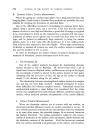
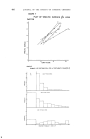
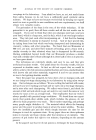
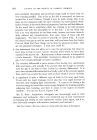
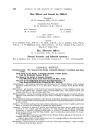
394 JOURNAL OF THE SOCIETY OF COSMETIC CHEMISTS MODIFIED TECHNE VISCOM ETER APPARATUS TO MEASURE LIGHT TRANSMISSION OF FOAMS VISCOMETER TUBE TO TECHNEHEAD••I•'[• CU P• 11 I Figure I '•TO 6v. AccU-I - MICROSCOP5 [ LAMP -'• I I FOAM CELL PHOTO- I CEIl" ,• I ' TO AL•ER Figure Foam is generated in the usual way. The t -- o for the age of foam is taken as soon as the mixer is stopped. Six to seven samples are withdrawn at this stage, and placed in viscometer cups. Viscosity is then determined at regular intervals. The first determination is carried out about 15-17 seconds after zero time. c. Light Transmission The transmission of light through foams was investigated by Clark and Blackman 4. They postulated that the loss of light transmission through a layer of foam is a function of the degree of dispersion of air. They expressed the loss of light in terms of loss factor which is defined as the ratio of the incident to the emergent light. This method was successfttlly adopted by Ross and his co-workers 5' 6 in their work with transmission of light by unstable and stable foams. The method we use is similar in many respects to the above.
Purchased for the exclusive use of nofirst nolast (unknown)
From: SCC Media Library & Resource Center (library.scconline.org)