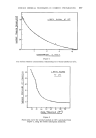
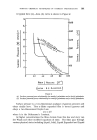
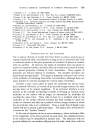
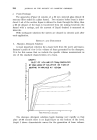
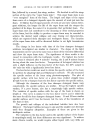
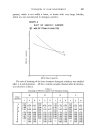
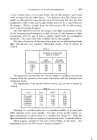
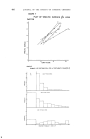
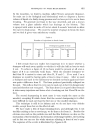
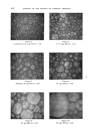
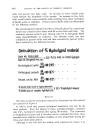
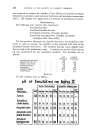
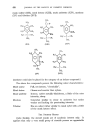
TECHNIQUES OF FOAM MEASUREMENT 407 The very fast rate of degradation of the foam is clearly illustrated by the number of bubbles present at 30 seconds (186 bubbles) and at 5 minutes (43 bubbles). The variation of the area of three individual bubbles with time is shown in Table $. Table $ CD Bubbles--area of individual bubbles in sq. cms. l min. 3mins. 5mins. 8mins. A. 0.0566 0.113 0.150 0.169 B. 0.0267 0.0780 0.113 0.156 C. 0.0011 0.0004 0.0002 -- Some diffusion is taking place since the small bubble shrinks before disappearing. We would have expected that the diffusion would have been a slower process, and we believe that some bursting must be occurring. G •APl..I 9. RATE OF DRAINING OF MOTHER LIQUORS s •o AGE OF FOAM IN MINUTES

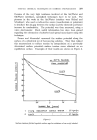
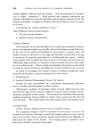
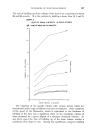
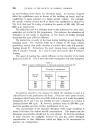
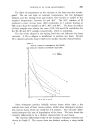
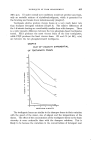
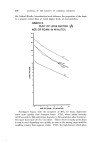
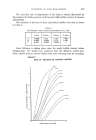
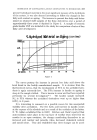
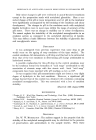
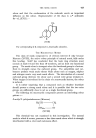
z•08 JOURNAL OF THE SOCIETY OF COSMETIC CHEMISTS The volume of liquid drained by the toothpastes is very much lower than with the shampoos. This is due to the viscous nature of the toothpaste foams. PD/1 and PD/2 after 1 minute's beating have similar drainage rates. However, after 4 and 8 minutes the drainage rate of PD/1 is much slower. The wide gap observed between the 4-8 minute PD/1 and PD/2 results is not present with CD, where the 1, 4 and 8 minute drainage rates are much more similar. The drainage rate of CS cannot be measured in this way as it blocks the sinter (Graph 9). CONCLUSION The various measurements outlined in the paper have been useful in characterising a foam. Some measurements, such as the viscosity differ- ential, are characteristic for individual foams, whilst others like foam volume, do not in themselves characterise the foam. When all the tests discussed are applied to one particular foam its characteristics are readily interpreted. ACKNOWLEDGMENT I wish to thank Unilever Limited for permission to publish this work, and Mr. J. Ravenhill for valuable technical assistance in developing the methods reported. (Received: •$rd June 1960) REFERENCES Perri, J. M., and Hazel, F. Ind. Eng. Chern. •t8 540 (1046). Barnett, G., and Powers, D.H. Proc. Sci. Sect. Toilet Goods Assoc. 24 (December 1055) Henry, W. C., and Barbour, A.D. Ind. Eng. Chern. 25 1054 (1033). Clark, N. O., and Blackman, M. Trans. Faraday Soc. 44 1-7 and 7-13 (1048). Ross, S., Barth, B., and Terenci, J.F. J. Phys. Chern. 58 247 (1054). Ross, S., and Cutilas, M.J. Ibid. 58 865 (1055). INTRODUCTION BY THE LECTURER THE AIM of our experiment was to have a set of physical properties with regard to foam which are similar to a liquid's boiling point, refractive index, or solubility. In other words, we wanted to get a set of practical as well as useful results. And I hope we have achieved this to some degree. These techniques which you have in front of you are, we hope, useful techniques and they give useful properties of the foam we are concerned with. To date we only had time to work with shampoo solutions and toothpaste solutions. It is easy to get a soiled shampoo solution simply by collecting the soiled water in hairdressing salons or, as we do quite often, by washing some salon
Purchased for the exclusive use of nofirst nolast (unknown)
From: SCC Media Library & Resource Center (library.scconline.org)