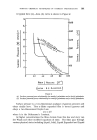
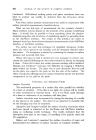
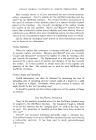
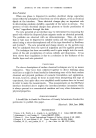
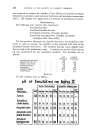
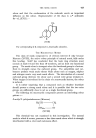
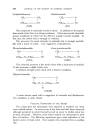
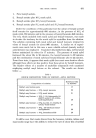
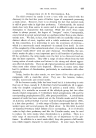
THE MUSK ODOUR 423 THE MUSK ODOUR J. PICKTHALL, F.R.I.C.* Delivered at the Summer Conference of the Society on 25th August 1960. The Musk Odour is of great importance in all branches of l•erfumery. Compounds possessing a Musk Odour are found in the following six structural types :--benzene, tetralin, indane, nitro, steroid and macrocyclic. It is possible to select certain chemicals, each with an odour reminiscent of natural musk but with special odour characteristics of their own, which can be used in periumes for a variety of purposes. The macrocyclic chem- icals are of special interest on account of their structural similarity to Muscone, the active ingredient of Musk from the deer. INTRODUCTION MUSK-LIKE fRODUCTS are employed in every branch of perfumery from the most expensive handkerchief perfumes down to the cheapest of industrial deodorants. Natural musk has been known for centuries and is obtained from the musk deer. This animal, which lives in high altitude wooded' districts, possesses a pouch which contains the "musk grain". These grains are extracted with alcohol and allowed to stand for several months. After filtration the musk tincture is obtained and this alcoholic solution is employed to impart character and tenacity to high-class perfumes. Other animal sources of products which possess musk-like odours are: rat, duck, shrew, beetle, ox, alligator, goat, civet-cat, rock-badger and zebra. Certain plants also give off musk-like odours and these include angelica, ambrette seeds and less importantly, mallow, thistle and orchis. In 1906 the odour principle of the musk-grains was isolated and named Muscone. In 1926, Ruzicka revealed its structure as 3-methyl-l-cyclo- pentadecanone. In view of this revelation, it is not surprising that much time and money has been spent on the production of macrocyclic compounds in the search for chemicals with musk4ike odours. It must be remembered that other musk4ike bodies had been synthesised many years before muscone was discovered. The classical example is musk Baur, trinitro- tertiarybutyltoluene, prepared by Baur in 1888. The value of this product in those days is illustrated by the fact that it was diluted with nine times its weight of acetanilide and sold at half the price of the natural tonquin musk. In 1889, Baur prepared trinitrotertiarybutylxylene, which is known *International Flavors and Fragrances (Great Britain) Ltd., Enfield, Middlesex.

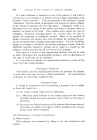
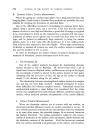
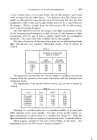
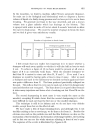
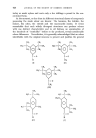
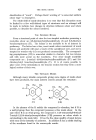
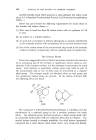
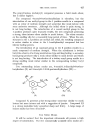
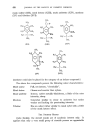
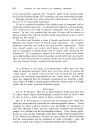
424 JOURNAL OF THE SOCIETY OF COSMETIC CHEMISTS today as musk xylene and costs only a few shillings a pound in the con- centrated form. At the moment, no less than six different structural classes of compounds possessing the musk odour are known: The benzene, the tetralin, the indane, the nitro, the steroid and the macrocyclic musks. It seems remarkable that such widely divergent structures can produce odours with one distinct characteristic and in all fairness an examination of the hundreds of "musk-like" bodies so far produced, reveals considerable odour differences. Nevertheless, it is generally acknowledged that an odour identifiable with the original muscone is present and justifies the general CH• CH• CHa CH• C CHa C C=0 C---0 I •I-I• H (II) (I) CH3 CH3 C=O C•H• (IIr) CHa H•C -- C -- CH• CH• C=0 H (•V) CH• CH= H•C -- [C -- CH• HaC0 -- CH, CH3 C=O (v)
Purchased for the exclusive use of nofirst nolast (unknown)
From: SCC Media Library & Resource Center (library.scconline.org)