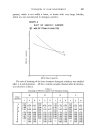
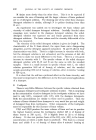
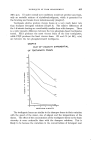
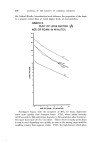
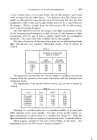
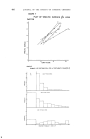
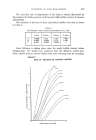
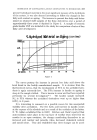
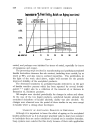
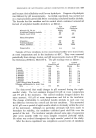
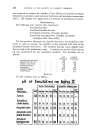
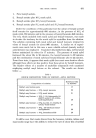
RESISTANCE OF ACETYLATED LANOLIN DERIVATIVES TO HYDROLYSIS 421 0nly minor changes in pH were evidenced in any of the above emulsions except in the preparation made with acetylated glycerides. Here a cor- rected change of 0.4 pH at room temperature and 1.1 pH in the incubator were significantly accompanied by the breaking of the emulsions and odour development. The changes in pH in the emulsions made with acetylated lanolin derivatives were in most cases within the range of accuracy of the pH meter. There was no change in stability nor in odour development. We cannot explain the instability of the acetylated monoglycerides in an emulsion system as compared to the acetylated derivatives of lanolin. This may reflect a basic difference between the stability of glyceride fats and non-glyceride waxes. DISCUSSION It was anticipated from previous experience that some drop in pH would occur on the ageing of soap emulsions of the type studied. The control emulsions did demonstrate a pH drop and this had to be subtracted from that of the test emulsions in determining pH change attributable to hydrolyzed acetate. A possible explanation for this pH drop in the control emulsions may be the tendency toward the formation of "acid soaps" attributable to the association of stearate soaps with free stearic acid. Such "acid soap" compounds have been reported with pH readings as low as 6.0 ø. It was recognized that pH measurements might not detect a very slight .degree of hydrolysis in the test emulsions. However, a significant pH change beyond that of the control was obtained with emulsions containing acetylated monoglycerides. This was associated with a loss of emulsion stability. (Received: 2$th August 1960) REFERENCES Truter, E.V. Wool Wax Chemistry and Technology, First Edn. (1956) (Interscience Publishers, New York) Gillam, N.W. .4ustralian Chemical Institute Journal & Proceedings, 14 361 (1947) Kitchen, G. F. and Clark, E. W., Pharm. Ind. 22 5 (1960) Sulzberger, M. B., Warshaw, T., and Herrmann, F., J. Invest. Dermatol. 20 33 (1953) Everall, J., and Truter, E. V. J. Invest. Dermatol. 22 493 (1954) Harry, R.G. Cosmetics, First Edn. 155 (1956) (Chemical Publishing Co.) DISCUSSION DR. W. W. }V[YDDLETON .' The authors suggest in the preprint that the stability of the acetylated monoglyceride may be attributed to the presence of preservatives and antioxidants in the sample studies. Were these

422 JOURNAL OF THE SOCIETY OF COSMETIC CHEMISTS additives known to be present and is it the practice of manufacturers of cosmetic materials to make such additions without disclosing the fact ? Is it considered likely that the acetylated monoglycerides might exercise a preservative action like that of triacetin, inhibiting the growth of micro- organisms either in the bulk cosmetic product or as a skin antiseptic ? Might this account for the stability of the acetomonoglyceride per se ? T•E LECTURER: I am sorry but I cannot answer for an industry. I can say for our own company, and I think for all those companies in our related business, that they do not generally add any antioxidants or preservatives,. but it has been known to happen, and I think you all are famihar with the fact that antioxidants have been added to mineral oil for a long time. At least in the United States--for a long time before it was made public. In this particular sample we did not know whether it was present or not. We just assumed so. MR. S. Co•E•: I would like to add that antioxidants and preservatives are generally not added to saturated monoglycerides. However in the case of liquid or plastic-type emulsifiers having high Iodine Values, antioxidants are useful and are often added to increase stability. In the United States the amount and type used are generally stated. It is suggested that the cosmetic chemist request this information from the supplier if it is important to him. MR. F. AT•:•s: Whatever the reason for the drop in pH value in the formula containing acetylated monoglycerides, it seems to me most improb- able that oxidative rancidity is involved, whether that material contained any antioxidant or not. Triethanolamine is one of the most efficient anti- oxidants we have and the cream formula tested contains more than sufficient to present rancidity development. The "acid soap" formation suggested by the author seems much more probable to me. MR. H. CARTER: IS it possible that the reason for the stability of the acetylated lanolin derivatives is due to the presence of enzymes analogous to the lipolytic enzymes of fats which are inhibited by acetylation ? T• LECtUReR: It is possible. Although lanolin does not undergo enzymatic cleavage too readily. It does not lend itself too readily to growth of organisms. DR. B. L. RAo: Are the acetylated lanolin derivatives stable to sunlight ? T• LECTURER: All shelf samples are stored in the dark. I should have mentioned that.
Purchased for the exclusive use of nofirst nolast (unknown)
From: SCC Media Library & Resource Center (library.scconline.org)