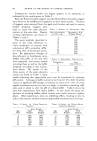
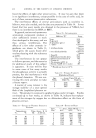
442 JOURNAL OF THE SOCIETY OF COSMETIC CHEMISTS The first work on assay methods suitable for routine use was done in connection with clinical testing, since the phosphatase activity of blood serum is of diagnostic importance. The amount of enzyme is expressed in terms of its ability to cause hydrolysis of a phosphate ester, such as a glycerophosphate, with libera- tion of free inorganic phosphate. Fundamentally, the measurement is one of the rate of phosphate production, and this of course varies with experi- mental conditions as well as with the phosphatase activity. The amount of inorganic phosphate set free from an ester will depend not only on the amount or concentration of enzyme, but also on the reaction time, the temperature, the nature of the substrate, interfering substances and other variables. Over the years different investigators have developed procedures of progressively improved efficiency. Unfortunately the units of phosphatase activity adopted by different authors have not always been the same, and therefore the phosphatase units obtained by different procedures are not generally interconvertible. One of the definitions of phosphatase activity is that suggested by Jenner and Kay in 1932 (1). According to these authors, one unit is the amount of enzyme that will liberate one rag. of phosphorus as free phos- phate from an excess of disodium-•-glycerophosphate in three hours, at 37.5øC., at a pH of 8.8, with certain other conditions specified. King and Armstrong (2), when working on a new assay inethod, de- veloped one in which the units were numerically equal to those of Jenner and Kay. Whereas the Jenner and Kay method required upwards of three and one-half hours, the King and Armstrong procedure could be completed in but thirty minutes. King and Armstrong used disodium phenylphosphate as the substrate instead of glycerophosphate. Their method, as modified later (3) defines an alkaline phosphatase unit which has been adopted by a number of manufacturers of placenta extracts. By the King and Armstrong defini- tion, one unit of phosphatase activity is the amount of enzyme which will liberate one rag. of free phenol from an excess of disodium phenylphos- phate, at a pH of 9.0, in thirty minutes at 37øC. Although the King and Armstrong method measures phenol produced, the nature of the substrate and the conditions are such that the number of units found in a sample equals numerically the number determined when phosphate is liberated from glycerophosphate by the Jenner and Kay (1) procedure. In spite of the fact that the King method is prescribed in quite some detail (3), it has been disturbing in this field of placenta extract assay that different laboratories frequently disagree in their assay results on the same material. This report describes a study of the effects on assay results

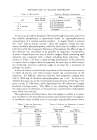
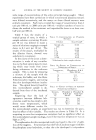
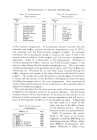
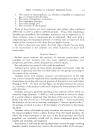
DETERMINATION OF ALKALINE PHOSPHATASE 443 when each of the steps in the procedure is varied purposely and system- atically. The assay procedure we suggest is substantially the 1942 modification by King et al. (3) of the King and Armstrong method. The method involves the use of the Folin-Ciocalteu reagent (4) for colorimetric estimation of the phenol which is liberated as a result of the action of phosphatase on the phenyl phosphate. Since the reagent is a protein precipitant, some of it is lost by reaction with the protein of the blood serum or of the placenta extract. In the published King and Arm- strong method, the authors attempt to partially compensate for this by using different amounts of reagent in their known phenol comparison stand- ards than they do in the unknown. Each known phenol standard is reacted with a different amount of the color developing reagent. Although this would be theoretically inaccurate in the absence of interferences, we have found no difference in results when the procedure is carried out rigorously as to reagent concentration. However, those comparison tests were made over a relatively small range of enzyme concentrations. Since our interests cover a wide range of con- centrations and a variety of added substances, we decided it would be better to eliminate the inconsistency of using different amounts of reagents in the standards than are used in the samples. We have therefore sug- gested a modification in the manner of preparing the phenol comparison standards, and in addition made a change in the Folin-Ciocalteu reagent concentration. The method, with this slight modification, gives placenta extract assay results in agreement with those given by the original or modified King methods, and tests of series dilutions establish that it has the advantage of being consistent over a wide range of phosphatase con- centration. The assay procedure is given below: Reagents Folin-Ciocalteu Reagent To a 2-liter flask add 100 grams of sodium tungstate (Na2WO4.2H20), 25 grams of sodium molybdate (Na2MoO4.2H20) and 700 ml. of distilled water. When dissolved (slight warming may be neces- sary), add 50 ml. of phosphoric acid (85 per cent) and 100 ml. of concentrated (12 N) hydrochloric acid. Reflux for ten hours. At the end of the reflux period, cool, and add 150 grams of lithium sulfate (Li2SO4.H•O), 50 mi. of distilled water, and 2 or 3 drops of liquid bromine, and again heat (without reflux this time) to remove excess bromine (Note 1). Cool and dilute to 1000 cc. Filter if necessary and store in an amber bottle to protect from light. The solution should be yellow in color, free from any greenish tint. It should be not more than three months old when used. Dilute Folin-Ciocalteu Reagent Dilute the reagent, prepared as above, one part reagent to 2 parts distilled water. This diluted reagent is stable for three months.
Purchased for the exclusive use of nofirst nolast (unknown)
From: SCC Media Library & Resource Center (library.scconline.org)