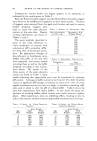
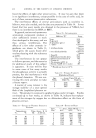
444 JOURNAL OF THE SOCIETY OF COSMETIC CHEMISTS Buffer Solution Dissolve 6.36 grams of anhydrous Na2CO3 and 3.36 grams of NaHCO.• in distilled water, and dilute to 1000 ml. (Note 2). Substrate Solution Dissolve 2.18 grams of disodium phenyl phosphate in 1000 ml. of water. Bring to a boil, and add a few drops of chloroform as a preservative. This solution must be freshly prepared every two weeks. Standard Phenol Solution Prepare a phenol solution containing 1 rag. phenol per ml. by dissolving 1.00 gram of U.S.P. phenol in 1000 ml. of water. This solution should be assayed by the U.S.P. method for phenol, and if necessary adjusted to the proper concentration. Standards Prepare standards containing 0.04 rag. phenol, 0.08 mg. phenol, and 0.16 rag. phenol per ml. by diluting respectively 4 ml., 8 mi. and 16 ml. of the standard phenol solution to 100 ml. These solutions should be made just prior to preparation of the standard curve. Prepare a standard curve of optical density rs. rag. phenol by following the procedure for nonincubated sample solution, except that 0.5 ml. of the standard is used in place of 0.5 ml. of sample. The phenol contents of the three nonincubated samples will be 0.02 rag., 0.04 rag. and 0.08 rag., respectively. Procedure Sample Solution The solution to be tested is diluted to a strength of about 10 K & A units per 100 mi. (Note 3). This is referred to as "sample solution." Incubated Sample Solution Place 5 ml. of buffer solution and 5 ml. of substrate solution in a test tube and place in a water bath maintained at 37øC. (plus or minus 0.5øC.). After ten minutes, add exactly 0.5 mi. of the sample solution and mix well. Stopper the tube and allow to remain in the water bath for fifteen minutes more. At the end of the fifteen minutes, and without delay, add exactly 4.5 cc. of the dilute Folin- Ciocalteu reagent and mix well. Nonincubated Sample Solution Place 5 ml. of buffer solution and 5 ml. of substrate solution in a test tube. Mix well. Add exactly 4.5 cc. of the dilute Folin-Ciocalteu reagent and then exactly 0.5 ml. of the sample solution (in the order given). Reagent Blank Place 5 mi. of buffer solution, 5 mi. of substrate solution, exactly 4.5 ml. of dilute Folin-Ciocalteu reagent and 0.5 ml. of distilled water in a test tube. Mix well. A blank should be run each day as its value changes with aging of the substrate solution. Reading To each of the tubes prepared as above (each now contains 15 ml.), add 4 ml. of 20 per cent Na2COa solution and mix thoroughly. Place the tubes in the 37øC., water bath for fifteen minutes to develop full color intensity, and then read in the spectrophotometer

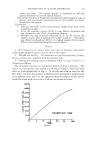
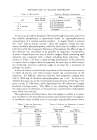
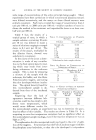
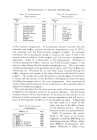
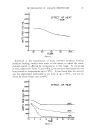
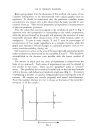
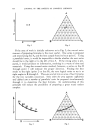
DETERMINATION OF ALKALINE PHOSPHATASE 445 within one hour. The optical density is measured at 650 mu, against the blank set at zero optical density. The optical densities of the phenol standards are plotted against rag. of phenol, and the phenol concentrations of the samples are deter- mined from this graph. Calculation 1. Subtract the O.D. of the nonincubated sample from that of the incubated sample. 2. From the standard curve of O.D. rs. rag. phenol, determine the rag. of phenol in the 15 mi. of incubated solution. 3. Multiply the rag. of phenol obtained in (2) by 20 and by the dilution factor used in making the "sample solution." This gives rag. phenol produced per 100 ml. of original sample (which equals K & A units of alkaline phosphatase per 100 mi.). NOTES 1. It is important to remove every last trace of bromine, and starch- iodide paper should be used to test for this in the vapors. 2. The pH will be 10.1. No substitutions may be permitted, as phos- phates, citrates, etc., interfere with the reaction rate. 3. Satisfactory readings may be obtained within a r:•nge cf about 1 to 60 units per 100 mi. The procedure includes an incubation period of fifteen minutes. The results of varying this time period are shown in Table 1, with the same data set forth graphically in Fig. 1. It can be seen that at least for the first thirty minutes the amount of phenol ester hydrolyzed is proportional to incubation time, and it is also apparent that the fifteen minute period should be timed with an accuracy of about one minute or better. 3200 2800 2400 2000 1600 1200 800 400 0 o ß 5 I0 15 20 25 MIN. TIME Figure 1.
Purchased for the exclusive use of nofirst nolast (unknown)
From: SCC Media Library & Resource Center (library.scconline.org)