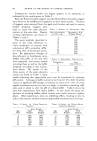
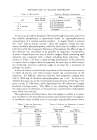
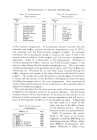
THE USE OF TERNARY DIAGRAMS IN COSMETIC FORMULATION By R. J. JAMES and R. L. GOLDEMBERG* Presented May I2, I960, New York City FORMULATING NEW PRODUCTS for the cosmetic industry has always been a relatively slow and tedious task. On the other hand, due to con- stant competitive pressure, the sales and advertising departments of a cosmetic company must constantly demand new products in a hurry. In the final analysis, the success of a company is measured in terms of both the number and quality of successful products brought to the market. To satisfy these pressures for both quality and quantity requires either a large laboratory staff or an efficient smaller one. It is not generally realized in sales and marketing circles how severely the formulating chemist is limited by the time allowed him for developing a new product. Unfortunately, the surest (and sometimes only) test of a product's shelf life is to wait out the desired period of time. Accelerated shelf-life procedures such as the use of warm ovens, hot and cold alternating cycles or special vibrators, etc., are only an indication of the product's ultimate shelf life. Blind acceptance of such test procedures has occasion- ally led to unexpected and embarrassing product failures. Since all com- mercial laboratories necessarily work under pressure of time limitations, a crucial ability needed is the one to make the "right" series of variations in the hope that one of them will eventually turn out to have sufficient shelf-life stability as well as other desirable properties such as appearance, feel, color, etc. In this paper we offer a new method to increase the productivity of the formulating chemist and to help him turn out a product having desired characteristics more quickly and with greater assurance. It combines a concept of approach with an improved method of recording information. Let us first analyze the present methods of developing formulations so that we can then move on to logical improvements. What are the steps involved in developing new products? First, there must be an idea or a goal toward which the laboratory work will be pointed. Second, there is usually some conception of how to start toward this goal. Shulton, Inc., Clifton, N.J. 461

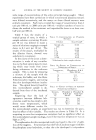
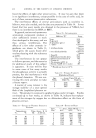
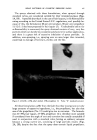
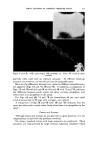
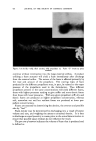
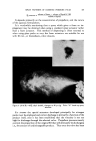
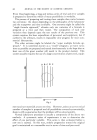
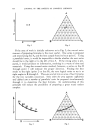
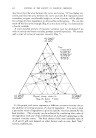
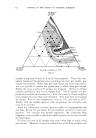
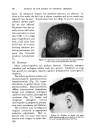
462 JOURNAL OF THE SOCIETY OF COSMETIC CHEMISTS From these beginnings, a long and tedious series of trial and error samples is prepared to determine which of many possibilities is workable. The process of preparing and testing these samples then varies between two extremes: the choice depending on the philosophy of the laboratory and the manpower and time available. One extreme might be called the "single formula approach," wherein only one variation of a formula is prepared at a time and then tested. The composition of each new variation then depends upon the test results of the previous one. This system requires the least expenditure of personnel and equipment, but if carried to the ultimate, results in impossibly slow progress for most com- mercial laboratories. The other extreme might be labeled the "super multiple formula ap- proach." It is sometimes known as a "crash" program as many varia- tions as possible are prepared and tested simultaneously in the hope that at least one of this great number will result in the product desired. This system usually requires the use of a large concentration of personnel, equip- Fig. 1 merit and raw materials at any one time. However, unless an astronomical number of samples is prepared and all possibilities covered systematically, there is still no guarantee that the problem will be solved quickly. Normal laboratory procedure is usually a compromise of the above two methods. A systematic series of experiments is run to determine the effect of one particular variable. This series is then evaluated before a new one is started. In this way, orderly progression toward the original goal is maintained at a reasonable cost in terms of time and personnel.
Purchased for the exclusive use of nofirst nolast (unknown)
From: SCC Media Library & Resource Center (library.scconline.org)