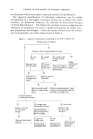
80 JOURNAL OF THE SOCIETY OF COSMETIC CHEMISTS very large diverse group of naturally occurring proteins each one being produced by a fixed line of mature lymphocytic type cell. This is in con- trast to the more orthodox view that antibodies are new species of proteins molded on either antigen or antigen-modified templates. The antigen according to this natural selection theory serves simply as a selective stim- ulus which brings about an increased rate of production of those particular naturally produced globulins with which it can react and which normally would otherwise be present only in such minute amounts as to be only rarely detectable by ordinary immunological techniques This selective stim- ulation has further been postulated to occur mainly at the cellular level through the selective stimulation of cell proliferation by the antigen-anti- body complex of only those antibody producing cells in the general popu- lation of such cells which can produce globulin configurations that match the configuration of the antigen in question THE SKIN AS A SENSORY ORGAN By R. K. WINKELMANN, M.D., Presented September 15-16, 1960, Seminar, Chicago STIMULI BOMBARD US continually, causing sensations that man has learned to call by names such as pain, touch, heat and cold. We have come to recognize that certain intensities of these sensations give pleasure, others discomfort. These sensations are different for each of us because in- dividual variations in the activity of the central and peripheral nervous systems produce perceptual differences. Such factors as attention, emotion and the physical state of the body condition the reception of a sensation in the brain. All sensations finally perceived must filter through the neuronal pathways of the spinal cord, where they may be modified by sensa- tions from other levels of the cord. The cutaneous receptors, which are the subject of this discussion are the point of origin for a major portion of the sensory load. The sensation as it is finally selected for recognition in the brain is the result of all these processes in the brain, spinal cord and skin. The skin is a physiologic paradox, for it serves two mutually exclusive functions: It provides protection from the environment, and it provides for a sensitive recording by the nervous system of the environment and its changes. Absolute protection means minimal sensory perception ab- * Mayo Clinic and Mayo Foundation, Rochester, Minn. This investigation was supported in part by Research Grant B-1755 from the Public Health Service.

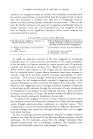
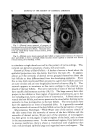
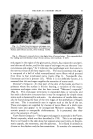
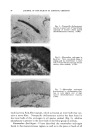
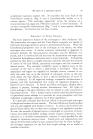
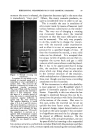
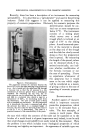
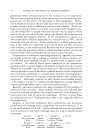
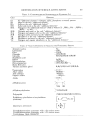
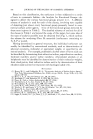
THE SKIN AS A SENSORY ORGAN 81 solute sensory capacity means minimal protection. The nervous system in the skin is a direct index of the ability of the organism to function in its environment. Simple animals have rudimentary sensory systems near the surface. As the functional capacities of the animals become more com- plex, so too do the structures and organization of nervous tissue in the skin. The primate with the grasping function of its hands, has a considerably different sensory structure than does an animal that has only paws. It is presumed that the paw perceives the same basic sensations that are per- ceived by the hand but, of course, this is anthropomorphic reasoning. All phylogenetic changes are in the direction of acuteness of sensation--that is, of overcoming the epidermal barrier. Acute sensation, with its accom- panying acute protective reflexes, becomes in itself a protective barrier thus, in place of the thick epidermal barrier of lower animals, the primate has developed a protective zone in its acute sensory capacity and nerve endings. Tradition teaches that the four basic modalities of sensation--pain, touch and the temperature sensations of cold and warm--have each a specific receptor in the skin, a specific pathway for central communication and a specific locus of perception in the brain (1). In the past decade it has gradually become apparent, through the work of Weddell and his colleagues (2, 3, 4) and the author (5, 6, 7), that there is no such specificity of nerve endings and that a basic simplicity exists in the nerve endings of the integu- ment. In Table 1 are listed the nerve endings that can be accepted on the basis of present-day neurohistologic studies, and it is one purpose of this paper to emphasize the lack of morphologic and physiologic specificity that these endings possess. NERVE ENDINGS OF THE INTEGUMENT Derreal Nerve Networks.--These are found in the skin of all mammals and have everywhere a basic structure, consisting of an associative network of nerve fibers each of which originates from a different dorsal-root ganglion 1--NErvE ENDINGS OF THE INTEGUMENT Dermal nerve networks Hair-follicle nerve networks Mucocutaneous end-organ Meissner's corpuscle Vater-Pacini corpuscle Mammalian end-organ cell. The meshwork in the deeper tissues is broad, but it becomes nar- rower as the diameter of the fiber grows smaller in the more superficial ]ayers of the skin (Fig. 1). Im- mediately under the skin the nerves fi)rm a final network, which is closely applied to, or enters, the epidermis. These networks of nerves are present before birth and during the life of the individual. Separate components of the networks are continually being changed (8). It is impossible, except under experimental conditions,
Purchased for the exclusive use of nofirst nolast (unknown)
From: SCC Media Library & Resource Center (library.scconline.org)