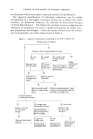
102 JOURNAL OF THE SOCIETY OF COSMETIC CHEMISTS preliminary before detailed analysis of the surfactant can be undertaken. The two major methods used to isolate surfactant from nonsurfactant com- ponents are: (1) Extraction (2) Adsorption or Chromatography. Extrac- tion methods are based on the principle that surfactants are usually soluble in polar solvents such as chloroform and the lower alcohols. If the sur- factant-containing mixture is a powder containing mainly inorganic mate- rial, the composition is usually extracted directly with an organic solvent such as 95 per cent ethyl alcohol, which will dissolve the surfactant and leave behind the inorganic material. If the composition is a paste, it is first evaporated to dryness, preferably in a vacuum oven at $0øC., before extracting with the solvent. If the composition is a dilute aqueous solu- tion, it may either be evaporated to dryness in vacuo and then extracted with a solvent, or the surfactant may be salted out with strong electrolytes such as soda ash, potassium sulfate or sodium chloride and then the mixture extracted with a water-immiscible solvent such as n-butyl alcohol. Compositions of surfactants containing mineral oil, vegetable oil or waxes are usually extracted with a solvent or mixture of solvents which is im- miscible with these materials, usually 1: 1 aqueous ethyl or aqueous isopro- pyl alcohol. In order to obtain better separation of the components, petroleum ether is usually added to the mixture to dissolve the oils or waxes. Mineral oil or paraffin wax emulsions, such as are often encountered in cos- metic preparations, may be handled in a similar manner by first evaporating them to dryness, preferably in a vacuum oven, and then extracting surfact- ants from the residue by the aqueous alcohol-petroleum ether method just mentioned. Alternately, isopropyl or ethyl alcohol may be added directly to the emulsion to make a 1:1 aqueous alcohol dispersion, and the dispersion extracted with petroleum ether to remove the oils and waxes. Recently, adsorption methods have been introduced for the isolation of surfactants from mixtures. These methods are much more selective than extraction methods and permit the isolated surfactant to be obtained in a much purer form than by extraction techniques. (In fact, in many Cases the isolated surfactant is much purer than when it was originally added to the composition.) Isolation of ionic-type surfactants from compositions may be accom- plished with ion exchange resins, using either the column technique (7, 8) or the batch method (la, 9, 10). Anion exchange resins are used to adsorb anionic surfactants and cation exchange resins are used to adsorb cationic surfactan rs. Ra • [CI - ] 4- Na *R- --* Ra • [R- ] q- Na • Cl- Anion Exchange Anionic Resin-Anionic Resin Surfactant Surfactant Complex Rc-[Na -•] 4- RN CI- --,- Rc-[RN -•] 4- Na*CI - Cation Exchange Cationic Resin-Cationic Resin Surfactant Surfactant Complex

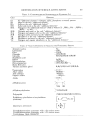
IDENTIFICATION OF SURFACE ACTIVE AGENTS 103 In the column technique, the surfactant-containing composition is perco- lated through a bed of the resin held in a glass tube, and all other materials except the ionic surfactant are removed from the column by eluting with appropriate solvents. In the batch method, the surfactant-containing com- position is stirred with a relatively small amount of the resin, which adsorbs the ionic surfactant. The resin-ionic surfactant complex is removed by fil- tration and washed on the filter to remove other materials. In either method, the ionic surfactant may be recovered froIn its complex with the resin by appropriate treatment. The ion exchange method of isolating ionic surfactants is limited by the fact that the surfactant-containing mixture which is to be treated with the ion exchange resin must be free of ionic material, otherwise there will be competition between the ionic surfactant and other ionic material for the available positions on the exchange resin. For this reason, the original composition is always rendered salt-free, usually by extracting it with an appropriate organic solvent in which any salts present are insoluble, before subjecting it to ion exchange. Since nonionic surfactants are not adsorbed by ion-exchange resins, this method can also be used to separate ionic-type surfactants from nonionic surfactants. Recently, Hobson and Hartley (11) have isolated nonionic surface active agents containing about 10 ethylene oxide units from compositions contain- ing mineral oil and fatty acids by a column chromatographic method using aluminum oxide as adsorbent for the mineral oil and other fatty material. The nonionic surfactants are not adsorbed by the aluminum oxide and are isolated by eluting with water. IDENTIFICATION Now that the surfactant or surfactants have been isolated from the non- surfactant components, their nature can be determined in a systematic fash- ion. If a mixture of surface active agents is present it should be separated into nonionic and anionic or cationic fractions by ion exchange methods, if this has not already been done during the isolation procedure. In many cases, after this separation, the fractions will be substantially pure, in- dividual surface active agents. If we should have a mixture of two or more surface active agents of the same charge type, for example, two dif- ficult nonionic surfactants or two different anionic surfactants, it is still possible to determine the nature of each component (la), but space pre- vents us from covering this aspect. ß Assuming, therefore, that we now have individual surface active agents to identify, the problem can be attacked by either instrumental or chemical methods. Since Manning covers instrumental techniques in his paper,
Purchased for the exclusive use of nofirst nolast (unknown)
From: SCC Media Library & Resource Center (library.scconline.org)