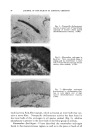
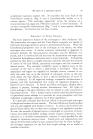
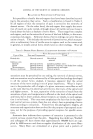
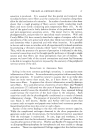
RHEOLOGICAL MEASUREMENTS IN THE COSMETIC INDUSTRY 91 determinations which can, for any given product, characterise it, so that when it gets into the hands of the consumer it will be considered to have that uniformity of quality which is an essential in preparations if they are to be well accepted by the public. It is well to consider the peculiarities of the human integument as it is through this tissue that the human brain gains cognizance of the attributes of cosmetic products. The free nerve endings in the skin are not closely nor uniformly packed over the whole area of the integument. They can respond to touch, light pressure and heat and other stimuli, but the mecha- nism by which the nerve endings appreciate the theological properties in materials is not at all understood. Nevertheless, any force applied to the skin must of necessity distort it and according to the intensity of the force, the nerve ending will react and pass the message on to the brain. SMOOTHNESS Smoothness of texture can be appreciated by the skin although it is very difficult to measure. Nevertheless, if smoothness itself as a textural feature is present, then it must, of course, show itself by the way in which light is reflected from its surface. Thus, one can appreciate that measuring the way in which light is reflected from a surface can be looked on as a theologi- cal determination. It is quite clear that the smoothness which is intrinsic in the surface of a liquid must tend to give specular reflection, whereas when there is some textural structure of magnitude greater than a wavelength of light, then a scattering will occur and although there may be a dominant angle at which light is reflected, nevertheless, there will be a scatter which could be used as a measure of the graininess, or lack thereof, of a cream. The problem of smoothness of texture is one which confronts the manu- facturer of tooth paste but here the conditions are somewhat different be- cause of the difference in the nerve endings in the epithelium of the mouth, this membrane being less sensitive to roughness than the skin. Of course, in this instance there is the peculiar property of saliva which could tend to mask roughness. Often, however, roughness or perhaps coarseness can be more easily detected by the biting of the teeth together. VISCOSITY Probably the easiest theological property which can be equated to the sensations appreciated by touch is viscosity in the Newtonian sense. The touch can distinguish differences between plain oils with varying viscosities, although sometimes the senses may be deceived, notably in comparing fixed with a mineral oil, because the one may have an unctuousness lacking in the other. In general, the use of oil on the hair can create a sense of heaviness as

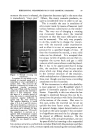
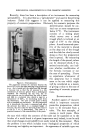
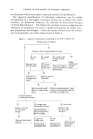
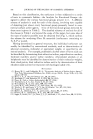
92 JOURNAL OF THE SOCIETY OF COSMETIC CHEMISTS a result of regular application, due, of course, not only to the "build-up" but also the viscosity. The difference between oils and different forms of them can be measured by taking a tress of hair, binding one end and sus- pending it from a spring balance. If a fine comb be drawn through the tress at constant speed, the drag can be determined. Such an apparatus can give values approximating to what the consumer finds when he combs his hair. The properties possessed by substances which can be appreciated by the human mind are many, all of which demand special methods of investigation. Many of the features overlap on to the others, so much so that it is almost impossible to hope for more than comparative figures which are true when the exact method of investigation is described. In other words, the phrase "under the conditions of the experiment" becomes a vital description of the experimental findings. Thus, even when a straightforward viscosity determination is carried out, it is essential to record whether or not it relates to streamline flow. Failure to ensure this may give values which are out- side the meaning of the results obtained when the Ostwald viscometer is used under the correct conditions. Sometimes, of course, the academic values may not be as real in the practical sense as those determined under conditions of turbulent flow simply because this sort of movement is often a requirement of speedy mixing. Viscosity in the less dynamic form is of immense value in considering the changes which can occur during storage. Here it is well appreciated that if the viscosity for any product be higher than some critical value, then per- manance of the preparation is likely, provided, of course, that there are no other physical-chemical changes going on which, in the ultimate, affect the basic viscosity of the product. Such changes tend to be of the fiocculent type, a good example being the decrease in consistency which occurs in a stearic acid cream when the fatty acid crystallises into pearly platelets. THIXOTROPY For investigating such problems, apparatus different from a simple vis- cometer, even of the nonacademic type, as for example, Ford Cup, is re- quired. Nor, indeed, is the falling sphere always of use. Thus, the effect of ageing under various conditions can be evaluated if a dynamic or rotating cup viscometer be employed (Fig. 1). It might be well to consider some of the properties which should be measured and one might as well start off with the most popular feature of a non-Newtonian fluid, viz., thixotropy. First of all, one must realise that the rate of thixotropic thickening varies with different systems. Some materials, as for example, printing inks and, indeed, a water dispersion of a substance such as Carbopol, become liquid on the application of a very small stress (Bingham parameter). The
Purchased for the exclusive use of nofirst nolast (unknown)
From: SCC Media Library & Resource Center (library.scconline.org)