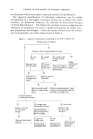
88 JOURNAL OF THE SOCIETY OF COSMETIC CHEMISTS activity and other histochemical reactivity of the end-organ are not re- lated to its function. However, in certain patients who have congenital absence of sensation, both the end-organ and the histochemical activity are missing, apparently from birth. In these unusual patients the somatic sensory system of nerves has not developed they do not feel pain or temperature sensations, al- though they may notice deep pressure. They are able to undergo major surgical procedures without anesthesia. In a patient studied recently the autonomic nervous system in the skin was completely developed, but no end- organs were present. I have demonstrated that nerves have no specific relationship to cancer of the skin, whether it is of epithelial or of derreal origin (20). However, cu- taneous nerves may form a site for the development of a primary tumor in the skin. Thus, neurofibromas, plantar neuromas, and congenital hamar- tomatous developments such as von Recklinghausen's disease may occur. These are tumors not of the active sensory nervous tissue but of the cells that surround it. These cells contain cholinesterase, and these tumors are cholinesterase positive the solitary neurofibroma is characteristically posi- tive. The plantar neuroma and amputation neuroma, being composed of proliferations of axoplasm, are not cholinesterase positive. Another tumor that is thought to be a tumor of the nerves on the basis of its cholinesterase content and its similarity, therefore, to sensory end-organs, is the dermal nevus (21). While occasionally an increased number of nerve fibers are present, nonspecific cholinesterase is present in large quantities in the der- mal nevus. Knowledge of the histochemical reactions of the nerves in the skin is leading to a more sophisticated classification of the pathology of cutaneous tumors. SUMMARY The sensory nerve endings in human and mammalian skin have been de- scribed, and it has been emphasized that the similarity of the features, both anatomic and histochemical, is remarkable, even in superficially distinct end-organs. The networks of derreal nerves have been shown to perceive all sensations for which testing methods have been devised. Similarly, all known end-organs may be associated with the sensation of touch. The structure of an end-organ or the nature of a specific stimulus is not the final determinant of the sensory q uality perceived from a given point in the skin that is decided by the pattern of reaction originated in the nerve endings and the nature of the fibers stimulated. The population of nerve fibers decreases rather than increases in itchy skin and in neurodermatitis. Cancer of the skin is not influenced by the cutaneous nerves. The cholinesterase activity found in sensory end-organs is found also in some nerve tumors of the skin and in the derreal nevus.

RHEOI.OGICAL MEASUREMENTS IN THE COSMETIC INDUSTRY 89 REFERENCES (1) Walshe, F. M. R., Brain, 65, 48 (1942). (2) Weddell, G., "Cutaneous Sensibility," in "Modern Trends in Dermatology," by R. M. B. Mackenna, 2nd Series, New York, Paul B. Hoeher, Inc. (1954), pp. 48-56. (3) Weddell, G.., Pallie, W., and Palmer, Elizabeth, •uart. •. Microbial. Sci., 95, 483 (1954). (4) Weddell, G., Palmer, Elizabeth, and Pallie, W., Biol. Revs. Cambridge Phil. Soc., 30, 159 (1955). (5) Winkelmann, R. K., "Nerve Endings in Normal and Pathologic Skin," Springfield, Ill., Charles C Thomas (1960). (6) Winkelmann, R. K., Proc. Staff Meetings Mayo Clinic, 34, (Jan. 21), 39 (1959). (7) Winkelmann, R. K., y. Comp. Neurol., 109, 221 (1958). (8) Weddell, G., y. Atnat., 77, 49 (1942). (9) Winkelmann, R. K., •inn. N.Y. Atcad. Sci., 83, 400 (1959). (10) Winkelmann, R. K., and Schmit, R. W., •i.M..4. •irch. Dermatol., 80, 543 (1959). (11) Montagna, William, and Ellis, R. A., y. Invest. Dermatol., 29, 151 (1957). (12) Winkelmann, R. K., •i.M.•i. •irch. Dermatol., 76, 225 (1957). (13) Winkelmann, R. K., "Similarities in Sensory End-Organs," read at the Providence Seminar on the Skin, Providence, R. I., January 30, 1959, in press. (14) Winkelmann, R. K., y. Invest. Dermatol., 29, 347 (1957). (15) Bishop, G. H., Physiol. Revs., 26, 77 (1946). (16) Wall, P. D., and Cronly-Dillon, J. R., •i.M.•i. •irch. Neurol., 2, 365 (1960). (17) Weddell, G., Sinclair, D.C., and Feindel, W. H., y. Neurophysiol., 11, 99 (1948). (18) Shelley, W. B., and Arthur, R. P., •i.M.•i. •irch. Dermatol., 76, 296 (1957). (19) Hurley, H. J., and Koelle, G. B., y. Invest. Dermatol., 31, 243 (1958). (20) Winkelmann, R. K., Ibid., 27, 273 (1956). (21) Winkelmann, R. K., Cancer, 13, 626 (1960). RHEOLOGICAL MEASUREMENTS IN THE COSMETIC INDUSTRY By R. H. MARRIOTT, D.Sc.* Presented September ZS-Z6, Z960, Seminar, Chicago, Ill. IT IS AS NEAP. a truth as does not matter to say that the usefulness of products and their appreciation by people involves the physical-chemical properties of matter. In the hands of the user the differentiation is made through the senses of touch, sight, hearing, taste and smell, all of which, singly or together, are involved when cosmetics are used. The cream in the pot is looked at, smelled, touched and often tasted. Hearing is not normally employed but this sense can be of value under dynamic conditions. The scroop of well-washed wet hair is an example of a physical test of the efficiency of a shampoo which can be detected by the ear. In use, cosmetic products are evaluated generally by touch. A stroke of the finger tells of rigidity, thixotropy, viscosity, smoothness and texture in general. Coupled with a seeing eye, simply spreading the preparation on the skin can cause the brain to appreciate uniformity, coherence, absorption and many of the features of a thin film--it may be shiny, be dull, or matt, * Consulting Chemist, London N. 20, England.
Purchased for the exclusive use of nofirst nolast (unknown)
From: SCC Media Library & Resource Center (library.scconline.org)