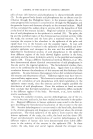
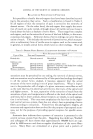
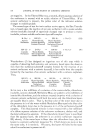
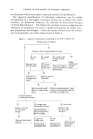
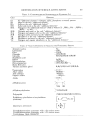
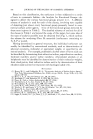
106 JOURNAL OF THE SOCIETY OF COSMETIC CHEMISTS Based on this classification, the surfactant is then subjected to a series of tests in systematic fashion--the Analysis for Functional Groups--de- signed to detect the various functional groups present in it. A different scheme of analysis is used for each of the classes, involving tests capable of detecting just about every functional group presently found in com- mercial surface active agents. A list of the functional groups detected by these tests is given in Table 2. The detailed schemes of analysis for all of the classes in Table 1 are beyond the scope of this paper, but some idea of the type of analysis possible may be obtained from Fig. 1, which outlines the scheme for analyzing Class IA materials (surfactants containing no N, S, P or metal). Having determined its general structure, the individual surfactant can readily be identified by conventional methods, such as determination of physical constants, molecular or equivalent weight, or quantitative ele- mental analysis. For example, polyhydric alcohol esters of fatty acids can be identified by determining their refractive indices, saponification numbers, hydroxyl numbers and/or iodine numbers ethoxylated alcohols or al- kylphenols may be identified by determination of their molecular weights, their cloud points, their refractive indices and/or by determination of their ethylene oxide content by treatment with hydrogen iodide (12). REFERENCES (1) Rosen, M. J., and Goldsmith, H. A., "Systematic Analysis of Surface-Active Agents," New York, Interscience Publishers, Inc. (1960), (a) pp. 260 if. (b) pp. 94 if. (c) p. 130 (d) pp. 109-110. (2) Hoyt, L. F., y. •lm. Oil Chemists' $oc., 24, 54 (1947). (3) Kortlandt, C., and Damreefs, H. F., Ibid., 32, 58 (1955). (4) Peter, K., Fette u. Seifen •Instrichmittel, 56, 997 (1954). (5) Weatherburn, A. S., Can. Textile 7., 71, 45 (1954). (6) Wurzschmitt, B., Z. anal' chem., 130, 105 (1950). (7) Ginn, M. E., and Church, C. L., •'Inal. Chem., 31, 551 (1959). (8) Weeks, L. E., and Lewis, J. T., 7. •Im. Oil Chemists' Soc., 37, 138 (1960). (9) Rosen, M. J., •'Inal. Chem., 29, 1675 (1957). (10) Barber, A., Chinnick. C. C. T., and Lincoln, •Inalyst, 81, 18 (1956). (11) Hobson, B.C., and l•Iartley, R. S., Ibid., 85, 193 (1960). (12) Siggia, S., Starke, A. C., Jr., Garis, J. J., Jr., and Stahl, C. R., •'Inal. Chem., 30, 115 (1958).

FUNCTIONS OF THE SKIN* By PETER FLESCn, M.D., Pn.D.• THE TOPIC assigned to me is so extensive that in order to give a bare outline, I will begin without any delay. Let us assume that someone would approach you with the problem of creating an artificial skin, a skin which would behave like human skin. You would be asked to give specifications for such a man-made structure. This request may not be quite as fantastic as it sounds at first. In our space age the Government may want to dispatch a man for prolonged inter- planetary travel before risking human lives, it would be decided to send a dummy for the first flight. This dummy would have to be covered with some fabric or material which would simulate the properties and functions of human skin during the long trip. Such a covering would be required to have some thermostatic device to keep the dummy's temperature constant, some mechanism whereby the composition of the inner fluids would be preserved and certain measures whereby it would replace material lost from the surface. Human skin has six basic functions. Three of these are essential for the well-being of the organism, three are rudimentary. The essential func- tions are protection, heat regulation and perception the nonessential functions are uptake, excretion and expression (of stress or emotions). PROTECTION The first and foremost function of the skin is protection. In order to understand our protective devices, we must keep in mind some basic phylogenetic developments. One of the most thndamental evolutionary changes that man has under- gone, has been the loss of his piliary system (1). All other terrestrial mammals are covered with fur. Some time, in the dimmest past, man has divested himself of most of his hairy covering and developed an efficient *This paper is based on an introductory course lecture given at the December, 1960, meeting of the American Academy of Dermatology and Syphilogy. Its publication is considered iustified by the inclusion of a number of recent key references, many of a review nature, which indicate new trends in the field. The author is greatly indebted to the Marine Biological Laboratories, Woods Hole, Mass., whose library facilities he was privileged to use during the Summer of 1960. • Department of Dermatology (Donald M. Pillsbury, M.D., Director), University of Pennsylvania School of Medicine, Philadelphia 4, Pa. 107
Purchased for the exclusive use of nofirst nolast (unknown)
From: SCC Media Library & Resource Center (library.scconline.org)