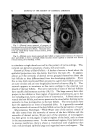
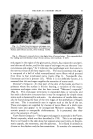
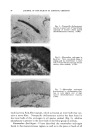
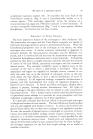
68 JOURNAL OF THE SOCIETY OF COSMETIC CHEMISTS cells of man (13) however acid phosphatase is characteristically present (2). In the general body dermis acid phosphatase has an almost even dis- tribution through the Malpighian layer in the pressure regions the en- zyme progressively increases in concentration through the Malpighian and the granular layers and decreases abruptly at the stratum lucidurn. Bejd] (2) has correlated this sudden drop in enzyme with the deposition of lipid at the level of the stratum lucidurn. Regional variation in the concentra- tion of acid phosphatase in the epidermis is marked (19). The palm, the lip and the umbilical region of the chimpanzee has minimal activity while the scalp, the scrotum and the knee give a maximal reaction. In the macaque the enzyme is less abundant in the epidermis of the palm and nipple than it is in the forearm and the scapular region. In man acid phosphatase activity is weakest in the epidermis of the pretibial and inter- scapular epidermis and strongest in the arm and the umbilical region. Quantitative biochemical analysis of acid phosphatase in the epidermis from different regions of the body showed highest activity in the knee, and pubis and the lowest hydrolytic activity in the pretibial and scapular regions (20). Using a different biochemical method, Hershey, et al. (10), have demonstrated almost identical concentrations of acid phosphatase in the sole and in the inguinal epidermis. The histochemical studies, then, seem to be confirmed by the biochemical data. Again there is no obvious correlation between the abundance of this enzyme and the thickness of the epidermis. In some instances there appears to be a fair correlation between this enzyme and the presence of hair. Glabrous regions may have less en- zyme and hairy regions more. This however is certainly not true at all sites. Bejdl's (2) correlation of acid phosphatase with lipid metabolism in the epidermis seems sound, since the esterase activity roughly parallels the distribution of acid phosphatase. From the evidence at hand we must then conclude that the lipid metabolism of the epidermis differs markedly in the different regions of the body. Herrmann, et al., have reached a similxr conclusion (9). Among the oxidative enzymes, succinic dehydrogenase, one of the en- zymes in the citric acid cycle, has been studied most intensely in the epider- mis. Regional differences in human epidermis were noted in the first re- port describing the histochemical localization of this enzyme in the skin (18). Succinic dehydrogenase is concentrated in the basal cells, diminishes in the stratum spinosum and disappears completely just above the stratum granulosum. The thick epidermis of the palm is more reactive than the thinner epidermis of the scalp, the axilla, the back and the chest (18). Visual and photometric determinations of succinic dehydrogenase in 20 different regions of human skin have demonstrated more subtle differ- ences in the activity of the enzyme in the epidermis (20). In these studies the sole, knee and sacral regions showed the strongest reac-

VARIATIONS IN ENZYMES OF THE EPIDERMIS 69 tion while the arm, chest and scapular epidermis had the lowest ac- tivity. Frequently, succinic dehydrogenase was strongest where the epidermis was thickest, but there were many exceptions to this generaliza- tion. This enzyme is an integral part of the energy providing system of the cell. The energy derived from the action of succinic dehydrogenase and the other enzymes in the citric acid cycle may be stored in the epidermal cells until a sufficient amount is available for mitosis. Thus as Montagna and Formisano (18) suggest the activity of this enzyme may reflect differ- ences in the epidermal mitotic rate over the surface of the body. There is also a good correlation between the succinic dehydrogenase activity in human epidermis and the richness of the vascular bed. The thigh, for example, is poorly supplied with capillaries and has low enzyme activity, the sacral epidermis has an elaborate vascular bed and is high in succinic dehydrogenase. The sole also falls into this latter category. Since the supply of glucose and oxygen is critical for mitosis (4, 5), and these sub- stances are supplied solely by the circulation, the development of the vas- cular bed undoubtedly influences the mitotic rate of the epidermis. A cor- relation with succinic dehydrogenase activity would then also be antici- pated. Monoamine oxidase and cytochrome oxidase, seems to follow the same pattern. All three ehzymes have been associated with the mito- chondria. Reports on regional differences of the activities of these enzymes have not been reported, but preliminary observations indicate that they will approximate that of succinic dehydrogenase. Lactic dehydrogenase, a DPN dependent enzyme, is reported to be twice as active in the epidermal cells of the sole as in the inguinal region (10). On the other hand, malic dehydrogenase is less concentrated in the sole than in the inguinal epidermis (10). Although glycogen is rarely encountered in the normal human epidermis, the enzymes which are involved in the synthesis of glycogen may be readily demonstrated histochemically. Phosphorylase and amylo 1,4-l,6 trans- glucosidase are concentrated primarily in the stratum spinosum. The activity of these enzymes shows regional variation and seems to be directly related to epidermal thickness (8). Very thin epidermis gives almost no reaction, the thicker epidermis of the abdomen and the external auditory meatus is moderately reactive, while the highest concentration of enzyme is found in the palm and sole. In the palm and sole the stratum basale is also reactive. Epidermal activity is also reported to vary with the age of the subject. Glucose-6-phosphate dehydrogenase is reported to be more abundant in the sole than in the inguinal epidermis (10). Since these enzymes are important in glucose metabolism, it is not surprising to see that their distribution almost parallels the succinic dehydrogenase activity and richness of the vascular bed. They are probably engaged in storing and providing the energy source for the mitotic and the synthetic activities
Purchased for the exclusive use of nofirst nolast (unknown)
From: SCC Media Library & Resource Center (library.scconline.org)