ESTROGENS By MAX A. GOLDZIEHEP., M.D.* Presented September 2¾, 1959, Seminar, New York City IT Is A PLEASURE tO discuss a subject with which I have been associated for quite a number of years and one which has held my fascina- tion. Of course my interest as an endocrinologist is different from yours. Your interest is primarily whether any ingredient mixed into a cosmetic does something to the skin, and if so whether it does this without harming the individual. Our interest as endocrinologists is different. We are interested in the principle of topical administration of hormones. Its advantages are the avoidance of two of the difficulties in hormonal treat- ment of human beings: one being the great dilution of hormones once they enter the blood stream and become part of the body fluids which means a dilution in a liquid of about 14 quarts. The other is the rapid inactivation of hormones circulating in the blood or in the tissue fluids by absorption to proteins, by conjugation as glucuronides or sulfates and eventually by metabolic destruction in the liver and other organs. This process is so rapid that within twenty or thirty minutes after administration, estrogen practically disappears from the circulation and a tiny part of it, anywhere between 2 and 5 per cent, may appear in the urine. How the topical application of hormones affects the skin is perhaps controversial. It is controversial not because the evidence is not good enough for the value of topical administration but because those who tried to check on the data presented, "improved" the methods of application and examination and thereby missed the boat. The fact is that when estrogen is applied to normal skin you obtain no effect whatsoever. The normal skin is completely tolerant to estrogen and does not react to it at all. You have to take a specialized type of skin to get any noticeable reaction. We selected the skin of aged individuals. Another type of skin which can be used for such tests or experiments is the skin of individuals who are deprived of their sex glands, i.e., cas- trates, or people who for some reason or other have lost the function of their sex glands, be they males or females. * New York, N.Y. 114

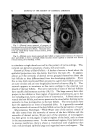
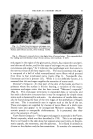
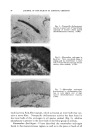
ESTROGENS 115 Now there is a peculiar resemblance between the skin of the aged per- son and the castrate. First of all, the skin is thinner. It is sort of trans- lucent, as it were, so that the blue veins can be seen far more readily than in the average person. The coloring is also different. There is a kind of pallor--a pallor due, as shown by histological examination, to poor capillary circulation in the skin. The number of capillaries is reduced, their calibre is decreased and the circulation in the capillaries is slower. But in addition to slower circulation there are two other fac- tors. Ordinarily, with slower circulation the circulating blood contains less of the bright red oxyhemoglobin and more of the reduced hemoglobin which is of darker color. Then, this poorly nourished skin contains cer- tain pigments. These pigments were first identified by a group at Har- vard and later by Hamilton in Brooklyn, with the help of spectrophotom- etry. They found that in addition to melanin, which is more prevalent in the colored races than in the white, there are other pigments some of which are called melanoid in addition to the well-known bright yellow carotene, the precursor of vitamin A. This mixture of pigments and the lack of circulation in the skin of the aged and the castrate account for its peculiar waxy pallor and yellowish tinge. This is the kind of skin which permits one to determine whether estro- gens do something to the skin or not. Take for example the skin of an old lady. The top layer, the so-called epidermis, is much thinner than usual and forms a straight line with- out any of the pegs coming down in the normal adult skin. At the same time the cutis shows very few if any capillary vessels. After three weeks of treatment with estrogen there is a definite thicken- ing of that surface layer, the epidermis. You see many pegs projecting into the depths and a number of capillaries with a wide lumen. In other words, in three weeks' time a substantial transformation of the skin has occurred, a transformation which consists of better circulation, better capillary development and blood supply and a thickening of the surface epithelium. Of course there are other developments. The individual cells in the untreated skin are smaller. They are also lighter because they are lacking certain chemicals which they develop after treatment. On the original atrophic thin skin of the old lady, there are no capil- laries visible. After twenty days of treatment there is some change and after thirty days still more. A number of changes are visible from a series of skin samples taken from the same subject. The first is the control before treatment and after treatment of five days no effect is noticeable in either the control or that treated for only five days. After ten days the effects are questionable. After twenty days there is a defi- nite thickening of the epidermis and capillary development. Really
Purchased for the exclusive use of nofirst nolast (unknown)
From: SCC Media Library & Resource Center (library.scconline.org)