258 JOURNAL OF THE SOCIETY OF COSMETIC CHEMISTS tion of hair dyeing must be studied to determine whether a beneficial effect on the strength of the hair shaft follows. Flesch (18) has suggested the use of an acid rinse after bleaching the hair to reduce the injurious chemical changes. His presentation at a recent scientific meeting of the Toilet Goods Association was very provocative. In this presentation I have attempted to discuss the etiological factors in the production of seborrhea capiris. The various methods of approach have been described. Individual selections must be made according to the desired dermatological effect. A wide variety of chemical agents are being utilized in the treatment of seborrhea capiris and their advantages and disadvantages have been enumerated. With increase in the number of hair cosmetics and hair treatments, there are bound to be some damaging effects produced, particularly when the cosmetics are used injudiciously or unintelligently. The possible inclusion of corticosteroids and other anti- inflammatory agents in cosmetic preparations should be explored. REFERENCES (1) I.ubowe, Irwin I., Paper presented at the International meeting of the Society of Cos- metic Chemists, Paris, France, July 30, 1957 Geneva, Switzerland, August 5, 1957. (2) Lubowe, Irwin I., Proc. Sci. Sect. Toilet Goods zfssoc., No. 28, 18 (1957). (3) Lubowe, Irwin I., Med. Times, in press. (4) Slinger, W. W., and Hubbard, D. M., zfrch. Dermatol. and SyphiloL, 64, 41 (1951). (5) Finnerty, E. F., New Engl. •7. Med., 254, 614 (1956). (6) Lubowe, Irwin I., Med. Times, 85, 58 (1957). (7) Ball,-F. I.,/1. M./1. /lrch. DermatoL, 71, 696 (1955). (8) Lubowe, Irwin I., Med. Times, 86, 15 (1958). (9) Butcher, Earl O., •7. Invest. Dermatol., 29, 377 (1957). (10) Flesch, P., /1. M./1. /lrch. Dermatol. and SyphiloL, 65, 261 (1952). (11) Flesch, P., Proc. Sci. Sect. Toilet Goods/lssoc., No. 29, 27 (1958). (12) Lubowe, Irwin I., and Mecca, S. B., Med. Times, in press. (13) Guy, William B., and Edmundson, Walter, P.,/1. M./1./lrch. Dermatol., 81, 205 (1960). (14) Sulzberger, Marion B., Witten, Victor H., and Kopf, Alfred W., Ibid., 81, 108 (1960). (15) Lubowe, Irwin I., "New Hope for Your Hair," New York, E. P. Dutton Co. (1960). (16) Savil, Agnes, Brit. •7. DermatoL and Syphilol., 70, 296 (1958). (17) Slepyan, A. H., eLM. eL ,4rch. Dermatol., 78, 395 (1958). (18) Flesch, P., Proc. Sci. Sect. Toilet Goods/lssoc., No. 32, 1 (1959). CORRECTION NOTICE I•r VoLuME XI, Number 8, November, 1960, an error appeared in the article "Determination of Alkaline Phosphatase Activity in Human Lyophilized Placenta Extract," by William Colburn, Ralph Schure and Jack Axelrood. In the calculation, page 445, instruction 3 should be: 3. Multiply the mg. of phenol obtained in (2) by 200 and by the dilution factor used in making the "sample solution." This gives mg. phenol produced per 100 ml. of original sample (which equals K & A units of alkaline phosphatase per 100 ml.).

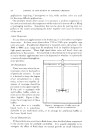
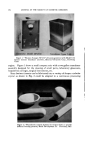
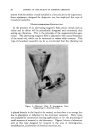
SCALE-UP CONSIDERATIONS IN COSMETIC MANUFACTURE BY J. Y. OLDSHUE* Presented November 29, I960, New York City SCALE-UP from laboratory equipment is often a part of cosmetic manufacturing operations. The use of impeller type fluid mixers and their scale-up characteristics is of importance in these operations. In a previous paper, "Fluid Mixing in Cosmetic Formulations," (•7ournal of the Society of Cosmetic Chemists, 10, 5 (1959)) some gerleral background to fluid mixing operations was discussed. The reader is referred to this paper for a geneal treatment of fluid mixing theory and practice. SOME IMPORTANT MixINc, CHARACTERISTICS There are several characteristics that can be used to describe the fluid regime in a mixing tank. In general, it is not possible to keep the ratios between all of these characteristics constant upon scale-up to a larger system. The key to scale-up is maintaining the major quantities in their proper ratio, and then compensating for any changes in the other variables. Some of these important quantities are: 1. Power input. 2. Volumetric pumping capacity of the impeller. 3. Maximum fluid shear rate at the impeller. 4. A,•erage fluid shear rate through the tank. 5. Minimum fluid shear rate at the lowest velocity point. 6. Type of flow pattern. 7. Tank geometry. In some mixing processes, one or more of these characteristics may be important, while in other processes different characteristics may be impor- tant. Figure 1 shows a schematic of a small tank in the laboratory. It also illustrates the fact that the only way we can keep every fluid dynamic ratio constant in large systems is with a whole series of small impellers in a large diameter with the same liquid level as the small tank. Since this is impractical, it is desired to go to a mixer of the type shown in Fig. 2, in which one mixer is used in a large volume. However, we must accept the fact that fluid conditions will not be identical to those in the small * Mixing Equipment Co., Inc., Rochester 11, N.Y. 259
Purchased for the exclusive use of nofirst nolast (unknown)
From: SCC Media Library & Resource Center (library.scconline.org)